Echoes of Silence: When Culture Meets Commerce on the Global Stage
The recent events surrounding a US concert tour reflect a persistent tension between artistic expression and commercial interests, prompting contemplation on what such patterns suggest for the cultural landscape of the Asia-Pacific.
SINGAPORE
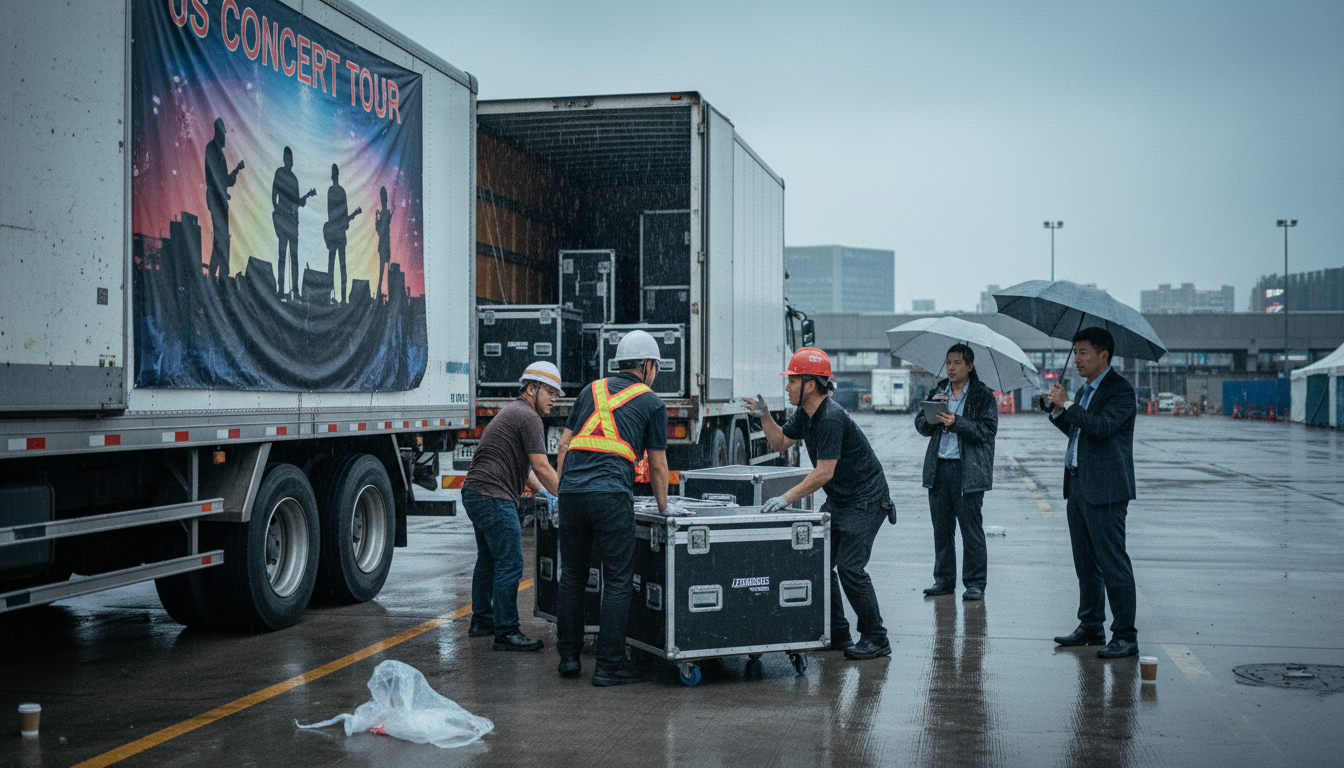
On September 15, 2026, news circulated that Ed Sheeran, a pop musician, stated that the decision to remove American rapper Macklemore from his US concert tour was not his own, but that of the tour’s promoter. This development followed Macklemore’s pro-Palestinian remarks, including a "Free Palestine" statement, made during a September 4 concert in New Jersey. The incident subsequently led to other supporting acts withdrawing from Sheeran’s tour.
Such occurrences illuminate a recurring pattern where the commercial apparatus supporting cultural production exerts influence over artistic expression. In this instance, a promoter's decision directly impacted Macklemore's presence, despite Sheeran distinguishing his own political approach from the rapper's. This is not merely a matter of differing political views but illustrates a system where financial stakeholders can effectively curate public platforms. The consequence extends beyond individual artists; it suggests a quiet policing of discourse within the public sphere, determining which voices are amplified and which are muted.
For the Asia-Pacific region, where cultural exchange increasingly takes place on global platforms, this dynamic holds particular relevance. While specific political contexts differ, the underlying tension between cultural expression and commercial viability resonates. From the historical patronage systems that shaped classical arts in Southeast Asia to contemporary state-sponsored cultural initiatives, there has always been an interplay between art and broader societal or economic forces. However, the current globalized entertainment industry introduces a new layer of complexity. Foreign promoters, with their own market sensibilities and risk assessments, increasingly influence what art reaches wider audiences. The question then becomes: what kind of cultural expression is deemed acceptable, and what is sidelined, not by artistic merit, but by commercial calculation?
One might argue that promoters are simply responding to market signals, protecting their investments by avoiding controversy that could alienate portions of their audience or corporate sponsors. This perspective suggests that these decisions are not acts of censorship but pragmatic business choices in a highly competitive industry. If a performer’s statements risk commercial harm, then a promoter's duty to the tour's financial success might necessitate such action. However, such an argument implicitly accepts that commercial interests should dictate the boundaries of public discourse and artistic freedom, potentially reducing culture to a commodity whose value is solely determined by its marketability rather than its capacity for critical engagement or reflection.
Historically, Asian cultures have navigated complex relationships between art, power, and commerce. Consider the way traditional performance arts, once supported by royal courts or religious institutions, adapted to new economic realities under colonial administrations or modern nation-states. What is preserved, and what is quietly replaced, has always been an evolving question. The present situation, where a single promoter’s decision can reshape a significant international tour, reveals that even in an interconnected world, the mechanisms determining cultural visibility can remain centralized and commercially driven. It underlines a continuous challenge: how to foster diverse and authentic cultural expression when the platforms for its dissemination are increasingly subject to global commercial pressures.
Sources
Newsletter
Pacific Daily
A curated briefing from Thailand, Asia-Pacific and the world.