Echoes in the Hall: The Unsettling Serenity of Museum Sound Baths
When a Los Angeles institution repurposes a display of taxidermy, it signals a shift in how public spaces are consumed – a trend with unsettling implications for cultural preservation.
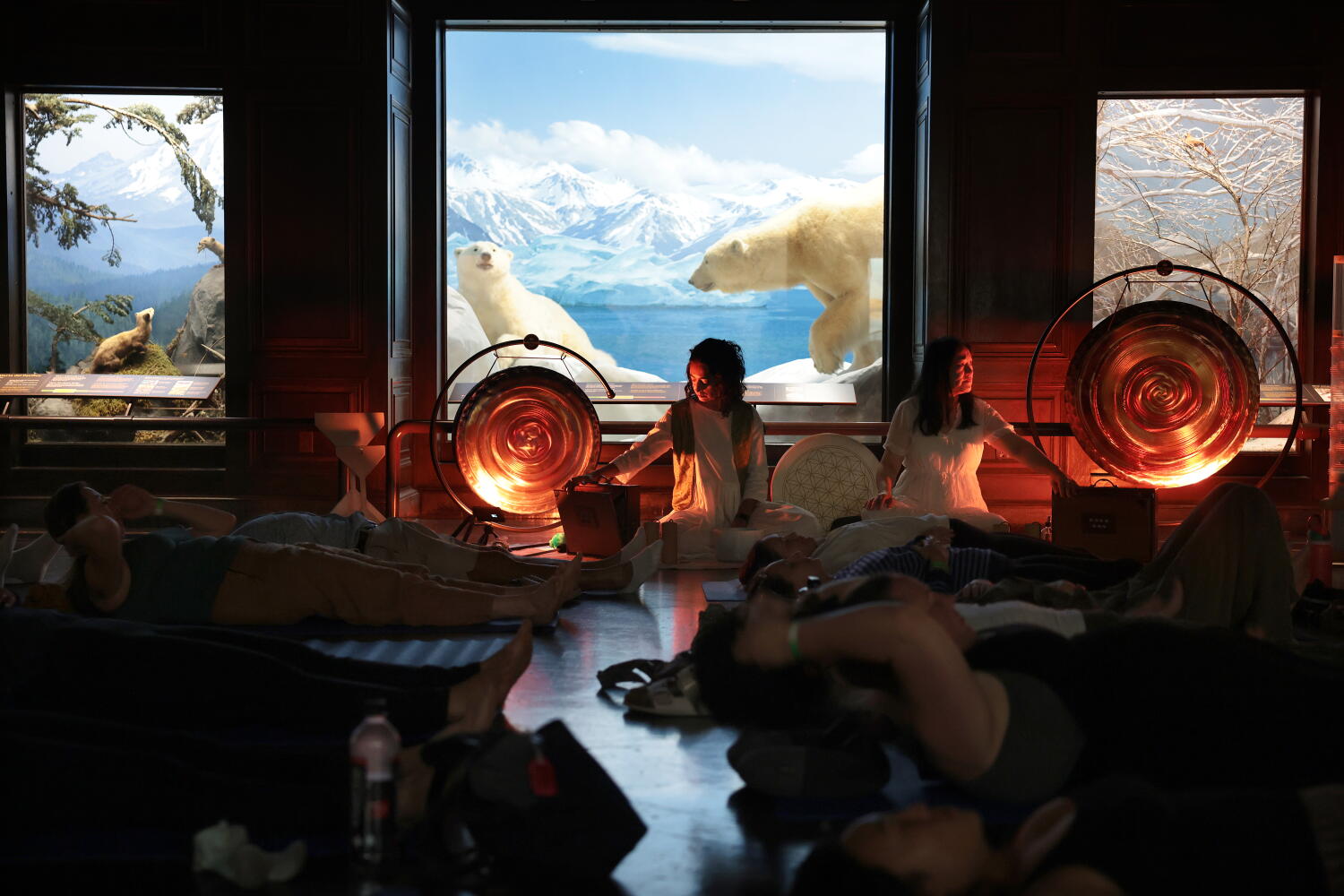
The North American Mammal Hall at Los Angeles’ Natural History Museum is a space designed for static observation. Dioramas present taxidermied animals in imagined natural habitats. But on August 28, 2026, reports from the Los Angeles Times Travel described this hall transformed into an “immersive wellness space” for the museum’s new Mindfulness Mornings series. Visitors lay on their backs, observing a painted sky while sound practitioners employed gongs, crystal bowls, and wave drums. To one side, a black bear cub, preserved in a perpetual stare, watched on.
This scene, a confluence of the preserved and the performative, offers a lens into a subtle but significant shift in how cultural institutions are perceived and utilized. Traditionally, museums curated and presented artifacts for study and contemplation, their value residing in historical narrative and scientific classification. Here, the very space designed for such specific intellectual engagement is re-rendered as a backdrop for personal wellness. The taxidermy, once central to a biological display, becomes an ambient prop, its original purpose subsumed by the new activity.
This recontextualization is not isolated. It speaks to an emerging pattern where the 'experience economy' infiltrates spaces previously sacrosanct for their educational or historical roles. The Natural History Museum, by offering a sound bath amidst its mammal displays, is arguably responding to a perceived public demand for novel, sensory-driven experiences, even if these experiences dilute the primary function of its collections. The Pacific Coast Business Times reported on an Ojai taxidermist gaining internet fame, hinting at an early, diffuse cultural curiosity around the form. Now, that curiosity appears to have matured into an active demand for interaction, however passive.
The museum’s move could be seen as an innovative attempt to broaden its appeal, drawing in new demographics who might not otherwise engage with natural history. It leverages existing infrastructure to generate revenue and maintain relevance in a competitive leisure market. This pragmatic approach might ensure the financial viability of institutions struggling with attendance figures or dwindling public funding. The New York Times, for instance, reported in 2022 on the Museum of Natural History’s renewed hall, touching upon both its “treasures and pain” – a nuanced view of the challenges these institutions face in presenting complex narratives.
However, the question arises: what is lost when the primary purpose of a collection is eclipsed by its atmospheric potential? When the integrity of scientific displays becomes secondary to creating a “vibe,” the educational mission of the museum is subtly undermined. The animals, once subjects of scientific study, become components of a curated calm, their stories replaced by the sounds of chimes and rain sticks. This shift risks reducing complex cultural and scientific narratives to mere backdrops for individualized, transient experiences. While new audiences are drawn in, the depth of engagement with the museum’s core offerings may diminish. The tension between preserving the past and performing for the present remains unresolved, suspended between the stillness of preserved nature and the vibrations of a contemporary wellness trend.
Sources
Newsletter
Pacific Daily
A curated briefing from Thailand, Asia-Pacific and the world.