Djibouti Migrant Deaths Reveal Geostrategic Crosscurrents, Undocumented Migration
The capsizing of a migrant boat off Djibouti, resulting in 139 deaths and 84 missing, highlights the human cost of unquantified migration routes through a globally strategic location.
SINGAPORE
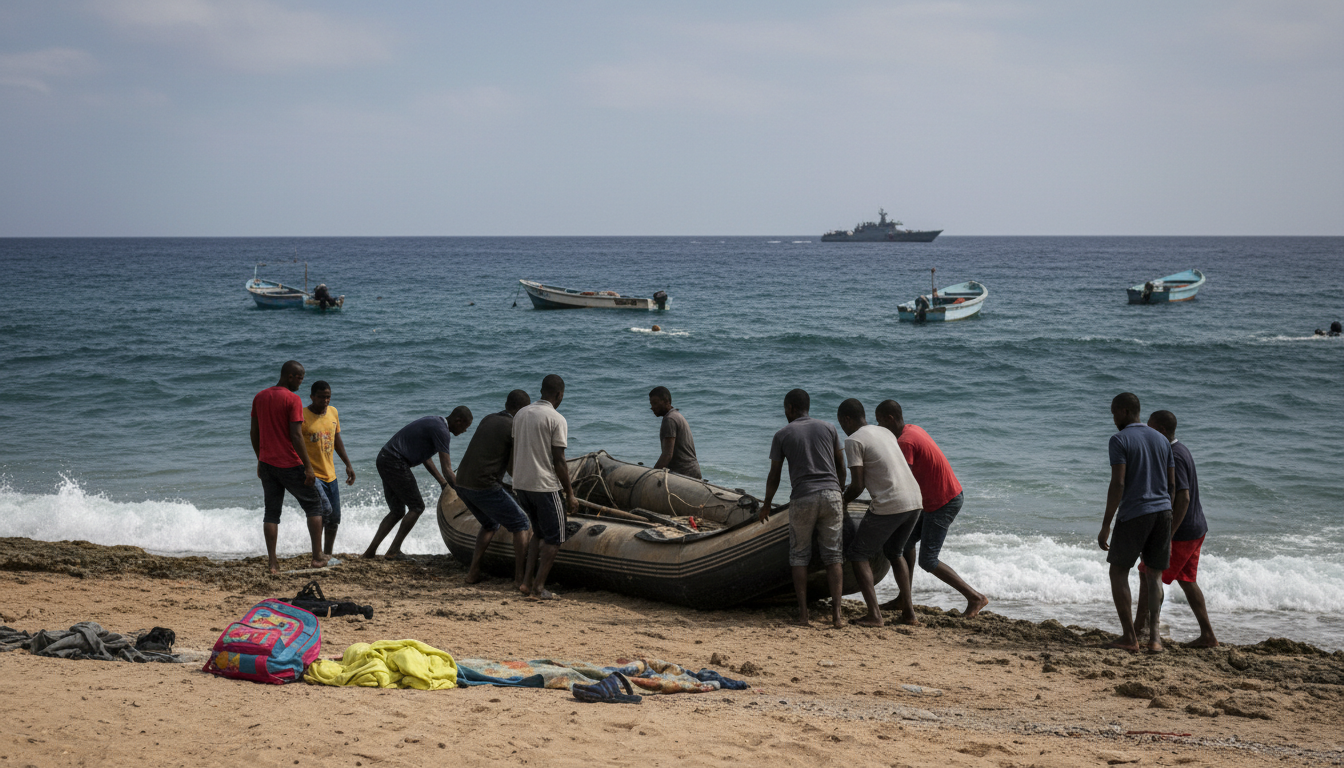
A vessel carrying 305 individuals, most of whom were Ethiopian, capsized off Djibouti near Guhere on October 11, according to the United Nations' International Organization for Migration. The agency reported 139 deaths, including 15 children, and 84 individuals missing after the boat sank while sailing from Djibouti to Yemen. This incident brings into focus the persistent risks associated with perilous sea crossings.
Djibouti occupies a strategic position, described by the World Bank Group in December 2024 as a "Strategic Crossroads." This designation underscores its importance not only for regional trade but also for international security. Japan expanded its military base in Djibouti in 2016, and China established a military base there by 2018. The presence of these international military assets indicates the area's significance beyond localized concerns.
The fact that 305 people embarked on a single, likely unregulated, voyage from Djibouti suggests a significant demand for movement. While the immediate destination of Yemen is identified, migration patterns often involve multiple legs, meaning an initial crossing can be a precursor to further travel. The existing data does not specify the ultimate intended destinations of these migrants, nor does it establish direct connections to Asia-Pacific migration networks. However, the sheer volume of human movement through a militarily sensitive choke point like Djibouti suggests that global migratory flows may have wider implications that remain unquantified. A more detailed understanding of these routes, from origin to ultimate destination, could illuminate potential linkages to the Asia-Pacific region.
The United Nations' report offers a grim numerical account of the immediate loss. This event, tragic in itself, represents a single data point within a larger, less visible trend of global mobility. The persistent use of dangerous routes in the pursuit of opportunity, even from a country like Ethiopia that experienced a separate migrant-related road accident in Semera town in January 2026, points to underlying pressures. The focus on Djibouti often emphasizes its geopolitical and economic role, seldom its function as a transit hub for vulnerable populations. The continuous occurrence of such large-scale, hazardous journeys demonstrates the enduring economic disparities and conflict dynamics that compel individuals to take extreme risks.
What remains unclear is the full scope of the human smuggling networks involved and the broader trajectories of those who utilize these pathways. While the current reports detail the tragic outcome for those on the vessel, the mechanisms and motivations that lead hundreds of people to undertake such a journey warrant further investigation. The available information provides a count of the dead and missing, but it offers limited insight into the full extent of the journeys that culminate in such incidents, particularly any eventual Asia-Pacific connections.
Sources
Newsletter
Pacific Daily
A curated briefing from Thailand, Asia-Pacific and the world.