Digital Echoes in Hong Kong Homes: A Shifting Domestic Landscape
The dispute between Ho Ying Wai and his son signals a wider generational drift in Asia's urban centers.
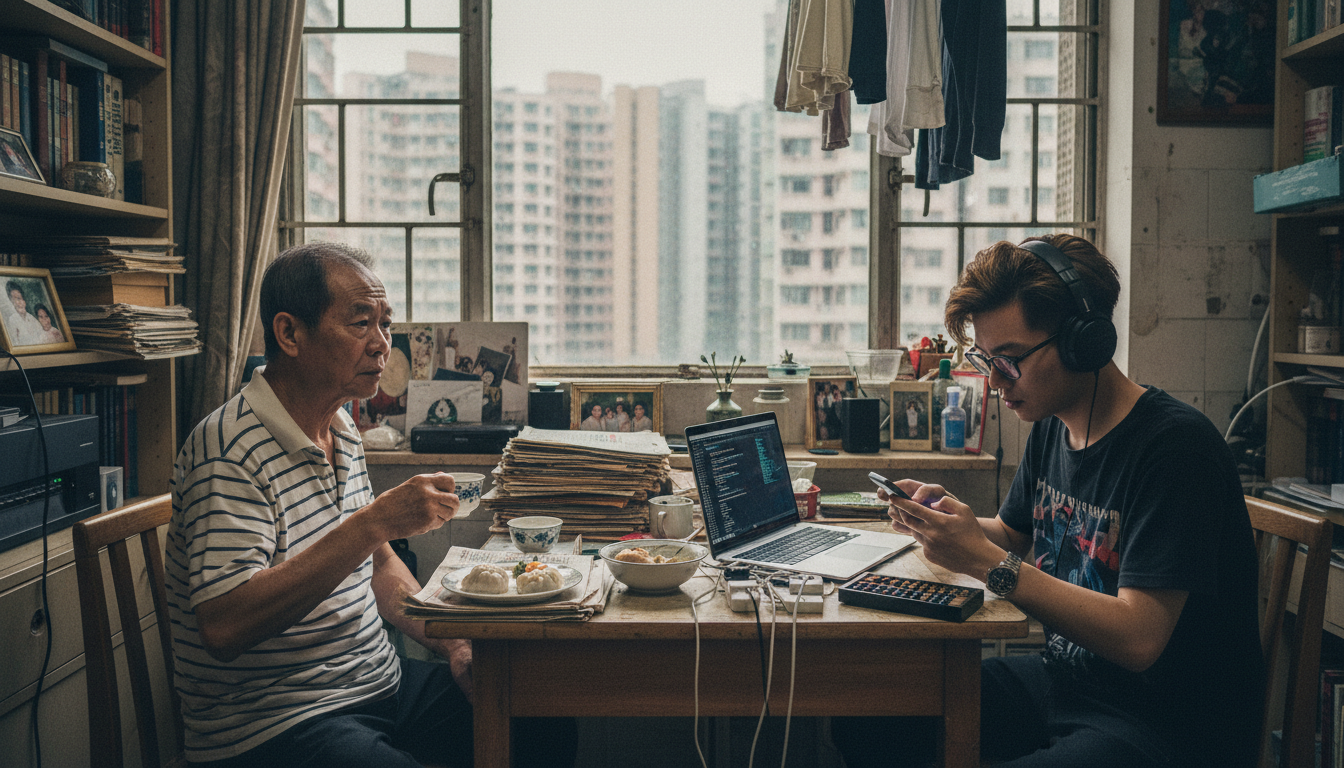
HONG KONG
The neon glow of Hong Kong’s nightscape often masks the quieter shifts within its homes. Recently, actor Ho Ying Wai’s experience with his 14-year-old son brought a particular tension into sharper relief. The son, after taking thousands in cash, ran away from home, dissatisfied with rules that included limits on his gaming time and withheld pocket money. He found temporary refuge with a classmate’s family, eventually presenting 12 conditions for his return, including demands for an iPhone and privacy. Mr. Ho, attributing his refusal of most demands to a need for respect and compromise, eventually chose reasoning over physical punishment, and his son returned home following negotiations.
This incident, reported by The Straits Times Life on September 15, 2026, extends beyond a single family’s struggle. It sketches the outline of a habit that is perceptibly changing across Asia’s dense urban environments: how households manage the boundaries of individual space and digital engagement. The son’s flight, and his specific demands, point to a growing expectation among younger generations for autonomy, not just in their physical environment, but crucially, within their digital lives. Parental attempts to control screen time, a common practice for many parents across the region, are increasingly being met with sophisticated pushback, often involving attempts to exert control over finances or living arrangements.
The dynamic suggests a clash between established parental authority and an emergent youth culture shaped by pervasive digital platforms. These platforms offer not only entertainment but also social connections and perceived independence, making restrictions feel more like an infringement than a protective measure. While Mr. Ho decided against physical punishment, his initial consideration of it highlights a traditional response that is increasingly at odds with the evolving understanding of adolescent psychology and digital native expectations. The son’s decision to stay with a classmate’s family, rather than disappearing completely, suggests a calculated negotiation for better terms, rather than an outright rejection of familial ties.
This is not to say that every teenager will resort to such measures. The immediate crisis was resolved through negotiation, indicating a path for communication, however fraught. Yet, the underlying tension remains. How parents navigate the digital lives of their children — from gaming limits to device ownership — is becoming a central fault line in domestic life, particularly in cities like Hong Kong where spatial constraints often amplify interpersonal friction. The stakes are not just about screen time, but about fundamental shifts in control and agency within the family unit. The quiet streets after nightfall, and the glow emanating from countless windows, hold these evolving narratives.
Sources
Newsletter
Pacific Daily
A curated briefing from Thailand, Asia-Pacific and the world.