Defending an Offshore Benchmark Demands Structural Discipline Over Reputation
Charles Caudrelier readies the Maxi Edmond de Rothschild to protect a record set against tight operational margins
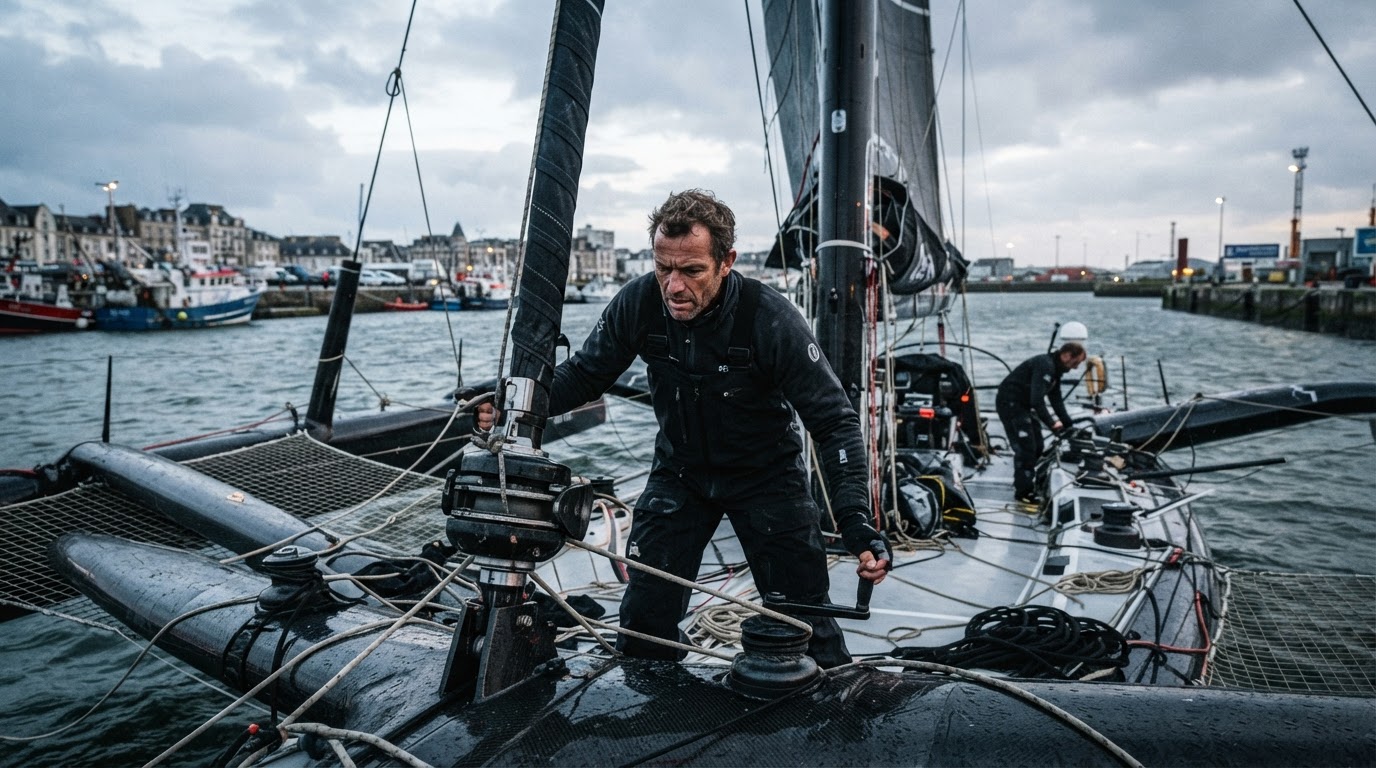
Charles Caudrelier is preparing to defend his title in the Route du Rhum–Destination Guadeloupe aboard the Maxi Edmond de Rothschild, designated Gitana 17. Entering as the defending champion, the French skipper holds an official course record of 6 days, 19 hours, 47 minutes and 25 seconds, logged during his 2022 crossing. That logged time establishes an extreme technical benchmark for singlehanded ocean racing. A recorded elapsed time documents what a specific naval architecture package achieved under precise atmospheric conditions, yet it offers zero structural protection when entering a subsequent offshore campaign.
Operating an offshore multihull at top speed exposes composite hulls to relentless hydrodynamic forces. When Caudrelier established the record in 2022, the central operational achievement was maintaining high velocity while avoiding catastrophic composite failure across varied sea states. Solitary offshore passages demand that a platform endure severe cyclic shock without delaminating structural bulkheads or breaking control surfaces. Modern high-speed ocean racing is fundamentally an endurance exercise in materials engineering under continuous dynamic stress.
Appendage loads and capital investment
Solo campaigns aboard giant multihulls function as industrial maritime research programs rather than traditional sporting endeavours. Sustaining giant appendages through open swell requires substantial financial commitments, dedicated shore personnel, and extensive composite testing. Offshore teams invest vast capital into sensor systems, hull laminate analysis, and foil designs because equipment attrition represents the primary barrier to finishing. A skipper alone on the water operates as an executive monitoring composite tolerances, calculating continuously whether short-term speed spikes threaten long-term vessel survivability.
Advocates of performance history often argue that an established record grants an indispensable psychological and operational advantage over challengers. Possessing reliable speed polars and proven routing strategies across oceanic corridors undoubtedly eliminates basic guesswork from tactical routing. This operational history allows navigators to project vessel handling in specific swell conditions with quantified confidence. Yet holding historical data also creates dangerous incentives to push machinery beyond safe margins. Skippers trailing a logged benchmark often overload foils, while defending champions face constant institutional pressure to match their own historical pace even when deteriorating sea conditions dictate caution.
Hydrodynamic risk and open corridors
Atmospheric dynamics across oceanic corridors never repeat previous patterns with fidelity. The favorable wind angles and wave spacing that allowed Gitana 17 to complete its 2022 run within six days and nineteen hours cannot be summoned on command. A severe localized low-pressure cell can disrupt routing schemes and introduce unpredictable cross-seas capable of shattering appendages. Ocean racing penalizes teams that mistake past success for systemic security. High-speed foils operating near cavitation thresholds offer minimal leeway when striking submerged objects or descending off steep wave crests.
Managing structural loads during solitary transits demands austere discipline from a skipper operating without relief. The physical isolation of solo ocean racing magnifies every technical risk, forcing the individual at the helm to balance structural preservation against tactical positioning. Caudrelier carries proven technical credentials, yet physical water dynamics operate entirely indifferent to prior trophies or historical rankings. In high-speed multihull competition, success across unpredictable open corridors ultimately depends on whether naval architecture and operational caution can outlast mechanical fatigue.
Sources
Newsletter
Pacific Daily
A curated briefing from Thailand, Asia-Pacific and the world.