Costa Rica Turns to Bryan Ruiz and the Long Cycle
Appointing a former captain after missing the 2026 World Cup tests whether domestic pedigree can rebuild structural federation capabilities
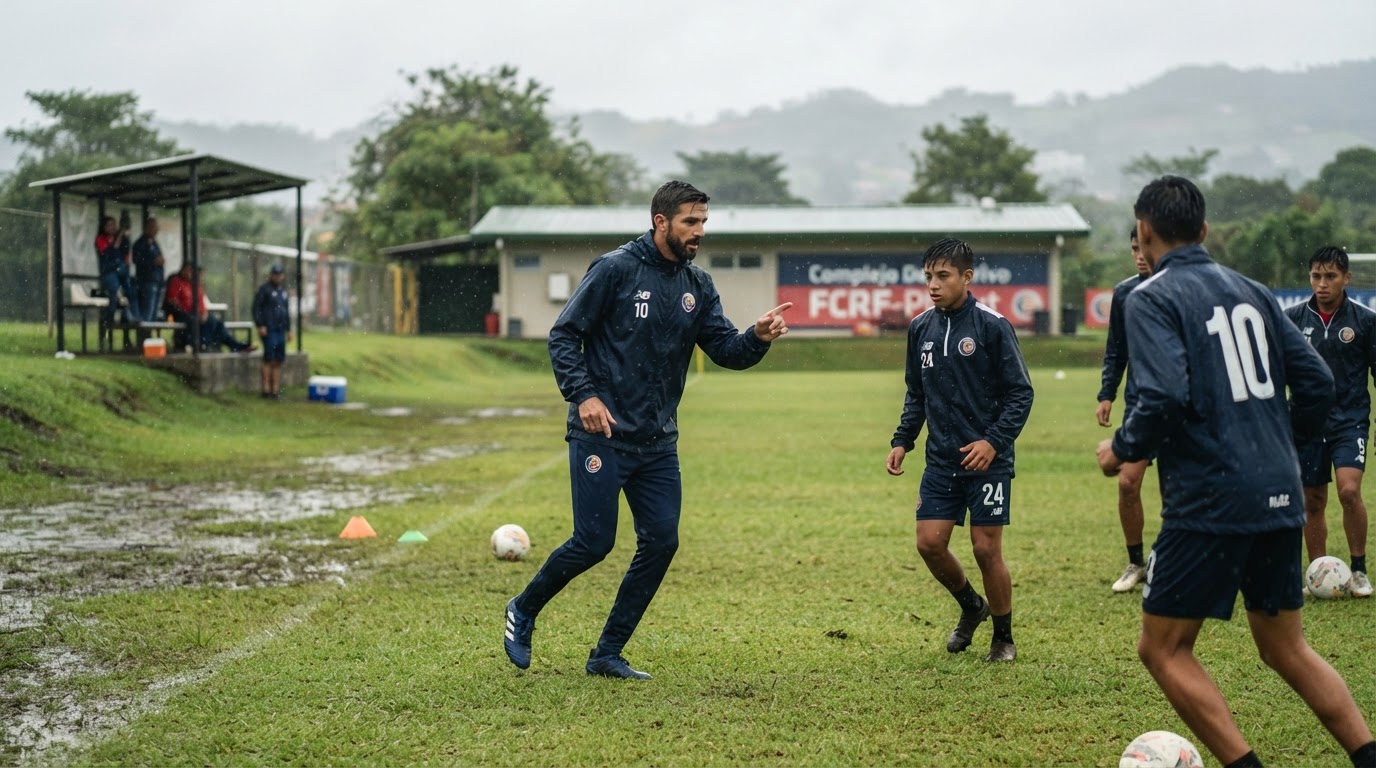
National football federations rarely alter their operational habits when cycles collapse; they alter their figureheads. The Costa Rican Football Federation confirmed on Wednesday that former captain Bryan Ruiz has taken over as head coach, handed the mandate of steering the national side toward qualification for the 2030 World Cup. Ruiz, 41, steps into permanent authority after an interim audition yielded two victories earlier this month in the CONCACAF Nations League, defeating Nicaragua 3-0 and Haiti 2-0. His installation follows the September dismissal of Argentine manager Fernando Batista, whose tenure ended when Costa Rica failed to secure qualification for the 2026 tournament.
The administrative logic governing this transition follows a recognisable trajectory across the Pacific Rim and secondary football economies. When qualification campaigns fail, federations routinely abandon imported technical direction in favour of domestic talismanic continuity. Batista’s departure in September marked the termination of an external technocratic approach that failed to deliver access to the expanded 2026 finals. In turning to Ruiz, the federation has opted to compress institutional memory into a singular personality whose playing career established the country's most durable international benchmarks.
Yet the appointment raises an immediate operational question regarding actual institutional capability. Elevating an accomplished former captain alters dressing-room cohesion and public sentiment, but it does not automatically reform the youth development structures or domestic competitive standards that determine long-range squad depth. The interim victories against Nicaragua and Haiti demonstrated tactical competence against regional opponents, yet those fixtures took place in the comparatively forgiving framework of the CONCACAF Nations League. Navigating a four-year cycle aimed at 2030 demands sustained talent production rather than short-term motivational recovery.
Federation Structures and Foreign Pedigree
Federations confronting developmental stagnation frequently oscillate between two administrative models. One imports expensive foreign stewardship to enforce tactical discipline from above, as Costa Rica attempted under Batista. The alternative installs former squad leaders to restore cultural identity and maintain squad cohesion, an approach that Ruiz now embodies. Neither method, however, compensates for thin player pipelines or uneven institutional investment.
Elevating an accomplished former captain alters dressing-room cohesion, but it does not automatically reform structural squad depth.
Sceptics will note that Ruiz takes charge with limited managerial tenure behind him, having transitioned rapidly from squad leadership to the dugout. His authority rests almost entirely on his stature as a decorated player and the brief momentum generated by two regional wins. Defenders of the federation's choice counter that domestic managers retain a native comprehension of local player constraints that foreign coaches, regardless of pedigree, often spend years attempting to decipher. That familiarity allows Ruiz to bypass the cultural friction that frequently impedes foreign managers during mid-cycle interventions.
The Strategic Horizon to 2030
The strategic reality facing the Costa Rican federation is that setting a target as distant as 2030 grants Ruiz time, but it also formalises an extended competitive void. Missing the 2026 finals represents not merely a sporting absence, but an acute loss of commercial exposure and competitive pressure against top-tier global opposition. To rebuild during a fallow cycle requires sustained federation discipline, insulating the coaching staff against inevitable fluctuations in regional form.
Ultimately, Ruiz’s elevation provides the Costa Rican Football Federation with immediate stability after a bitter qualifying exit. What remains unresolved is whether the structural machinery beneath him can produce the technical talent required to compete on the global stage when 2030 arrives, or whether the federation has simply substituted nostalgia for structural transformation.
Sources
Newsletter
Pacific Daily
A curated briefing from Thailand, Asia-Pacific and the world.