Coordination in Pacific Meteorology: A Discrepancy Between Structure and Operational Impact
While the Pacific Meteorological Council has formally existed since 2011, data suggest a gap in its operational effectiveness, particularly for distant stakeholders like Thailand.
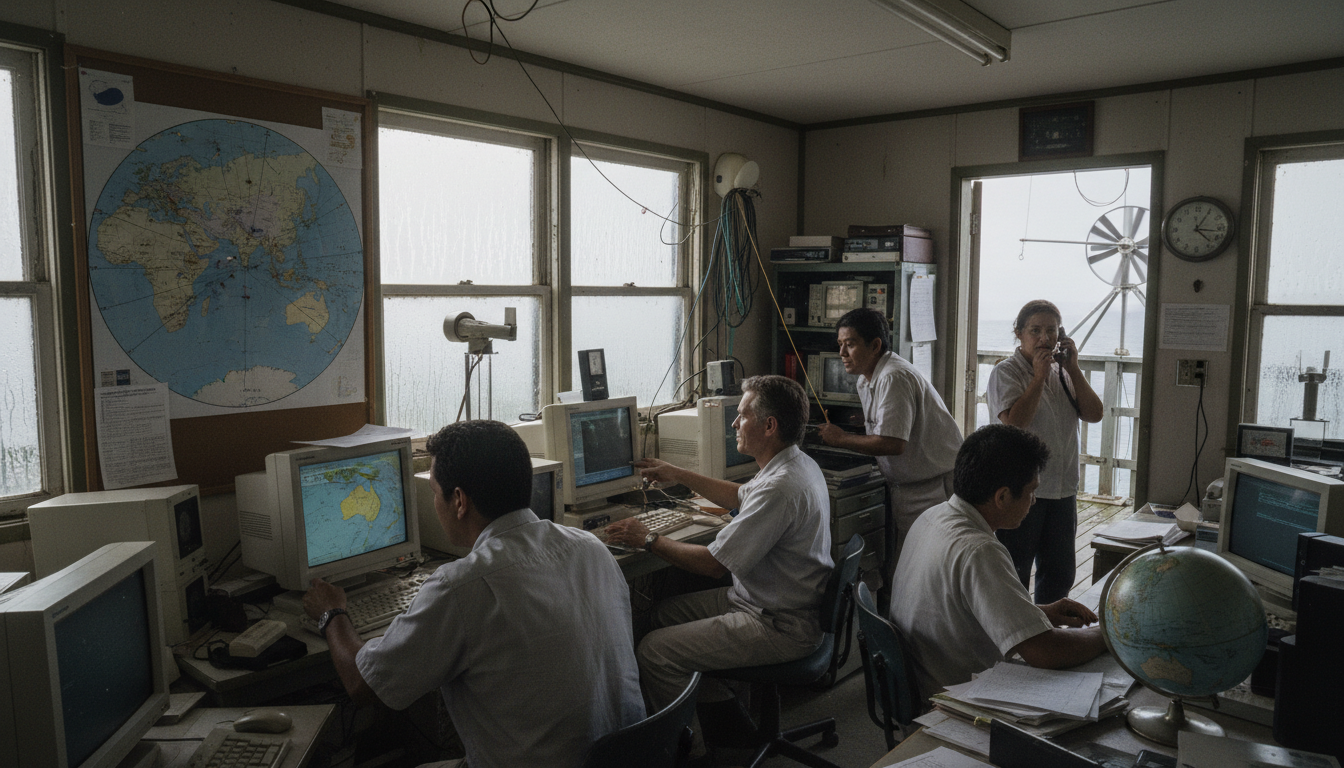
The Pacific Meteorological Council, established in 2011, replaced a series of regional meteorological services meetings. This formalisation might suggest a unified approach to climate and weather data management across the Pacific. However, the available evidence indicates that this structural change has not consistently translated into broader, verifiable operational impacts or widespread, timely data dissemination that would benefit Southeast Asian nations such as Thailand.
The Council's formation was intended to streamline regional meteorological coordination. This is a fact. The United Nations Development Programme (UNDP) re-affirmed its technical and capacity support for weather and climate data reporting in 2018. This suggests an ongoing need for foundational support rather than a mature, self-sustaining system. The 2025 UNESCO convening of Pacific island experts to vow the establishment of a regional body for geohazards points to another coordination gap, indicating that sectoral integration remains a prospective goal rather than a realised one, even after the PMC’s formation. If a regional body for geohazards, a closely related field, still needs to be established in 2025, the depth of inter-agency operational coordination overseen by the PMC warrants scrutiny.
While regional directors solidified commitment to work together to restrain the spread of COVID-19 in 2020, this focused initiative is distinct from the regular, long-term meteorological data exchange that the PMC might ostensibly facilitate. The COVID-19 response was a specific, urgent health crisis, not a routine meteorological function. Financial data, which often clarifies operational reach, is scarce. Reports from 2026 highlighting issues like Solomon Islands women being blocked from business investment financing or Pacific business concerns about fuel fears and mining reform, while not directly meteorological, point to broader economic and infrastructure challenges in the region. These issues, particularly infrastructure, could impede data collection and dissemination capabilities, regardless of the PMC's formal structure.
The central claim, then, is that the formal existence of the Pacific Meteorological Council since 2011 has not demonstrably led to a robust, regionally integrated meteorological data and response system with clear, accessible benefits for external stakeholders. This is inferred from the continued external support, the identified gaps in related regional coordination, and the absence of specific, measurable outcomes regarding improved data access or collaborative forecasting that extend beyond the Pacific region.
A counterargument might be that the PMC’s role is primarily internal, focusing on capacity building and coordination among its direct members. Its impact might be measurable through improved local forecasting accuracy or enhanced early warning systems within Pacific island nations themselves. Such internal progress, however, has not been made transparently available to external observers, nor does it necessarily translate into readily available, actionable data for other regions like Southeast Asia, which could benefit from broader climate pattern understanding.
The limitations of assessing the PMC's impact from a Thai perspective are clear. The available facts are largely internal to the Pacific or concern external support for foundational aspects. There is a lack of concrete data on the actual outputs of the PMC in terms of data sharing protocols, harmonised standards, or cross-regional collaborative projects involving countries outside the immediate Pacific island group. Without specific trade figures or consumption patterns related to meteorological data, any assessment of direct benefit to Thailand remains speculative.
The effectiveness of a coordinating body ultimately depends on its tangible impact beyond its mere establishment. For Thailand, the perceived utility of the Pacific Meteorological Council rests on the accessibility and quality of the meteorological data it facilitates, which remains largely unquantified in public records. The outcome now depends on whether the Council can translate its formal structure and external support into demonstrable, widespread operational data streams that extend their utility beyond the immediate island nations.
Sources
Newsletter
Pacific Daily
A curated briefing from Thailand, Asia-Pacific and the world.