Coffee as a social anchor: beyond the commercial brew
While Asia's coffee market grows, its capacity to build community and support well-being warrants specific attention.
SINGAPORE
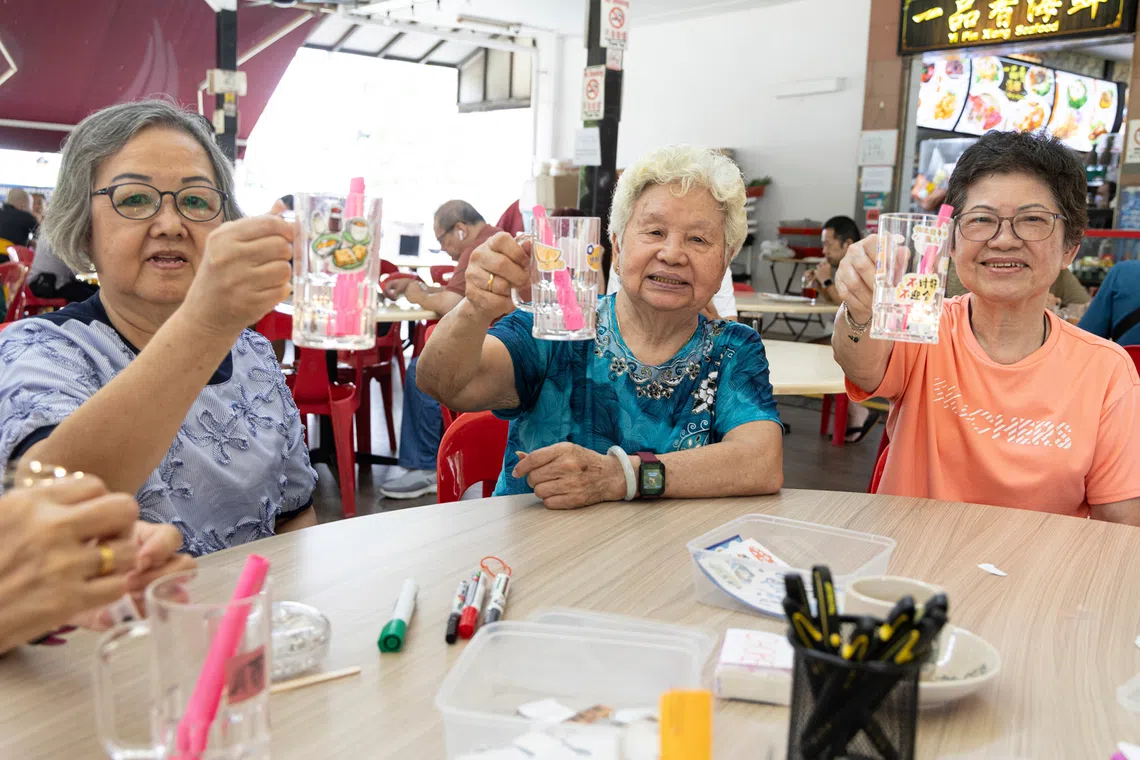
The Straits Times Life reported on September 20, 2026, a gathering of seniors at a coffeeshop in Cassia Crescent for an arts-and-movement program. This event highlights a function of coffee beyond its commercial value as a beverage. Seniors from THK Active Ageing Center (AAC) @ Cassia participated in activities like decorating cups, indicating that these familiar coffee environments can serve as platforms for social interaction and creative expression among older adults. The Kopi and Boogie Kakis session, commissioned by the National Arts Council and hosted by HOWONE Ins, provided a structured setting for conversation and connection over six mornings.
This social utility offers a different perspective from the dominant economic narrative surrounding coffee in the Asia-Pacific. SCMP.com reported on a "coffee revolution" underway to meet rising demand across Asia, underscoring the region’s growing economic stake in the industry. Furthermore, Reuters noted on March 3, 2026, that Jollibee Food's Highlands Coffee is evaluating a Vietnam IPO, indicating significant investment and market expansion. Even as market data points to a burgeoning commercial sector, the Cassia Crescent example demonstrates a more fundamental, human-scale impact on daily life.
For many, including those adapting to new social landscapes, the local coffeeshop or café is not solely a place for a drink. It can often be a point of entry for community engagement, offering an accessible environment for interaction. This applies to local populations, particularly seniors, who may experience shifts in their social structures. The activities described in Cassia Crescent offer a tangible way to mitigate isolation and build new connections, utilizing a familiar setting. This approach provides a concrete change in someone's routine, shifting from solitary consumption to shared activity.
However, the viability of replicating such programs widely may depend on dedicated funding and institutional support. The Cassia Crescent program was commissioned by a national arts council, suggesting public sector investment in social well-being through cultural initiatives. Without such backing, the organic development of similar community-focused activities around coffee might be limited. The commercial coffee sector, primarily driven by profit, may not prioritize social programming in the same way, despite potential indirect benefits like increased foot traffic or customer loyalty.
For Thailand and the broader Asia-Pacific, the observation from Cassia Crescent suggests that policymakers and urban planners could consider the dual role of coffee spaces. Beyond their economic contributions and consumer appeal, these venues possess a capacity to foster social cohesion. The outcome now depends on whether the region’s expanding coffee culture will be intentionally leveraged to address social needs, or if its community-building potential will remain an incidental benefit of commercial growth.
Sources
Newsletter
Pacific Daily
A curated briefing from Thailand, Asia-Pacific and the world.