Coastal Development in Vietnam: Yields Contingent on Resilience
Developer activity in Vietnam’s coastal regions suggests a new urban model, but the long-term returns for property and tourism are not without challenges, particularly from environmental risks and market segmentation.
SINGAPORE
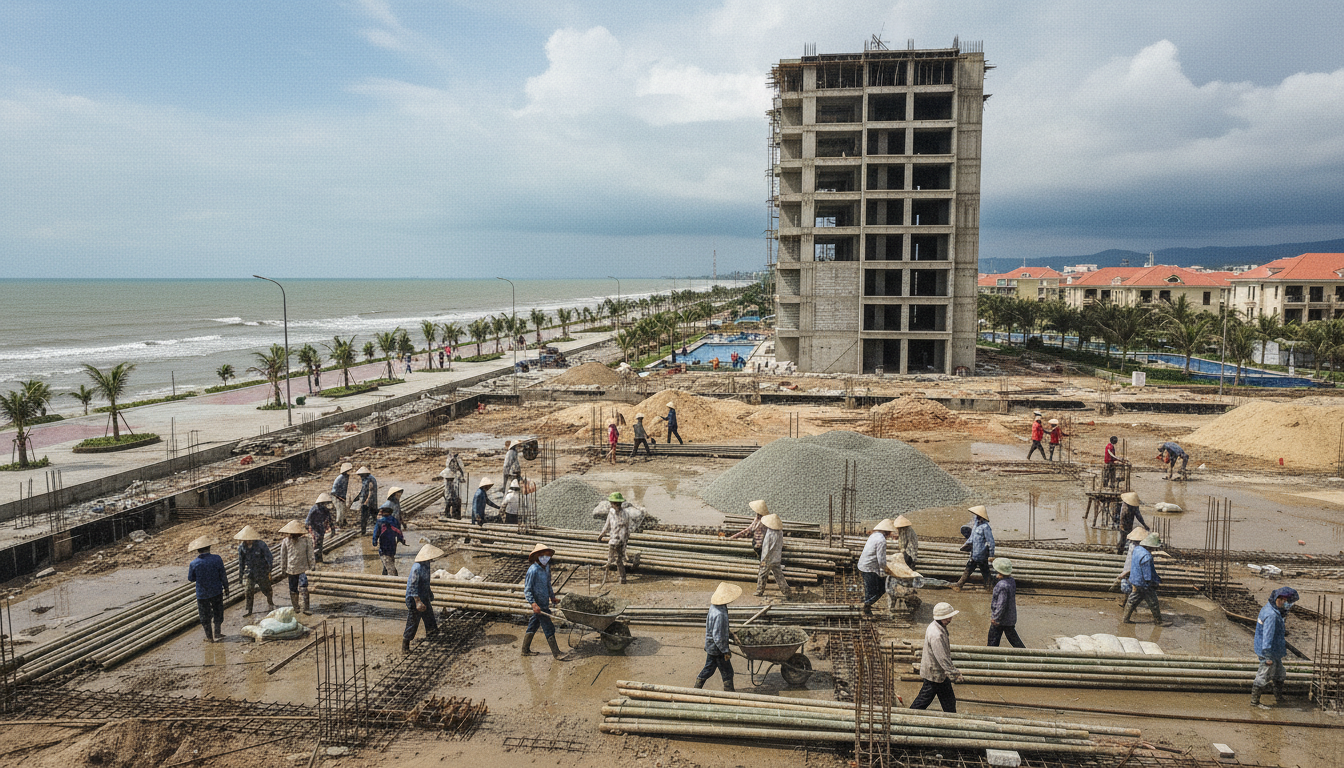
Vietnam's coastal areas are attracting development activity, with developers building homes on the coast, testing a new urban model [3]. The Vietnam National Authority of Tourism reported Russia, China, and South Korea as top international markets for a specific coastal location in 2025 and 2026 [1]. This activity aligns with reported Thai tourist interest in destinations such as Da Nang, Ho Chi Minh City, Hanoi, and Da Lat, citing historical sites and natural landscapes as attractions [1]. Some of these destinations are coastal, indicating interest in Vietnam’s maritime offerings.
However, the extent of Thai tourist engagement with Vietnam's coastal destinations specifically for beach tourism is less clear. Thai travelers rarely pay much attention to beach destinations in other Southeast Asian countries, despite Thailand itself being known for its stunning beaches and turquoise waters [1]. This suggests a potential segmentation in the market, where Vietnamese coastal appeal to Thai tourists might stem more from historical or cultural elements than from direct competition in conventional beach tourism, or it may indicate a gap in market perception that requires further understanding.
The rush to develop along the coast, introducing this new urban model, occurs amidst significant environmental and social challenges [3]. The World Bank Group has shared lessons from Viet Nam’s Mekong Delta on transitioning from coastal risks to resilience [4]. Furthermore, central regions of Vietnam experience damage from events such as floods, with 90 reported deaths from a single incident [6]. Maintaining coastal integrity and managing the impact of natural phenomena are material considerations for any yield assumptions underpinning these development projects.
Investment into coastal areas, whether for residential or tourism purposes, necessitates a careful assessment of its return on capital. The financial viability of new urban models relies on sustained demand and mitigated risk. While reported interest from key international markets, including Russia, China, and South Korea, suggests a baseline for tourism revenue, the long-term stability requires diverse and resilient demand streams.
The economic yield from these coastal developments also depends on managing potential negative externalities. An incident involving an Australian man detained for damaging a Da Nang cafe indicates a need for effective governance and visitor management in growing tourist hubs [5]. Such events, while isolated, can affect perceptions of safety and order, impacting tourist inflows. Ultimately, the success of Vietnam's coastal development push hinges on a balanced approach that accounts for market specifics, environmental realities, and effective local management. This balance remains the critical unresolved constraint for sustained returns.
Sources
Newsletter
Pacific Daily
A curated briefing from Thailand, Asia-Pacific and the world.