Climate Finance Still Treats Small Island Land as Cheap Collateral
Concessional capital promised in Antalya offers technical relief while leaving sovereign exposure unresolved
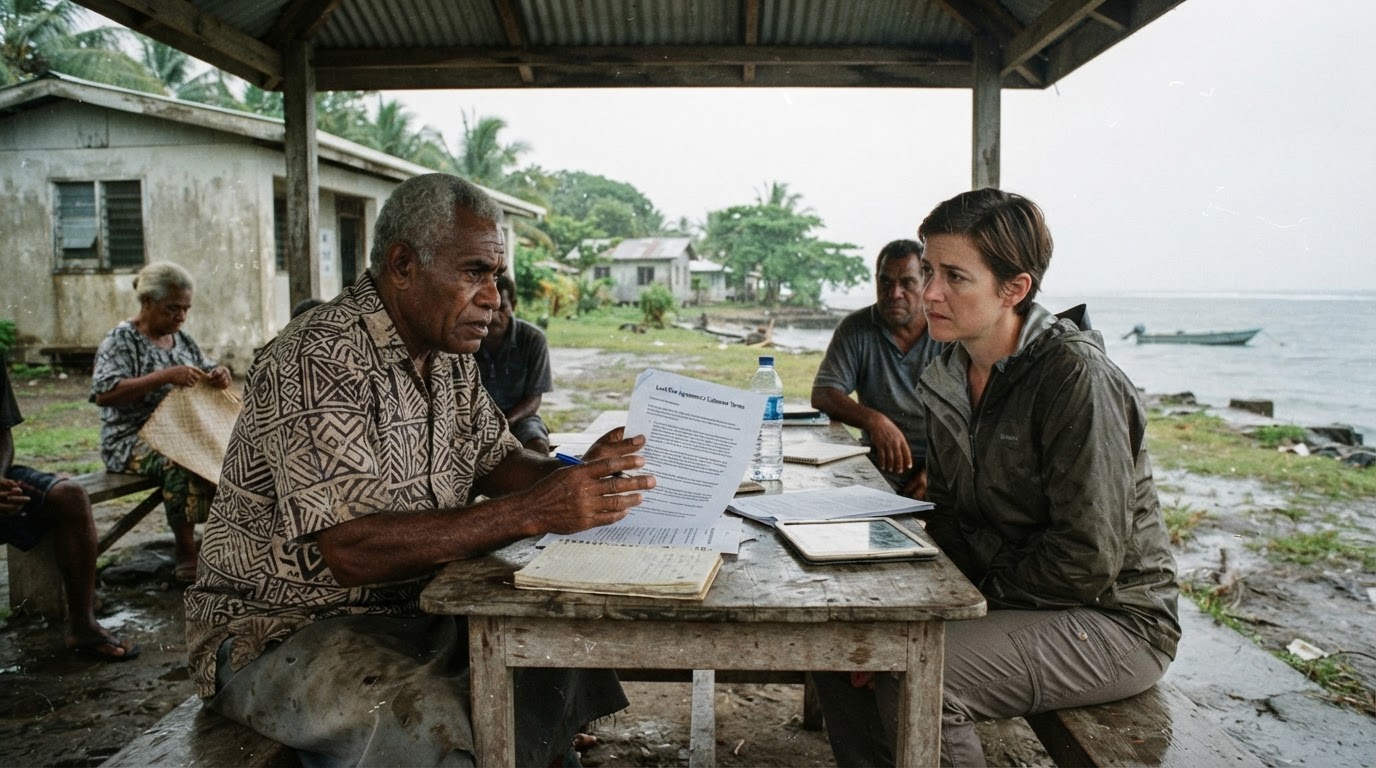
Pacific island communities cannot build seawalls out of sovereign debt. At the global climate summit in Antalya, Pacific Islands representatives stated plainly that climate finance mechanisms continue to burden vulnerable territories with borrowing costs they cannot service. The international community failed to deliver a binding resolution at COP31, leaving overseas jurisdictions dependent on fragmented technical facilities. Among these, the European Union-funded Green Overseas Programme, implemented by the French International Cooperation Agency, presented new research on practical funding pathways for island jurisdictions. While technical programs offer operational expertise, they operate within an institutional architecture that prices physical risk into sovereign liability.
Capital allocators operate under straightforward incentives. Commercial lenders demand yields that reflect physical hazards, while multilateral institutions balance concessional mandates against balance sheet preservation. For small island territories such as French Polynesia, Wallis, Futuna, and New Caledonia, the economic consequence is direct. Physical adaptation projects require immediate capital, yet borrowing against defensive infrastructure produces no direct commercial cash flow. When municipal balance sheets absorb loan obligations for baseline coastal reinforcement, local treasuries bear the loss.
The Cost of Defensive Capital
Mainland metropolises manage climate expenditure by leveraging dense tax bases or issuing municipal paper against future commercial receipts. Initiatives like the United Nations Development Programme work on urban resilience under Building Bangkok’s Green Tomorrow demonstrate how continental centers capture returns on municipal investment. Island territories possess neither the land area nor the commercial density to offset debt servicing through property revaluation. When a coastal defense scheme in an archipelago fails to attract non-debt financing, the territorial administration must choose between deferred maintenance and fiscal insolvency.
External funding vehicles attempt to bridge this divide through targeted grants and project preparation. The Green Overseas Programme has sought to demonstrate alternative finance structures for European overseas territories, extending lessons across jurisdictions including Pitcairn and Greenland. Yet technical assistance does not alter the underlying capital requirement. Non-repayable grants remain scarce, and project pipelines often require compliance structures that small island administrative teams cannot staff. The jurisdictions best positioned to access compliance-heavy funding packages are those with administrative backing from sovereign sponsors like France, the United Kingdom, or the United States. Unincorporated or smaller local bodies find themselves structurally excluded.
Sovereign Risk and Spatial Displacement
Public discourse frequently equates project announcements with capital deployment. Delivering research at Antalya highlights where systemic friction lies, but research does not fund breakwaters. The fundamental asymmetry remains unaddressed: the entities that bear the highest physical exposure to rising sea levels must dedicate shrinking domestic revenues to service loans for assets that merely preserve existing land.
Private capital retreats from assets that cannot generate yield. When shoreline properties and communal holdings lose insurance coverage or access to non-reimbursable reconstruction capital, residents face spatial displacement without institutional compensation. The current architecture of overseas climate finance preserves technical advisory channels while leaving the foundational burden of loss and damage squarely on local ledgers.
Long-term territorial stability depends on whether multilateral funders abandon debt-based distribution for baseline adaptation. Until donor institutions replace sovereign lending with direct, non-repayable capitalization, island populations will remain priced out of their own geography.
Sources
Newsletter
Pacific Daily
A curated briefing from Thailand, Asia-Pacific and the world.