Capital Inflows Shield Delhi Even as Civic Clashes Mobilise Youth
Record diaspora deposits insulate federal policy from the economic fallout of youth crackdowns.
SINGAPORE
New Delhi drew in $73 billion in 11 weeks from non-resident Indians while carrying out an internal security crackdown that galvanized campus opposition. The simultaneous arrival of massive diaspora liquidity alongside civic polarization exposes an uncomfortable reality about state authority: domestic unrest rarely dents international balance sheets if sovereign deposit instruments yield enough return. Across urban centers, state security enforcement and external balance-sheet strength are expanding in tandem rather than colliding.
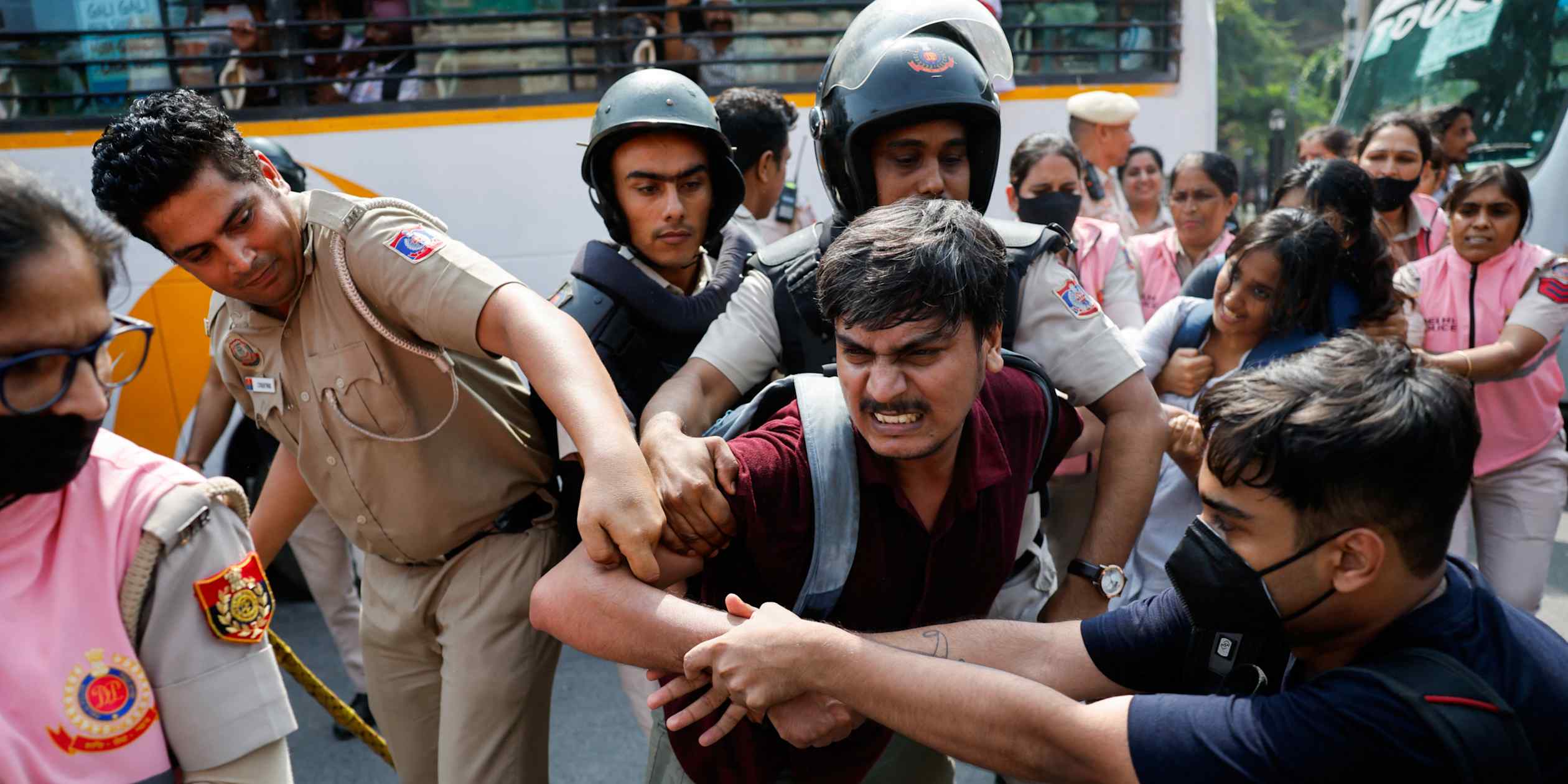
Financial markets run on hard arithmetic rather than political sentiment. Nikkei Asia reported that an enforcement crackdown in Delhi fostered Gen Z defenders of Indian democracy, mobilizing younger citizens around constitutional protections and civil liberties. Conventional political risk models predict that visible state coercion frightens off private capital. Yet the rapid inflow of $73 billion through targeted nonresident deposit schemes proves that cross-border capital operates under completely different incentives. For economic planners managing sovereign liabilities, overseas capital provides an immediate balance-sheet buffer that insulates administrative decision-makers from domestic street agitation.
Capital Flows Versus Street Protests
Security enforcement has stiffened across municipal jurisdictions. Delhi police placed an investigation of a car blast under statutory anti-terrorism law, signaling an unyielding administrative doctrine that prioritizes state security above procedural leniency. Such statutory measures usually trigger warnings from governance analysts about institutional overreach and creeping political risk. In practice, external investors read strong-arm policing as evidence of centralized stability, treating state control as a guarantee of contract enforcement.
Foreign geopolitical alignments deepen this insulation. External partners evaluate Delhi primarily as a vital commercial anchor and regional counterweight rather than an arena for democratic standards. The South China Morning Post reported that Japan's Takaichi pursued high-level engagement in India while navigating falling domestic support, showing how regional powers seek bilateral commercial and diplomatic gains regardless of local political frictions. Diplomatic engagement continues unabated because sovereign strategic value consistently overrides external concern for youth rights.
Generational Friction and Fiscal Reality
A counterargument suggests that persistent generational alienation eventually exacts an undeniable economic toll. When educated youth organize against the state instead of entering the formal corporate pipeline, long-term human capital formation suffers. Disillusionment among Gen Z cohorts can erode domestic consumer confidence, dampen entrepreneurial risk-taking, and entrench structural frictions across metropolitan labor markets. Sovereign debt instruments cannot indefinitely substitute for social cohesion.
That generational reckoning remains a distant constraint rather than an immediate fiscal crisis. Current numbers confirm that offshore funding mechanisms effectively decouple sovereign financing from domestic dissent. Central authorities can withstand sustained youth opposition because non-resident capital maintains foreign exchange reserves and stabilizes the sovereign ledger without demanding institutional compromise. The durability of this administrative posture now depends on whether external capital remains indifferent if generational friction permanently divides the domestic workforce.
Sources
Newsletter
Pacific Daily
A curated briefing from Thailand, Asia-Pacific and the world.