Cambodia’s Stance on Activists Undermines Regional Stability, Not Just Domestic Dissent
The Cambodian government's defiance of a UN call for the release of environmental activists highlights a structural shift with implications for Thailand and broader Asia-Pacific dynamics.
SINGAPORE
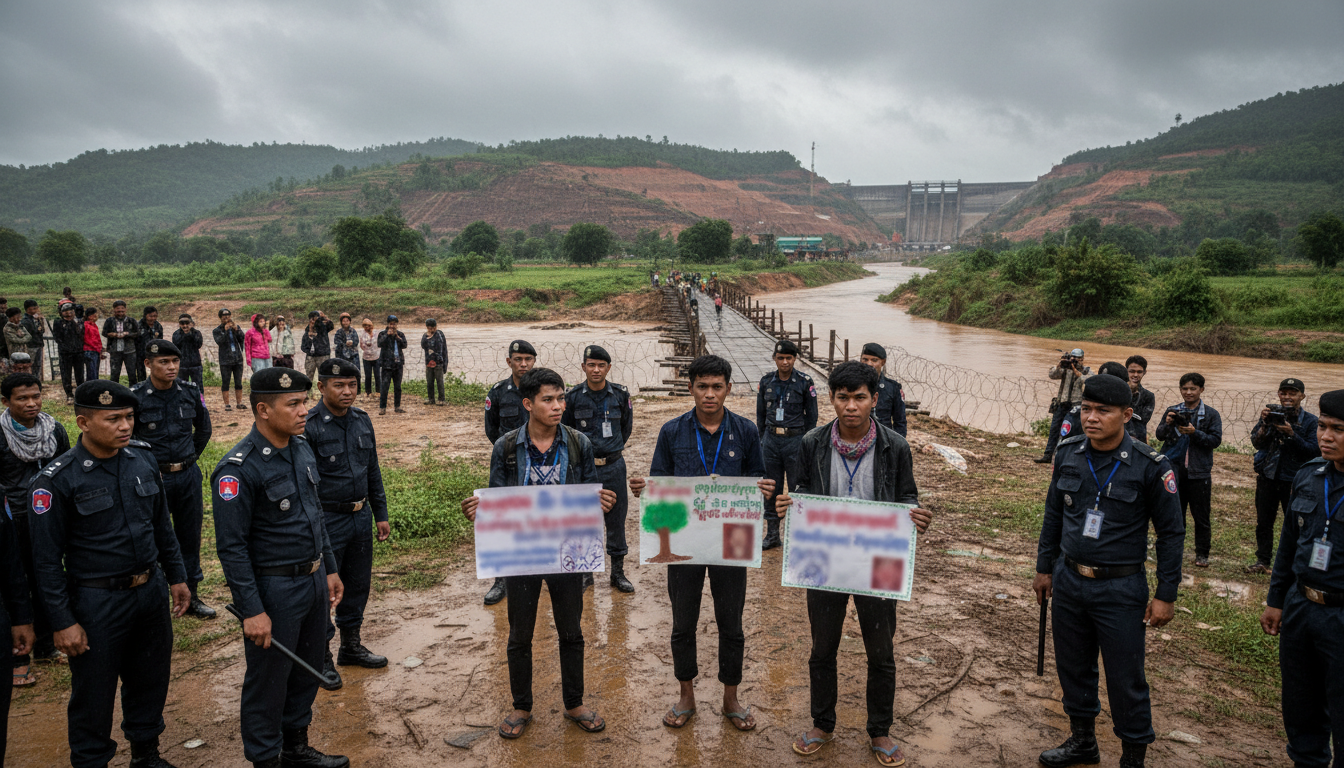
The Cambodian government’s public defense of its continued imprisonment of five environmental activists, despite a clear United Nations Working Group on Arbitrary Detention declaration that their detention is arbitrary, represents a structural hardening of state power over civil society. The activists, affiliated with Mother Nature Cambodia, have been serving sentences ranging from six to eight years since 2024 for alleged plotting against the government. This posture, detailed in a 16-page UN opinion published in February, indicates a broader regional challenge that extends beyond internal Cambodian affairs.
Historically, such international admonitions, particularly from UN bodies, could exert a degree of diplomatic pressure, influencing state behavior through reputational costs or conditional aid. However, Phnom Penh’s response suggests a reduced sensitivity to these mechanisms, indicating a recalibration of strategic priorities. This shift redefines the constraints on domestic governance and, by extension, the regional balance of influence.
The timing of this defiance is notable. In May 2026, Thai and Cambodian leaders committed to seeking peace after a rare meeting, a development reported by Reuters. This diplomatic overture followed significant border tensions, including fighting in 2025 and Cambodia’s Prime Minister accusing Thailand of occupying territory after a Trump-brokered ceasefire in February 2026. Thailand, in July 2026, continued with its border fence construction following 2025 clashes. These events demonstrate a fragile and often contentious bilateral relationship, where internal Cambodian stability and its government's approach to dissent can directly impact regional dynamics.
When a government, such as Cambodia’s, demonstrates impunity in the face of international legal opinions regarding human rights, it establishes a precedent. This precedent signals to other regional actors, and potentially domestic groups, the limits of external intervention and the perceived strength of state sovereignty over international norms. For Thailand, directly bordering Cambodia and entangled in recurring border disputes, this signals a neighbor less inclined to compromise under international scrutiny. The implications extend to regional security frameworks, which depend on a degree of adherence to shared principles and predictable state behavior.
This structural realignment elevates the importance of bilateral negotiations and non-traditional security issues. While leaders speak of peace, the underlying mechanisms for achieving it are undermined by divergent interpretations of international obligations and domestic rights. The Cambodian government’s stance suggests that calls for release, even from a UN body, are deemed less consequential than asserting internal authority. This strengthens the hand of the state and diminishes the leverage of external actors advocating for human rights.
The challenge for regional stability is now twofold: first, how to manage a government increasingly impervious to international human rights criticism; and second, how this emboldened domestic posture translates into foreign policy and regional cooperation, particularly with states like Thailand. The unresolved constraint lies in the lack of a clear, unified regional mechanism that can effectively bridge the gap between national sovereignty claims and universally accepted human rights standards. The outcome now depends on whether regional powers prioritize a stable, normative order or acquiesce to a fragmented approach where internal actions bear fewer external consequences.
Sources
Newsletter
Pacific Daily
A curated briefing from Thailand, Asia-Pacific and the world.