Bolivia's Mining Law Overhaul: Capital Priorities and Environmental Risk
A proposed modernization of Bolivia's mining regulations reveals a familiar tension between economic demands and environmental commitments, with implications for Asia-Pacific resource governance.
SINGAPORE
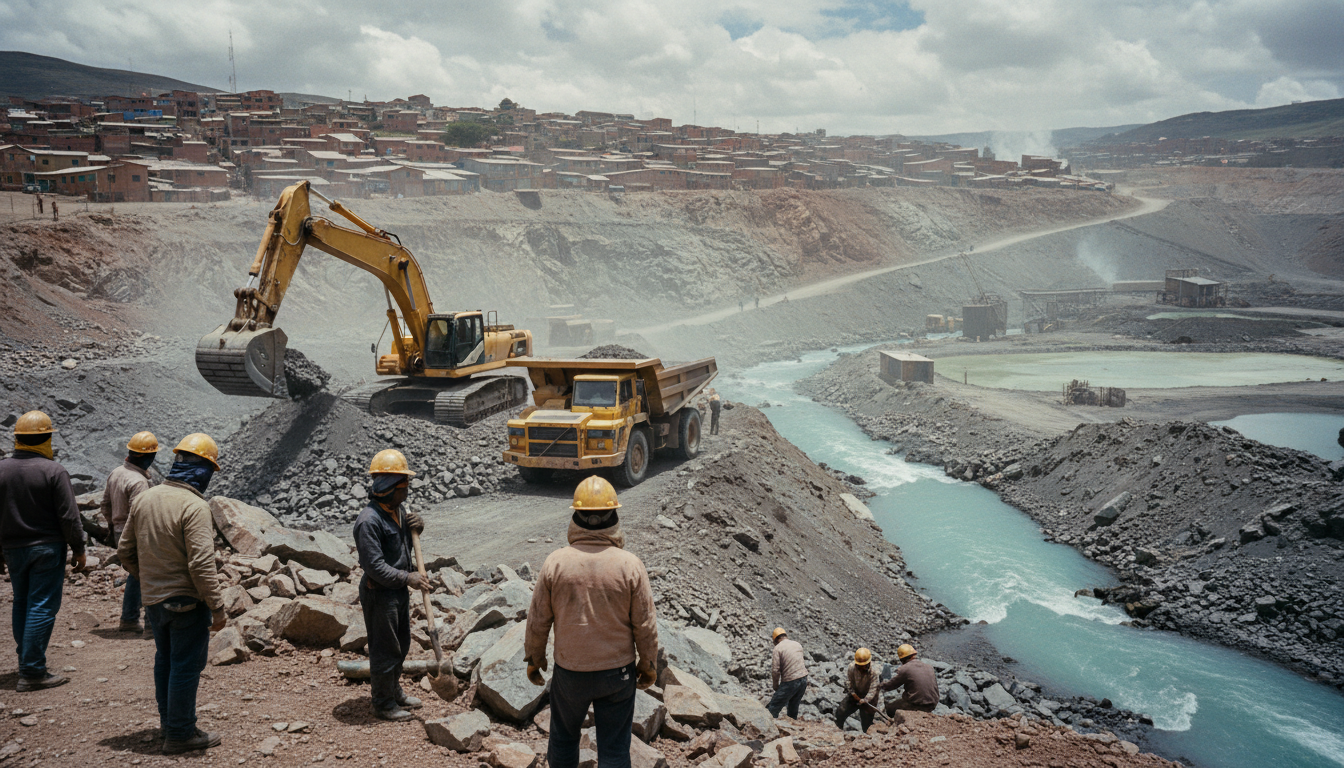
Bolivia has initiated an overhaul of its principal mining laws, with the stated goal of modernizing the industry and improving oversight. This development, reported by Mongabay Asia on September 16, 2026, includes officials asserting that the new code will promote economic development and incorporate environmental protections. Marco Antonio Calderón de la Barca Quintanilla, the minister of mining and metallurgy, stated a desire for a mining code that addresses current sector needs, generates legal certainty, and establishes clear rules to support the development of Bolivian mining. His ministry says it has held weekly meetings with key mining stakeholders concerning their input.
However, civil society and Indigenous groups have raised concerns about this process. This contention is not unique to Bolivia; it mirrors patterns in other resource-rich nations. Bolivia’s economic situation provides context. The nation is experiencing an economic crisis, which has led to increased reliance on China for investment, as reported by The Diplomat. This reliance on external investment raises questions about the transparency of such agreements. The Diplomat has also reported claims that China is withholding details of investment deals from the Bolivian public and Congress. The proposed legal reforms are occurring within this environment of financial dependence and reported opacity.
The stated goal of incorporating environmental protections into the new mining code requires scrutiny. The question, “Does the commitment survive contact with the capital plan?” becomes pertinent. While officials claim environmental safeguards, the pressure for economic development, particularly when linked to foreign capital, can challenge the practical implementation of such provisions. The experience of other developing nations suggests that the pursuit of “modernization” and “legal certainty” in resource sectors frequently prioritizes extraction efficiency over long-term environmental and social costs. Without independent verification of proposed safeguards and clear mechanisms for public accountability, the commitment to environmental protection remains an assertion by an interested party.
For Asia-Pacific nations, many of which balance resource extraction with environmental concerns and external investment, Bolivia's approach serves as a potential case study. The tension between the need for economic growth, often driven by mining, and the imperative of environmental preservation and Indigenous rights, is a familiar challenge. The reported concerns from civil society and Indigenous groups in Bolivia underscore the difficulty of achieving genuine sustainability when the process for legal reform lacks broad consensus. The minister's stated intention to respond to sector needs and provide legal certainty, while commercially appealing, does not inherently guarantee robust environmental or social outcomes when external economic pressures are significant and transparency is compromised. The unresolved tension lies in how far economic imperatives will shape environmental and social commitments under the framework of modernization.
Sources
Newsletter
Pacific Daily
A curated briefing from Thailand, Asia-Pacific and the world.