Beyond the Screen: The Intimacy of Australian Drama and Asia's Wider Canvas
While 'Dalliance' offers a specific window into aging friendships, the broader question remains: What narratives truly connect across the Pacific?
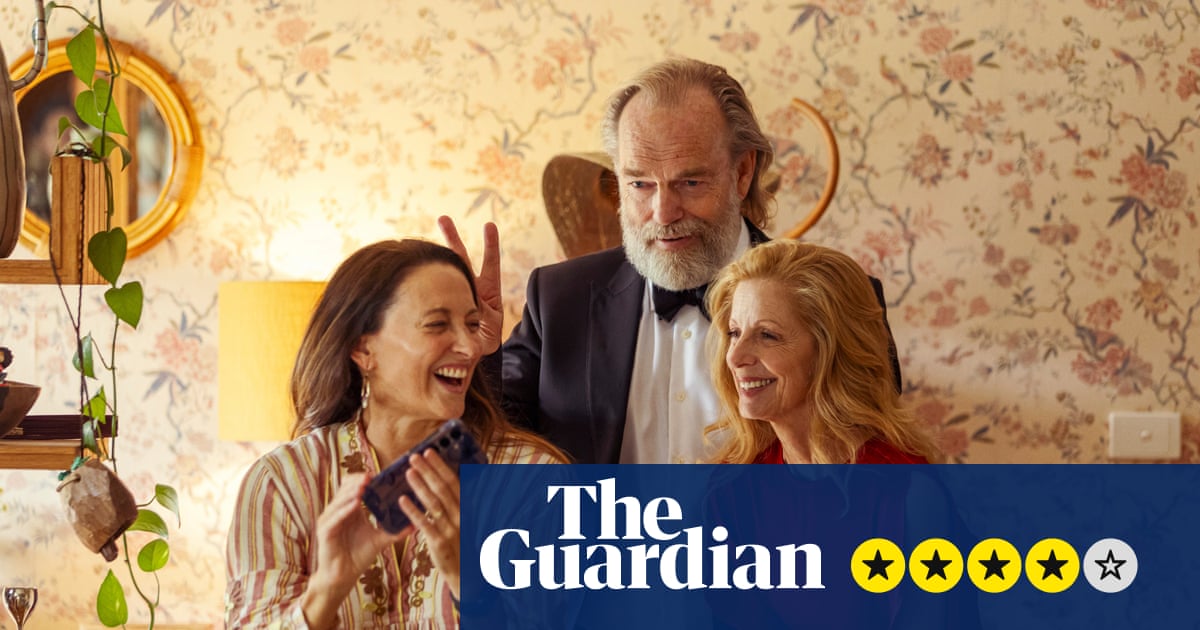
A photograph from a recent review of 'Dalliance' captures three figures – Georgie Parker, Hugo Weaving, and Heather Mitchell – in character, suggesting a shared moment of irreverence and honesty. This Australian series, described as a drama about old friends in their 60s, is noted for its beautiful writing, presenting a "feast of hilarity and heartbreak". Lucy Mangan, reviewing for Guardian Australia Culture on 2026-08-27, positioned the show as an example of television's "brave expeditions into unknown narrative lands," particularly citing its portrayal of women's stories following the post-Weinstein era.
The series itself, "Dalliance," a term referring to a casual romantic or sexual relationship, or a playful action, takes on new meaning when applied to a drama focused on enduring friendships. While the title might evoke fleeting encounters, the Guardian's review of this specific production underscores a different kind of human connection: sustained, complex, and deeply felt. The presence of Hugo Weaving, an actor whose work has spanned diverse roles, lends a specific weight to the ensemble.
This kind of intimate, character-driven storytelling from Australia raises a question for a broader Asia-Pacific audience. What does this narrative of aging, friendship, and introspection ask of those who encounter it from a distance? The review's assertion that there "needs to be more TV like it" suggests a perceived vacuum for such nuanced drama. Yet, the appeal of a "rare drama so beautifully written" may resonate differently across varied cultural landscapes, where storytelling traditions and audience expectations diverge.
Consider the historical context of media consumption. While Hollywood productions like 'Cloud Atlas' (2012) faced scrutiny for casting choices that affected representation, and even a film celebrating a pacifist like 'Hacksaw Ridge' (2016) garnered widespread attention, these are global-scale productions. A localized Australian drama, even with its critical acclaim, presents a distinct proposition. It invites viewers into a particular social milieu, with its own specific rhythms and implicit understandings.
The Guardian also championed 'The Beast in Me' (2025) as "instant top-tier TV," indicating a consistent appetite for high-quality dramatic offerings. This suggests a pattern of critical endorsement for productions that delve into complex human experiences. However, the success of such series in, for instance, Thailand or Vietnam, where narrative conventions and viewing habits are shaped by different histories and local productions, is not guaranteed. While shared human experiences of aging and friendship are universal, their cultural expression and narrative framing can create barriers or bridges.
It is possible that the specific appeal of 'Dalliance' lies in its particular blend of "hilarity and heartbreak" within an Australian context, rather than a universal template. The challenge for content creators and distributors throughout the Asia-Pacific region is to discern whether the universal threads of human experience can outweigh the cultural specificities. A television series that delves into the nuanced world of friendships in their 60s might offer a compelling mirror, or it might remain a reflection of a different shore, appreciated for its craft but distinct in its resonance.
Sources
Newsletter
Pacific Daily
A curated briefing from Thailand, Asia-Pacific and the world.