Bedazzling Trend Signals Structural Shift in Youth Consumption
The widespread adoption of 'whimsy-maxxing' suggests evolving patterns beyond mere aesthetics in Asia-Pacific markets.
BANGKOK
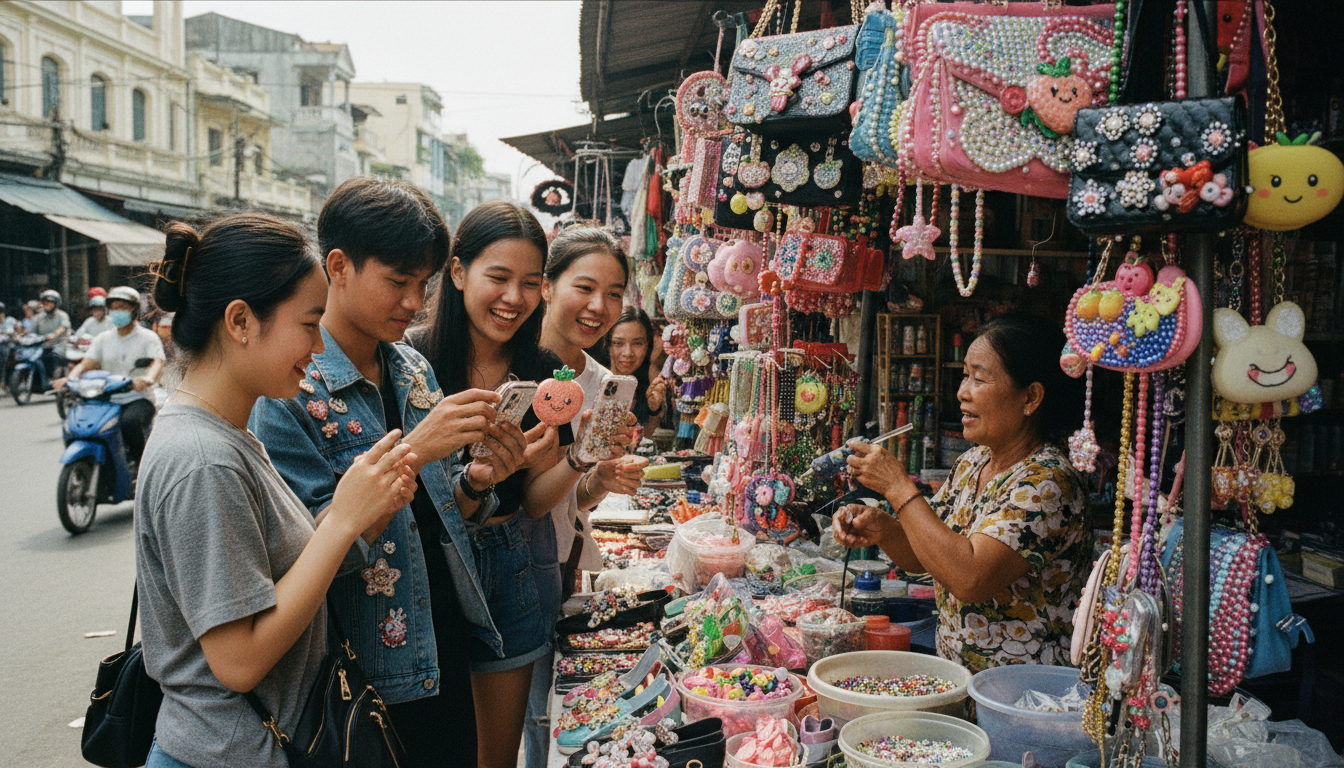
The internet's newest obsession with 'whimsy-maxxing,' as reported by Bangkok Post Life on August 26, 2026, involves decorating items with rhinestones, crystals, or gems. This practice, termed 'bedazzling,' extends beyond traditional fashion and craft, encompassing everyday objects. The rapid embrace of this trend by younger demographics indicates a structural shift in consumption priorities and economic behavior.
Historically, consumer trends in the Asia-Pacific region have often mirrored global fashion cycles, albeit with local adaptations. The current phenomenon, however, suggests a departure where personalization and visible, albeit superficial, enhancement supersede conventional markers of value. This 'whimsy-maxxing' is not merely an aesthetic choice; it reflects a broader inclination towards immediate, accessible forms of self-expression and distinction. This could imply a reallocation of discretionary spending towards low-cost, high-visibility customization rather than larger, more durable purchases.
One potential implication for regional economies, particularly those reliant on manufacturing and retail, is a pivot towards niche markets for embellishment supplies and services. The earlier instance of 'bedazzled nails,' as noted in the report, serves as a precedent for how micro-trends can gain significant traction. This could foster new entrepreneurial opportunities in materials supply, design services, and localized customization hubs, particularly within urban centers across Thailand and neighboring countries. Businesses traditionally focused on mass-produced goods may need to consider integrating customization options or face eroding market share among younger consumers.
However, it is also plausible that this trend represents a cyclical return to decorative fads rather than a fundamental economic realignment. Consumer behavior often includes short-lived interests, particularly those amplified by internet culture. The perceived value of 'bedazzled' items could be ephemeral, leading to rapid obsolescence and limited long-term impact on manufacturing or retail infrastructure. Furthermore, the term 'whimsy-maxxing' itself suggests a pursuit of novelty that might lack enduring structural implications, remaining confined to a niche segment of the youth market.
Despite this counterargument, the structural implication of readily available, low-cost means of personal expression is significant. If this 'whimsy-maxxing' trend persists or evolves into other forms of accessible customization, it indicates a generation prioritizing immediate, personal aesthetic control over traditional status symbols. The decision power shifts from established brands dictating style to individual consumers curating their immediate environment with minimal capital outlay. The constraint that remains unresolved is how established industries will adapt to this fragmented, highly personalized demand structure without compromising economies of scale.
Sources
Newsletter
Pacific Daily
A curated briefing from Thailand, Asia-Pacific and the world.