Bangkok's Independent Studios Are Turning Thai Craft Into a Design Export
From shophouse workshops to Bangkok Design Week, a generation of Thai designers is pairing village craft with contemporary form, and global buyers are noticing.
BANGKOK
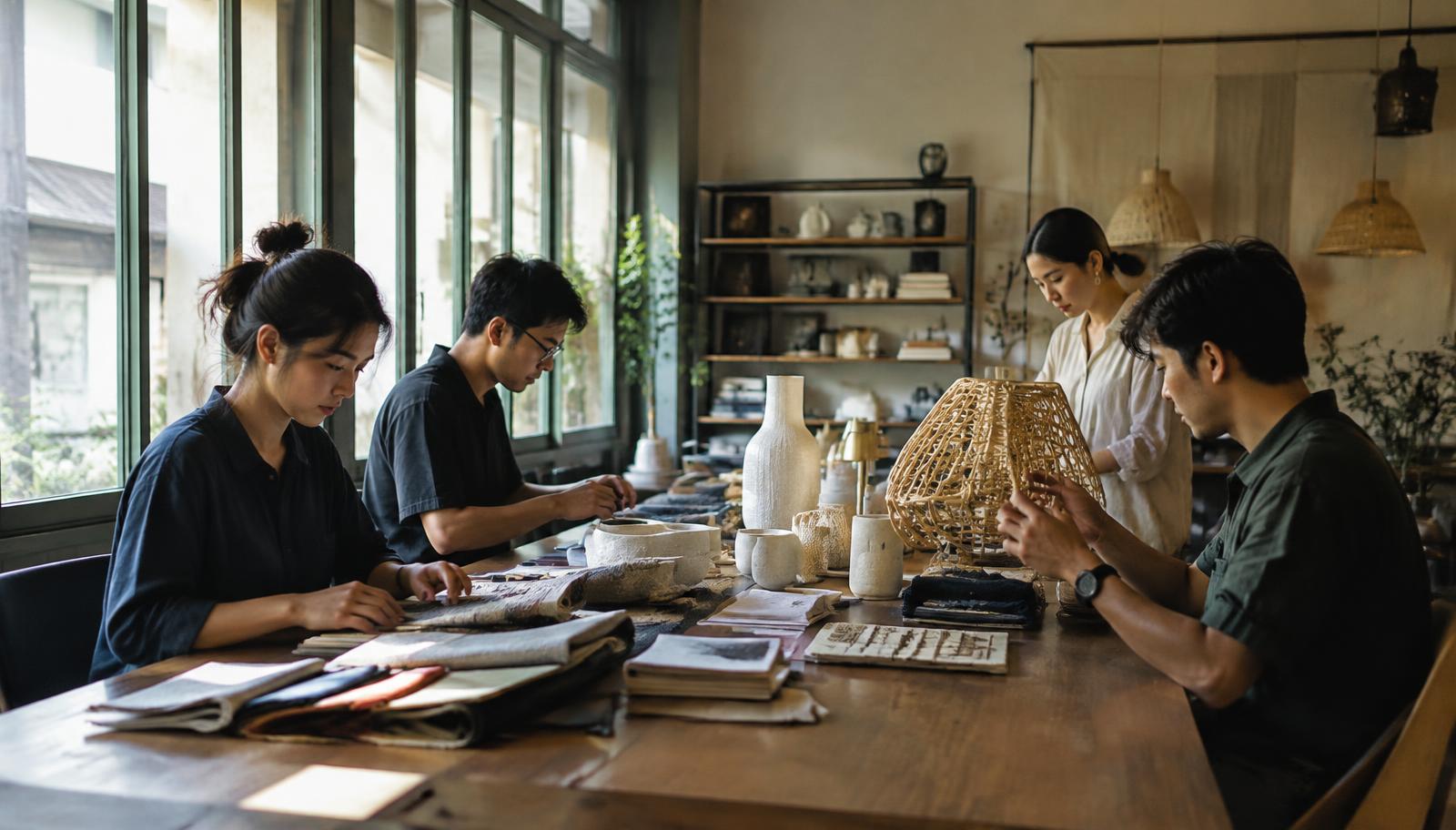
BANGKOK — Inside a converted shophouse near the Chao Phraya, a small team spreads indigo cloth, woven rattan and unglazed ceramic samples across a long teak table. The studio employs fewer than a dozen people, yet its lamps and tableware are sold in boutiques from Tokyo to Copenhagen. It is part of a quiet shift in Thailand's creative economy: independent studios are turning traditional craft into contemporary design for export.
Thailand has always had craft depth. Northern provinces are known for weaving and lacquerware, the northeast for silk and mudmee dyeing, the central plains for basketry and ceramics. What has changed is the way younger designers work with those skills. Instead of copying traditional forms for souvenir shops, they collaborate directly with village artisans to develop new objects that suit modern homes, hotels and restaurants.
Public support has helped. The Creative Economy Agency organises Bangkok Design Week each year, turning neighbourhoods such as Charoen Krung and Talat Noi into open studios and exhibition routes. The festival has become a showcase for local talent and a meeting point for international buyers and hospitality groups looking for authentic materials.
Hospitality as a launch pad
The hotel boom across Thailand and Southeast Asia has given designers a steady client base. Luxury resorts and boutique hotels increasingly want interiors that speak of place rather than generic international style. Woven headboards, hand-thrown ceramics and natural-dye textiles from Thai studios have found their way into properties in Bangkok, Phuket, Bali and beyond.
That commercial link matters. It gives artisans more regular orders, helps studios plan production and builds a portfolio that opens doors abroad. Several Thai brands now exhibit at international fairs in Milan, Paris and Singapore, presenting themselves as contemporary design houses rather than craft suppliers.
The hard part: scale and fairness
Growth brings tension. Handmade production does not scale easily, and artisans can be squeezed when orders grow faster than prices. Responsible studios publish the names of partner communities, pay fixed rates and invest in training, but practices vary. Intellectual property is another concern, as successful designs are quickly copied by mass manufacturers.
Sustainability is both an opportunity and a test. Natural fibres, local clay and plant dyes carry a smaller footprint than imported synthetic materials, and buyers are willing to pay for that story. The story must be true, however, and increasingly buyers ask for documentation of materials and labour.
The best of Bangkok's new studios suggest a different idea of Thai design: not exotic decoration, but serious contemporary work rooted in specific places and hands. If the sector can grow while keeping artisans at the centre, it could become one of the country's most distinctive exports.
Sources
Newsletter
Pacific Daily
A curated briefing from Thailand, Asia-Pacific and the world.