AI in Asia's Tourism: The Operational Limits of 'Higher-Value' Growth
Singapore's strategy to attract affluent travelers through AI faces inherent physical and human capital constraints, indicating a broader regional challenge.
SINGAPORE
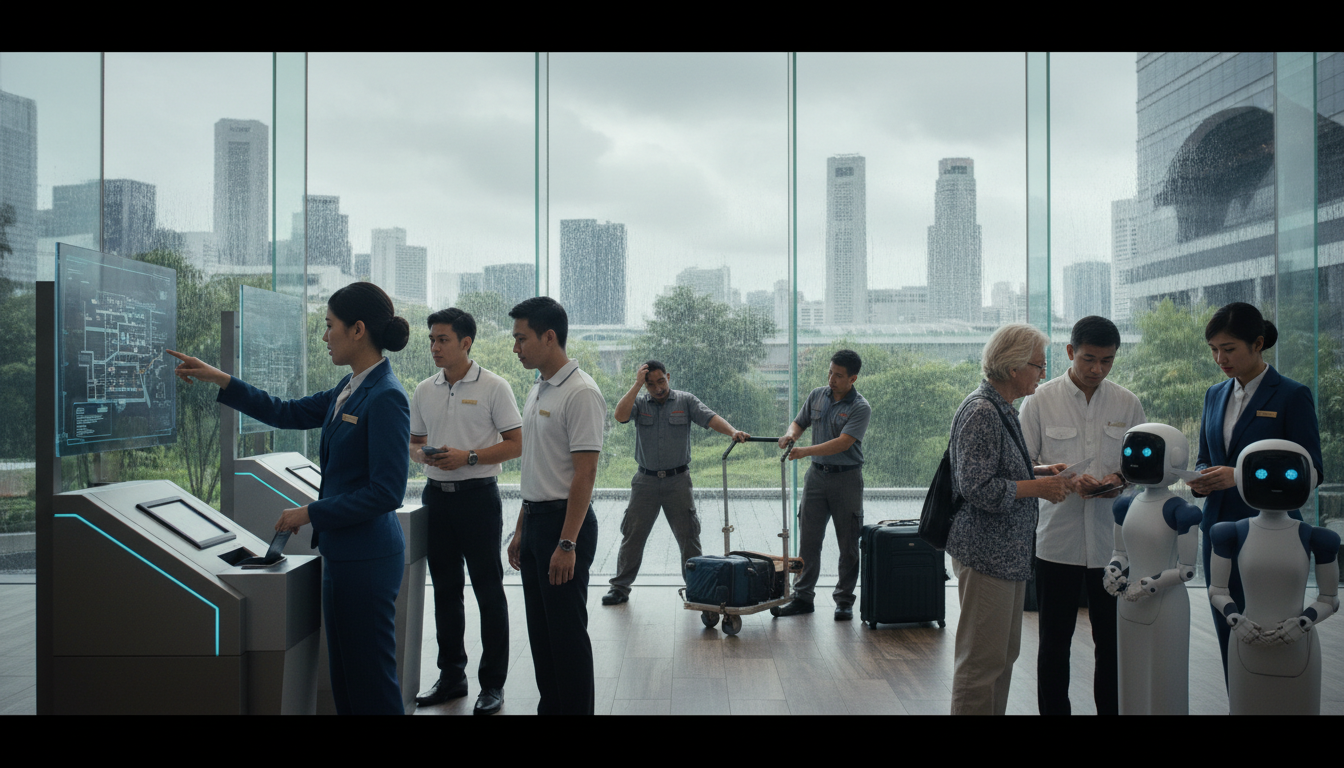
Edmund Ong, general manager of Trip.com Singapore, states that data and artificial intelligence (AI) can help Singapore attract 'higher-value travellers,' support tourism businesses, and manage visitor growth, as reported by TTG Asia on September 25, 2026. This assertion frames a key operational question for the Asia-Pacific region: how to increase economic returns from tourism without overstretching existing infrastructure and service capabilities. The International Air Transport Association (IATA) expects air passenger traffic to grow by 2.1 per cent in 2026, which indicates sustained demand. However, converting this demand into sustainable, high-value growth for local businesses involves navigating complex operational limitations.
The strategy of attracting 'higher-value travellers' through AI rests on the technology's ability to identify and target specific visitor segments. Travelers are using AI for trip planning, although issues like 'hallucinations' and trust gaps persist, as reported by CNBC on March 11, 2026. For a destination, this means employing AI to discern spending habits and preferences, then refining promotional efforts. Singapore has been focused on using AI to bolster its tourism sector since at least 2020, according to CNBC. The intended outcome is an increase in spending per visitor, which theoretically reduces the total number of tourists needed to meet financial targets, thereby alleviating pressure on physical and human resources.
However, this approach introduces its own set of operational demands. While per-visitor spending may rise, fundamental capacity limitations—including hotel rooms, transport networks, skilled labor, and critical infrastructure—remain fixed. An increase in 'higher-value travellers' does not necessarily translate to a decrease in overall visitor numbers. The critical question for any operation is which component will fail first under maximum load. Singapore's 2026 growth outlook has been boosted by AI investment, as reported by VnExpress International. However, growth within the AI sector does not directly expand the physical capacity for tourism or create a readily available workforce capable of delivering the personalized services often expected by 'higher-value' guests. A DBS report, cited by Nikkei Asia, warns of uneven growth across ASEAN in the AI era, suggesting that while some areas might benefit, others could face difficulties with technology adoption and integration.
The counterargument posits that AI-driven efficiencies could mitigate some capacity constraints. If AI can optimize resource allocation—for example, by predicting peak demand for attractions or streamlining airport processes—it might enable existing infrastructure to handle more traffic effectively. Yet, such efficiency gains have inherent limits. The physical capacity of airports, road systems, and popular sites is finite. Furthermore, delivering a 'higher-value' experience often requires more bespoke, labor-intensive service. This demand could strain the workforce, a concern already recognized in discussions about Singapore's 'longevity economy' and healthcare costs, as reported by The Straits Times on July 25, 2026.
Ultimately, relying on AI to draw a more profitable tourist segment may delay, but not resolve, the core challenge of managing visitor volume within finite operational boundaries. The outcome now depends on whether the projected revenue increase can finance the necessary expansion or enhancement of physical and human capital, or if it simply leads to a higher-yield operation that remains fundamentally strained.
Sources
Newsletter
Pacific Daily
A curated briefing from Thailand, Asia-Pacific and the world.