The Springbok Reliance on Proven Power Reveals a Familiar Structural Hesitation
Recalling Eben Etzebeth for Dublin exposes how elite international rugby still retreats to veteran physical capital when structural pressure mounts
SINGAPORE
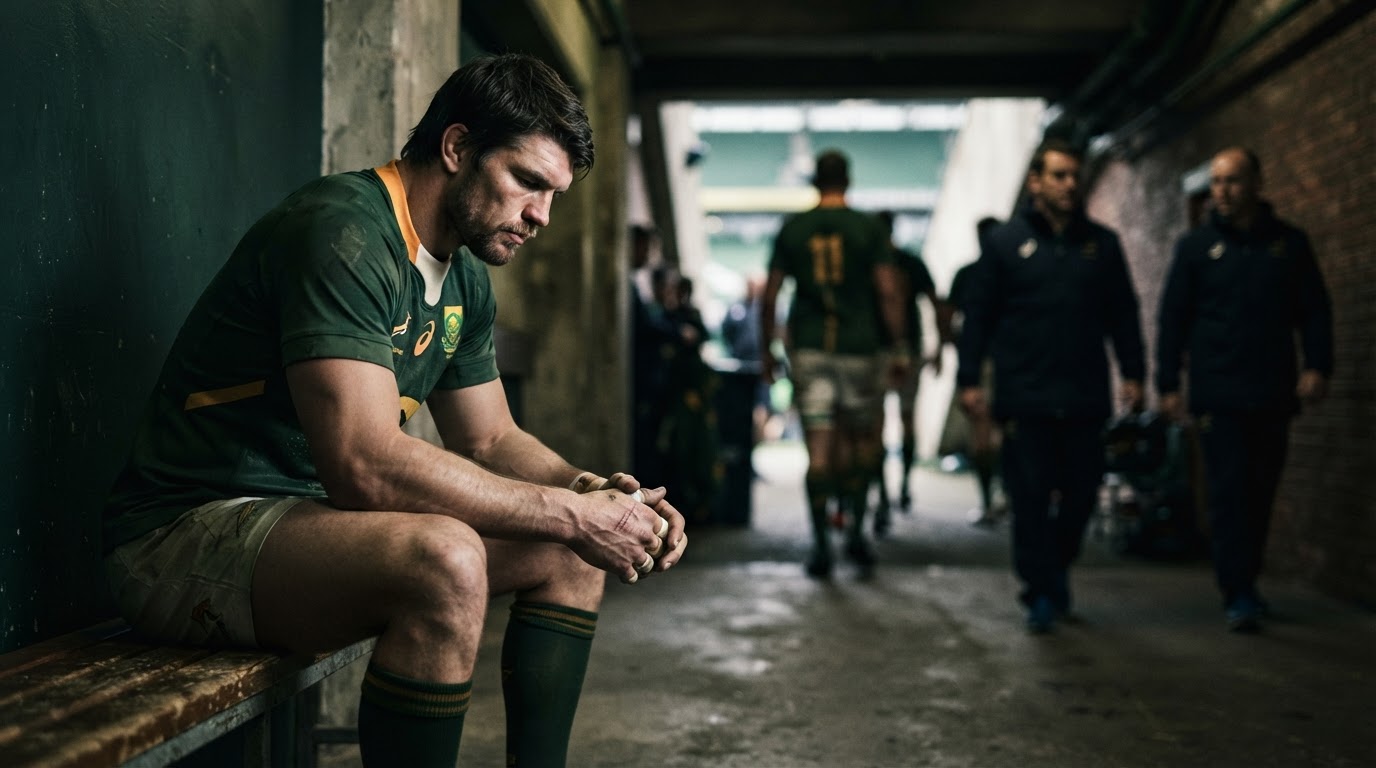
Elite international sport operates under a perpetual double bind: squads must aggressively develop next-generation talent while remaining structurally terrified of absorbing consecutive defeats. Following a loss to France in Paris, South Africa responded by making five changes to their starting fifteen ahead of their Nations Championship fixture against Ireland in Dublin on Saturday. Central to that recalibration is the return of Eben Etzebeth, who is set to extend his national record to 148 caps. The decision demonstrates how quickly tactical renewal yields to historical dependability the moment competitive margins narrow.
On the surface, this reshuffle looks like routine squad rotation driven by tactical necessity and disciplinary fallout. Jasper Wiese faces a possible suspension after receiving a red card against the French, creating an opening for Cameron Hanekom at number eight. Alongside changes in the front row involving props Ox Nche and Wilco, Etzebeth steps back into the second row to partner Ruan Nortje. Yet beneath these administrative adjustments lies an enduring operational reflex. Rather than absorbing the Paris setback as an invitation to accelerate succession in the tight five, the Springbok management opted to deploy their most tested physical asset.
The Gravity of Defensive Capital
Experience in rugby union is frequently treated as an unalloyed virtue, especially when facing Ireland on their home ground. Etzebeth represents an established baseline of technical control and set-piece attrition that younger combinations cannot instantly replicate. Partnering him with Nortje does offer a blend of longevity and fresh development, but the strategic calculation remains defensive. In championship test matches, coaching structures routinely conclude that the cost of tactical experimentation outweighs the long-term benefit of blooding unproven combinations under severe duress.
The tactical calculation remains defensive, choosing established set-piece attrition over the volatility of unproven combinations.
There is, of course, a pragmatic counterargument that cannot be dismissed lightly. Test matches between top-tier nations are not developmental workshops. Defeat in Paris stripped away the luxury of experimentation, and facing Ireland in Dublin without maximum forward stability carries immediate reputational and tournament costs. The inclusion of Hanekom demonstrates that new personnel are being introduced where absences dictate, and pairing Nortje with an established centurion can theoretically shield developing players from disproportionate tactical exposure.
Limits of Strategic Reversion
What this posture avoids addressing is the compounding fragility created by perpetual reliance on senior figures. Each time a squad defaults to historical stalwarts to steady the ship after a loss, the institutional clock is paused rather than advanced. The Nations Championship format intensifies this friction by raising the stakes of every cross-hemisphere encounter, leaving little institutional appetite for transitional volatility.
South Africa arrive in Dublin with a proven enforcer anchoring their forward pack and their physical standards firmly reasserted. Whether that tactical reversion secures a result against Ireland is almost secondary to the institutional habit it reflects: when modern rugby confronts operational uncertainty, it consistently bets on the past.
Sources
Newsletter
Pacific Daily
A curated briefing from Thailand, Asia-Pacific and the world.