The South Pacific Weather Calendar Ceases to Insulate
Broadcast alerts extending into April 2027 point to an operational gap between early warning and local fiscal capacity.
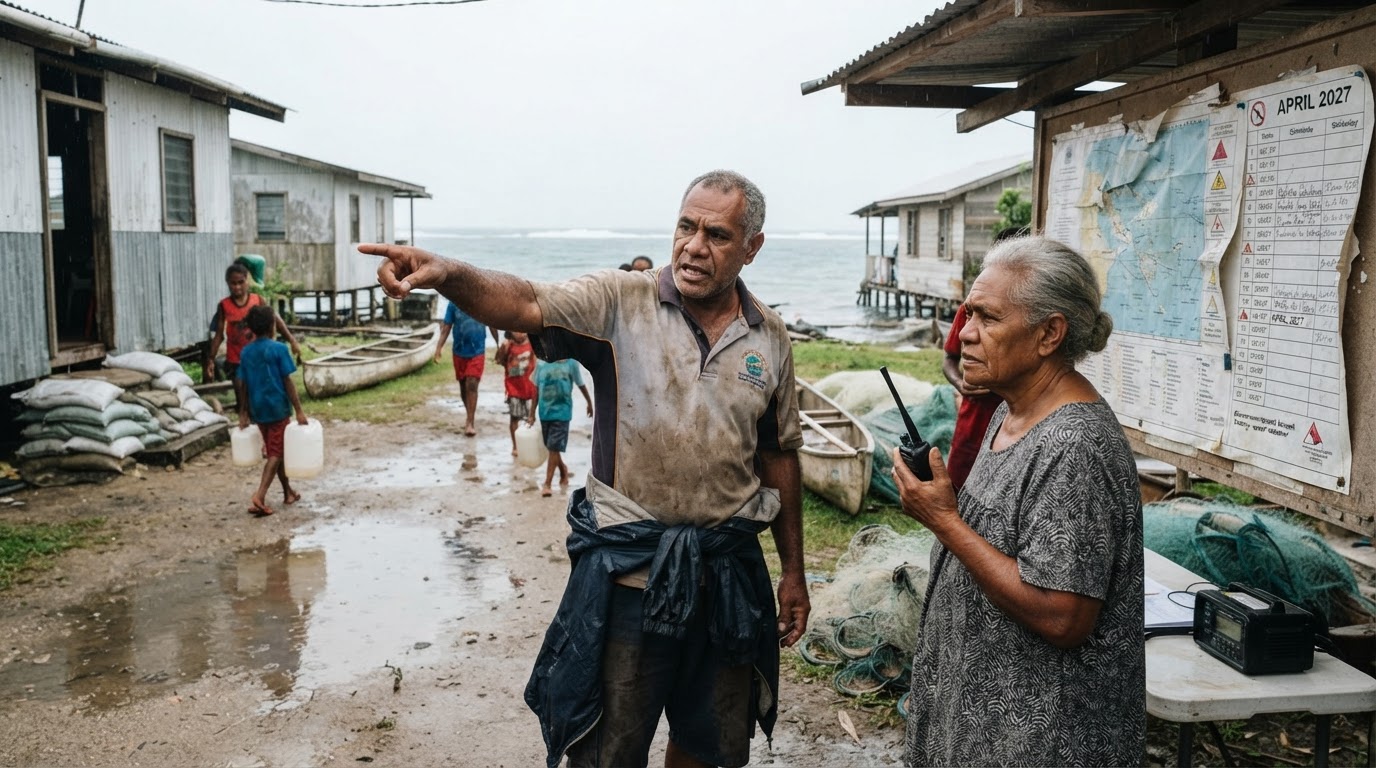
Administrative governance across the South Pacific relies on a calendar boundary that physical reality is steadily eroding. Officially, the regional cyclone season begins 1 November and extends through the end of April 2027. That timeline has historically dictated when emergency services stand up operations and when maritime transport routes alter their schedules. Yet meteorological activity increasingly ignores the calendar, leaving public administrations caught between rigid budget cycles and unscripted oceanic volatility.
For decades, island administrations treated the non-cyclone months as an operational reset window. Governments used that seasonal lull to complete civil repairs and replenish municipal reserves before another storm cycle arrived. That clear administrative rhythm separating crisis from recovery has broken down. When storms form outside statutory periods, institutional planning defaults to emergency improvisation, accelerating the financial wear on fragile public balance sheets.
Divergent Costs Across Island Economies
Consider how out-of-season weather fractures capacity differently across distinct island systems. When Tropical Cyclone Wati struck parts of the Cook Islands group outside the conventional season, the storm exhausted domestic emergency allocations that were intended for routine public administration. In Fiji, the disruption arrives through institutional paralysis, demonstrated when Tropical Cyclone Vaianu forced widespread school closures and halted inter-island transit. Further west, when tropical depression development alerted Vanuatu and Fiji ahead of Cyclone Urmil, or when TC Maila reached Category 2 status over open waters, regional authorities faced immediate logistical demands before any seasonal recovery had consolidated.
This cyclical pressure will only intensify over the coming months. Earth Sciences New Zealand is predicting elevated cyclone activity for parts of the Pacific during this operating window. The institutional burden of interpreting this hazard falls largely on metropolitan facilities in New Zealand, where Meteorological Services analyze storm paths and where RNZ Pacific operates its Cyclone Watch Service. That broadcast lifeline provides essential situational awareness for Pacific nations and territories. Yet the financial cost of acting on those broadcasts remains entirely domestic, paid for by island governments that possess no sovereign bond markets to backstop emergency spending.
The Institutional Limits of Information
A prevailing view among regional technocrats suggests that modern alerting infrastructure compensates for shifting seasonal bounds. Proponents argue that high-precision telemetry and regional broadcast networks grant civil protection services adequate lead time to evacuate exposed shorelines and secure maritime vessels. According to this reasoning, superior communication neutralizes the surprise factor of an early storm or a delayed seasonal departure.
Broadcast alerts cannot substitute for the fiscal reserves required to rebuild damaged infrastructure.
That argument confuses information transmission with physical resilience. Knowing a Category 2 storm is approaching does not reinforce an exposed harbor wall or replenish an already depleted national contingency reserve. While the Cyclone Watch Service provides early warning across maritime borders, it cannot bridge the structural divergence between metropolitan analytical capacity in New Zealand and the shallow capital reserves of sovereign Pacific neighbors. The unresolved dilemma across the Pacific is not whether meteorological risk can be tracked, but whether local public finances can survive an alert system that never truly turns off.
Sources
Newsletter
Pacific Daily
A curated briefing from Thailand, Asia-Pacific and the world.