The Restless Needle
Global garment production shifts between workshops across Asia, exposing how quickly industrial stability displaces human labor
SINGAPORE
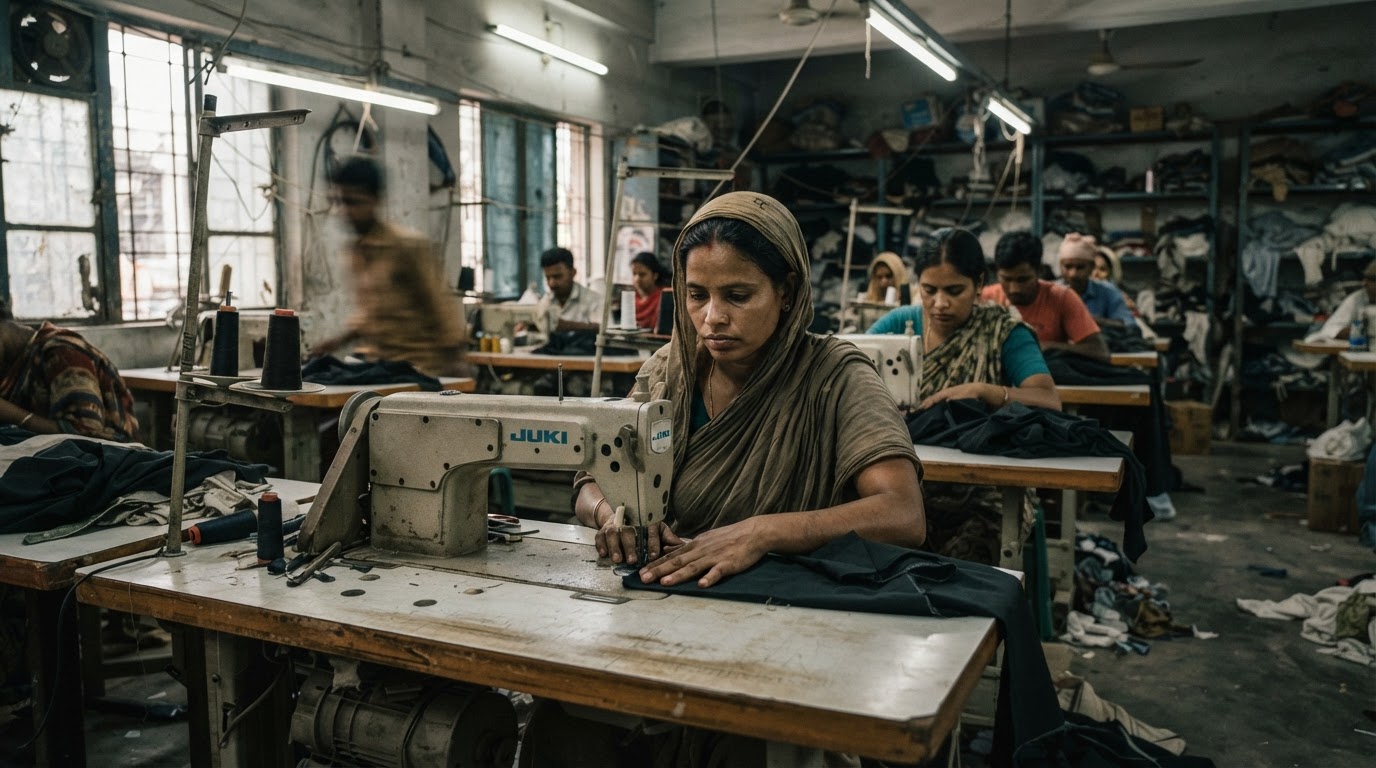
Industrial apparel assembly relies on an unspoken pact between cost, predictable schedules, and disciplined factory gates. When civil turbulence disrupted garment production in Bangladesh, with riot police confronting protesting workers on Nov 18, 2026, international retail buyers demonstrated a familiar instinct for swift relocation. Global retail corporations, including Zara, H&M, and Marks & Spencer, redirected purchase orders to assembly lines across India, Vietnam, and Cambodia, as local factory proprietors informed Reuters.
This immediate outward movement reveals how modern garment manufacturing functions across borders. The underlying mechanisms of apparel commerce preserve capital and inventory velocity while treating national industrial workforces as interchangeable staging grounds. Decades ago, garment manufacturing settled into concentrated urban belts where available labor and export infrastructure offered predictable production margins. That stability has increasingly unraveled under the pressures of wage disputes and civic grievance, prompting international buyers to sever contractual ties when deliveries face disruption.
The Geography of Transfer
Apparel contracts move across national boundaries with minimal friction. Unlike capital-intensive heavy industries that tie equipment to specific river basins or mineral deposits, the cutting and sewing trade requires primarily fabric, power grids, and rows of sewing machines. When production faltered in Bangladesh, the immediate beneficiaries emerged elsewhere. India absorbed fresh orders, while secondary allocations moved toward workshops in Vietnam and Cambodia, according to factory managers.
This reallocation illustrates the persistent fragility within low-margin manufacturing. When corporate purchasing offices encounter local instability, procurement teams rarely pause deliveries or await domestic social settlements. They transfer manufacturing manifests to alternative contractors who possess surplus floor capacity. What factory managers perceive as an unexpected windfall in one country represents a sudden contraction of industrial payrolls in another, transferring human vulnerability without altering the system that demands rapid turnarounds.
Shifting Borders and Borrowed Security
Regional supply systems remain structurally intertwined through this competitive vulnerability. Factory operators who welcome displaced contracts operate under the identical calculus that drove apparel brands away from Bangladesh. The migration of contracts to facilities in India offers immediate volume, yet that volume rests on a precarious foundation. If operating margins tighten or street disruptions appear in these alternative destinations, corporate buyers will execute the same defensive rerouting toward whichever market promises calmer operations.
Textile manufacture was once regarded as an initial rung toward sustained industrialization and national wealth creation. Across the region, it functions increasingly as an itinerant industry, moving between production centers whenever civic friction threatens seasonal shipping calendars. As long as retail logistics prioritize uninterrupted supply over structural stability, the needle will continue to wander, binding disparate national workforces together only in their shared insecurity.
Sources
Newsletter
Pacific Daily
A curated briefing from Thailand, Asia-Pacific and the world.