The Porous Commons of Seasonal Retail
A lethal confrontation in northern California exposes the vulnerability of spaces built for rapid commerce rather than civic defense
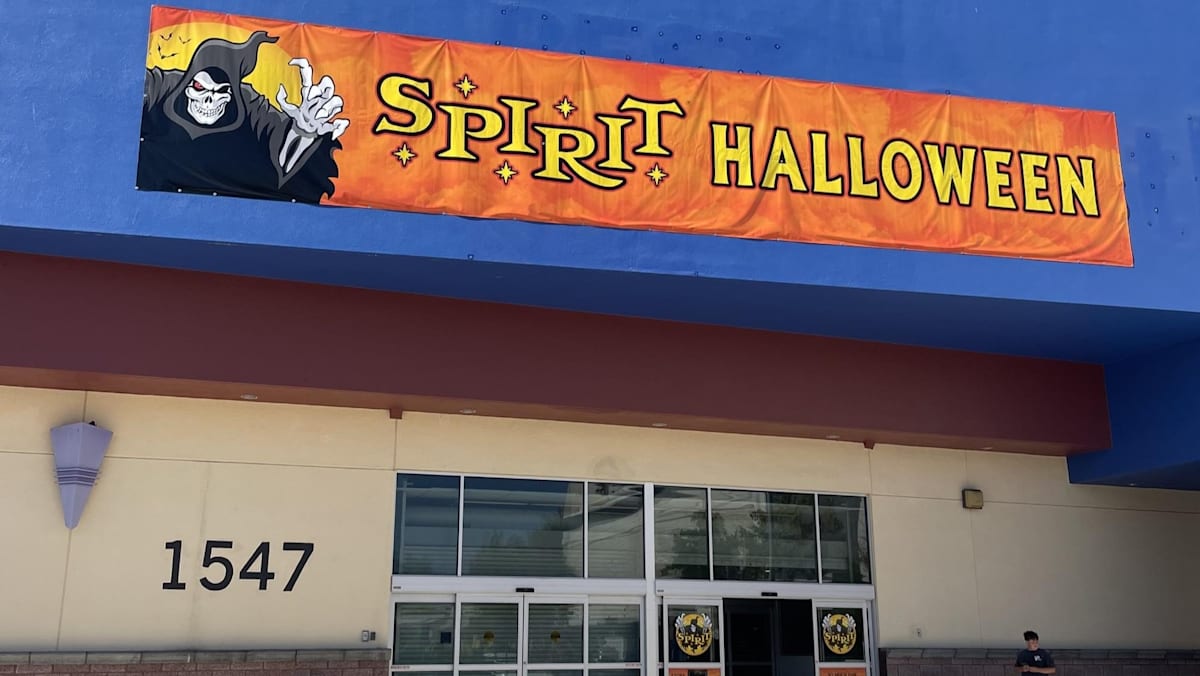
Seasonal commerce operates on an assumption of absolute disposability, yet it requires the uninterrupted stability of a public square to function at all. That structural contradiction became impossible to ignore on Friday night in northern California, where gunfire killed one person and wounded six others inside a temporary retail outlet. The attack occurred shortly before 8.30pm at a Spirit Halloween store operating inside a shopping mall in Fairfield, roughly 76 kilometres northeast of San Francisco. In an establishment assembled rapidly to sell paper masks and synthetic costumes hours before the United States marked Halloween on Saturday, lethal violence punctured the routine of suburban consumption.
Fairfield Police Chief Dan Marshall confirmed the toll, reporting that one victim died and six others were transported to hospitals with gunshot injuries. The perpetrator remained unidentified as investigators began processing the mall floor. Marshall described the initial operational reality facing his officers with clinical precision.
There is still a very active crime scene and investigation going on right now,
Marshall said as law enforcement cordoned off the perimeter.
The Friction of Exported Rituals
Commentary surrounding such episodes typically retreats into familiar domestic categories, debating response times or private patrol density. What observers routinely step around is a more uncomfortable reality: modern commercial developments have largely replaced municipal commons, yet they possess none of the institutional resilience of traditional civic space. A pop-up shop inside a regional mall is engineered for transient foot traffic and frictionless entry. It contains no defensive depth, no physical perimeter, and no capacity to manage acute social volatility. The model assumes an ambient baseline of civilian peace, even while operating in an environment where that baseline repeatedly dissolves.
For audiences across the Asia-Pacific, the episode provides a revealing contrast. Late October retail traditions have been exported aggressively across the Pacific Rim, adopted by shopping districts from Tokyo to Bangkok as lighthearted exercises in seasonal marketing. Asian commercial operators eagerly license the festive aesthetics of American holiday merchandising, yet their domestic environments remain structurally insulated from sudden firearm violence. The spectacle of consumer leisure circulates globally with ease, but the fragile domestic conditions beneath its country of origin cannot be packaged away.
Institutional Defenses and Public Erosion
defenders of commercial property protocols argue that shopping complexes maintain private security coordination and surveillance systems adequate for predictable municipal risks. From this perspective, an unsolved shooting inside an open retail corridor constitutes an extraordinary tactical breach rather than a systemic institutional failure. Commercial landlords cannot reasonably transform temporary holiday storefronts into fortified installations without extinguishing the very commercial accessibility that keeps retail properties viable.
That argument possesses mechanical coherence, but it misjudges how public trust actually erodes. Civilian gatherings do not depend on the theoretical diligence of mall management; they depend on an implicit confidence that ordinary spaces remain safe for assembly. When gunfire occurs within a store dedicated to holiday novelties, the event reveals how thin the boundary between festive escapism and acute mortal hazard has become. International trading partners and regional observers view these recurring episodes not as tactical anomalies, but as evidence of a domestic landscape where basic physical security within routine commercial corridors remains permanently negotiable.
Fairfield investigators will eventually conclude their forensic accounting of the shopping mall floor. The deeper unresolved friction, however, belongs to the retail environment itself, where the requirement of open commercial access remains fundamentally at odds with the physical vulnerability it quietly creates.
Sources
Newsletter
Pacific Daily
A curated briefing from Thailand, Asia-Pacific and the world.