The Legal Status Paradox Inside American Enforcement
Fatalities among documented non-citizens reveal how administrative detention erodes the formal boundaries of legal residency.
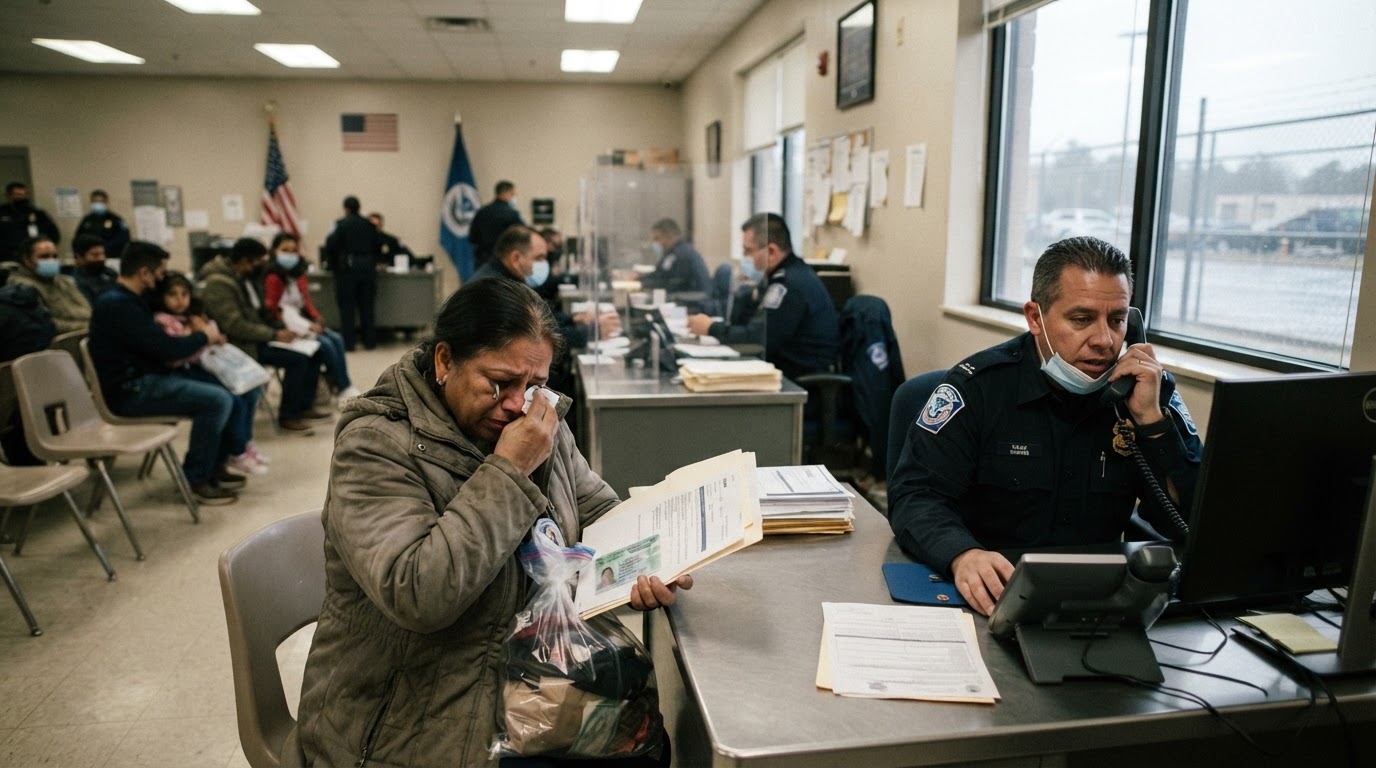
Immigration systems rely on an administrative fiction: that the state maintains an absolute boundary between documented status and illicit presence. That boundary dissolved in Laredo, Texas, with the death of Emiliano Andrade-Covarrubias at the Rio Grande Processing Center. A Dallas resident of decades, the 56-year-old had lived in the United States as a lawful permanent resident, holding the green card that federal statutes equate with secure status. His death marks the 18th Mexican national to die in American immigration custody or during enforcement operations since January 20, 2025.
Public discourse around detention routinely assumes that holding facilities serve merely as temporary waystations for contested arrivals. Yet the record across 2025 and 2026 demonstrates that the detention apparatus operates with total indifference to historical permanence. When holding facilities absorb long-term residents alongside recent border arrivals, the operational machinery applies the same custodial defaults to both. Andrade-Covarrubias was not evading authorities or awaiting initial identity verification. He was an established resident whose legal paperwork offered zero protection against custodial breakdown once absorbed into administrative confinement.
According to his daughter, personnel at the Laredo facility withheld his daily medications for heart disease, diabetes, and blood pressure. She stated that center staff ignored him when he subsequently reported chest tightness and acute breathing distress. The Webb County Medical Examiner is conducting an autopsy, and authorities have released no formal cause of death. Even so, the trajectory mirrors a recognized pattern across federal detention sites, where basic clinical management fractures under rigid containment rules.
The Friction of Bilateral Accountability
Diplomatic resistance from Mexico has steadily mounted across 2026. Mexico moved to file criminal complaints over custody deaths in July 2026, months after demanding formal answers following another migrant death in ICE custody in March. Official counts confirm that 15 Mexican nationals have died in custody alongside three fatalities during enforcement operations since January 2025. Commentary from Travis Bembenek highlights how these deaths force an uncomfortable reckoning over custodial standards within the American detention regime. Bilateral tension accelerates as formal complaints directly challenge conditions inside detention centers.
Advocates of expansive detention powers argue that administrative holding facilities require uniform procedures to maintain order across large populations. From an operational viewpoint, processing centers cannot function as bespoke medical facilities; they manage high-turnover caseloads under strict mandates where standardized security routines supersede personal accommodations. Under this institutional logic, medical intake systems follow centralized protocols designed to prevent contraband flow, handling individual health claims through rigid bureaucratic steps rather than immediate concessions to family appeals.
That institutional logic collapses when custodial routines systematically fail basic clinical oversight. A procedural apparatus that equates medical delivery with administrative friction produces preventable mortality. When 15 Mexican nationals die in detention and three during enforcement operations in less than two years, the outcome ceases to be an isolated failure. It reflects an operational architecture that treats civil detention as punitive containment.
For regional observers tracking migration agreements and labor mobility across the Pacific Rim, the Laredo fatality illustrates a fundamental governance lesson. Institutional capacity deteriorates rapidly when enforcement agencies operate with diminished external scrutiny. Formal legal rights mean little if the physical bureaucracy holding an individual cannot administer prescribed heart medication or respond to physical distress. Long-term resident status was designed to offer predictability and civic integration; inside the detention center, it provided neither protection nor distinction from arbitrary operational neglect.
Sources
Newsletter
Pacific Daily
A curated briefing from Thailand, Asia-Pacific and the world.