The Corporate Aesthetics of Regional Design Accolades
Consumer appliance manufacturers lean on international competitions to project domestic authority across Asian retail networks.
SINGAPORE
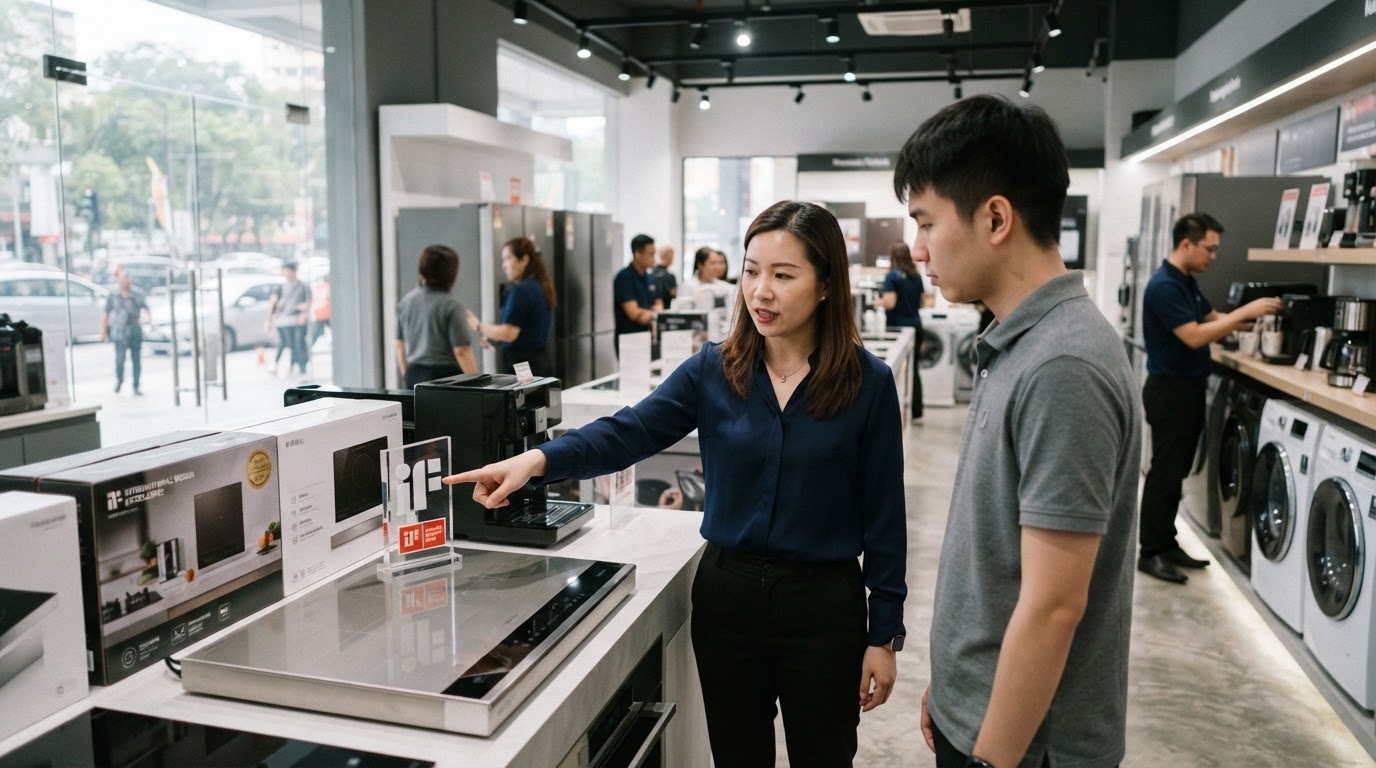
Domestic hardware across regional households historically secured market standing through mechanical endurance rather than aesthetic presentation. For decades, consumer equipment providers prioritised functional longevity and basic servicing networks over decorative refinement. That commercial baseline has shifted as manufacturers seek visual distinction to escape commoditised pricing. When Coway announced multiple honours at the 2026 Good Design Award, corporate communications framed the outcome as evidence of design prowess across its entire portfolio. Such pronouncements highlight how aesthetic credentials have been elevated from peripheral marketing assets into core instruments of corporate positioning.
Accolade systems have steadily expanded their institutional footprint across Asia-Pacific commerce. From real estate recognition schemes evaluating commercial developments like The Henderson in Hong Kong to programs such as the Asia Pacific Interior Design Awards, external commendations serve as portable credentials. Manufacturers deploy these badges across multiple territories to bridge jurisdictions where retail environments and regulatory requirements vary substantially. An award secured under an established international framework provides a standardised reputational currency, reducing the friction of local brand introduction across borders where consumer familiarity is uneven.
Commercial Validation Across Borders
Hardware manufacturers face distinct consumer expectations depending on local economic conditions. Dense metropolitan centres evaluate domestic appliances primarily through spatial efficiency, where quiet operation and slender cabinet profiles dictate purchasing decisions. In expanding consumer markets, by contrast, household equipment often functions as a conspicuous statement of domestic modernisation and middle-class stability. The corporate claim that an entire catalogue displays comprehensive aesthetic pre-eminence targets both consumer environments simultaneously. It offers established urban buyers reassurance regarding formal discretion while equipping showroom dealers in growth markets with an authoritative external seal.
Corporate publicity frequently portrays competition victories as objective proof of technological and artistic pre-eminence. Proponents argue that independent judging panels perform a valuable vetting function, filtering out clumsy ergonomics and ensuring adherence to contemporary manufacturing standards. Yet institutional prize cycles operate within commercial relationships that serve participants and organisers alike. Convening bodies gain operational revenue, international visibility, and industry deference, while participating corporations secure trademarked endorsements that mitigate buyer doubt. Presenting an award sweep across a full catalogue constructs an operational narrative aimed at defending elevated price points amid intense retail rivalry.
Institutional accolades function less as definitive aesthetic audits than as portable instruments of retail diplomacy.
The Friction of Material Delivery
Relying on exterior styling creates structural vulnerabilities for manufacturers dependent on ongoing customer subscriptions and maintenance contracts. When a brand anchors its premium identity in sculptural casings and refined surfaces, customer expectations extend automatically to operational upkeep, filter availability, and technician reliability. An appliance buyer persuaded by design credentials expects mechanical performance to match external finish. Where routine maintenance falters or component replacements experience delays, aesthetic distinction cannot prevent consumer alienation.
Manufacturing enterprises across China already produce comparable exterior hardware at lower capital costs, commoditising refined industrial finishes across mass-market retail channels. Replicating modern silhouettes and neutral casing tones has become standard manufacturing practice, eroding the defensive value of physical form alone. Sustainable market defence requires responsive service infrastructure, reliable inventory logistics, and durable engineering. External accolades provide corporate offices with persuasive material for promotional campaigns, yet they leave unresolved the demanding operational mechanics required to sustain household utility across varied regional markets.
Sources
Newsletter
Pacific Daily
A curated briefing from Thailand, Asia-Pacific and the world.