Managerial Insulation and the Governance Shadow at Manchester City
Enzo Maresca separates dressing-room form from administrative scrutiny, but elite sport rarely isolates off-pitch legal pressures so cleanly.
SINGAPORE
Elite football management relies on a deliberate division between operational performance and corporate jeopardy. A manager's task is to treat tactical execution as an insulated discipline, detached from boardroom hearings, commission calendars, and institutional liabilities. Yet professional squads operate inside the commercial apparatus that funds them, meaning regulatory peril inevitably bleeds into sporting reality.
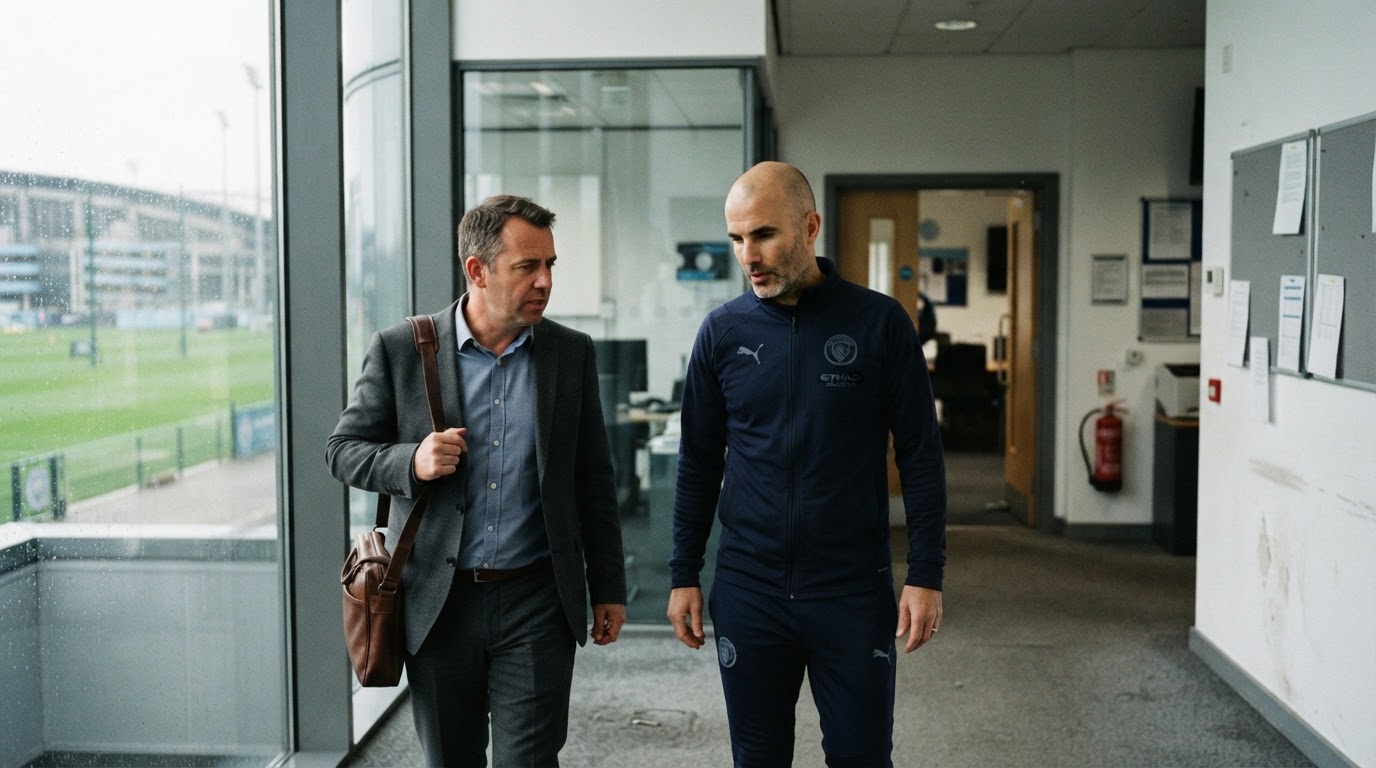
Manchester City manager Enzo Maresca made that conventional separation explicit ahead of Saturday's match against Fulham. City opened their campaign with seven successive league victories, establishing early dominance before absorbing three consecutive league defeats prior to the international break. The reversal leaves the side third in the table, six points behind Arsenal, following an away trip to Germany where they faced RB Leipzig at Red Bull Arena on November 4. Addressing questions regarding whether institutional uncertainty has unsettled his squad, Maresca rejected any connection between the slump and external regulatory proceedings.
I don't think the players are thinking too much about that,
Maresca noted, framing the dip purely as a competitive oscillation rather than the product of corporate distraction.
The Friction of Regulatory Scrutiny
That managerial response is standard across modern sport, yet it overlooks how administrative investigations alter working conditions. The Premier League case involving financial rules, reviewed by an independent commission in September regarding longstanding compliance questions often catalogued across figures such as 114 and 115 distinct inquiries, creates an inescapable institutional atmosphere. High-performance teams rely on certainty regarding future competition, contract security, and reputational standing. Denying that unresolved sanctions affect a squad asks observers to believe professional athletes exist entirely outside the organisation that employs them.
Maresca's position is not without merit. Footballers are accustomed to weekly volatility, public criticism, and high pressure; tactical failure on a given weekend frequently stems from mundane variables such as fatigue, pressing fatigue, or opposing tactical adjustments rather than legal briefs. Attributing three consecutive defeats directly to an administrative process risks constructing an unfalsifiable narrative that excuses tactical shortfall.
Performance Under Institutional Strain
Still, the broader governance context cannot be erased by managerial discipline alone. The Premier League operates as a global commercial spectacle, commanding dedicated audiences across the Asia-Pacific region where supporters consume club football as both entertainment and brand loyalty. Institutional integrity underpins that commercial appeal. When an elite institution faces potential disciplinary measures over historical rule compliance, the sporting product inevitably reflects the tension. Maresca can control team selection, defensive structure, and match preparation against Fulham, but his authority stops at the perimeter of the regulatory apparatus. The unresolved question is whether a squad can maintain sustained sporting supremacy while the institution around it defends its fundamental operating record.
Sources
Newsletter
Pacific Daily
A curated briefing from Thailand, Asia-Pacific and the world.