Maduro Capture and the Limits of Enforced Transition
Maria Corina Machado attributes Venezuelan political opening to unilateral American intervention, establishing an uncomfortable precedent for sovereign governance.
SINGAPORE
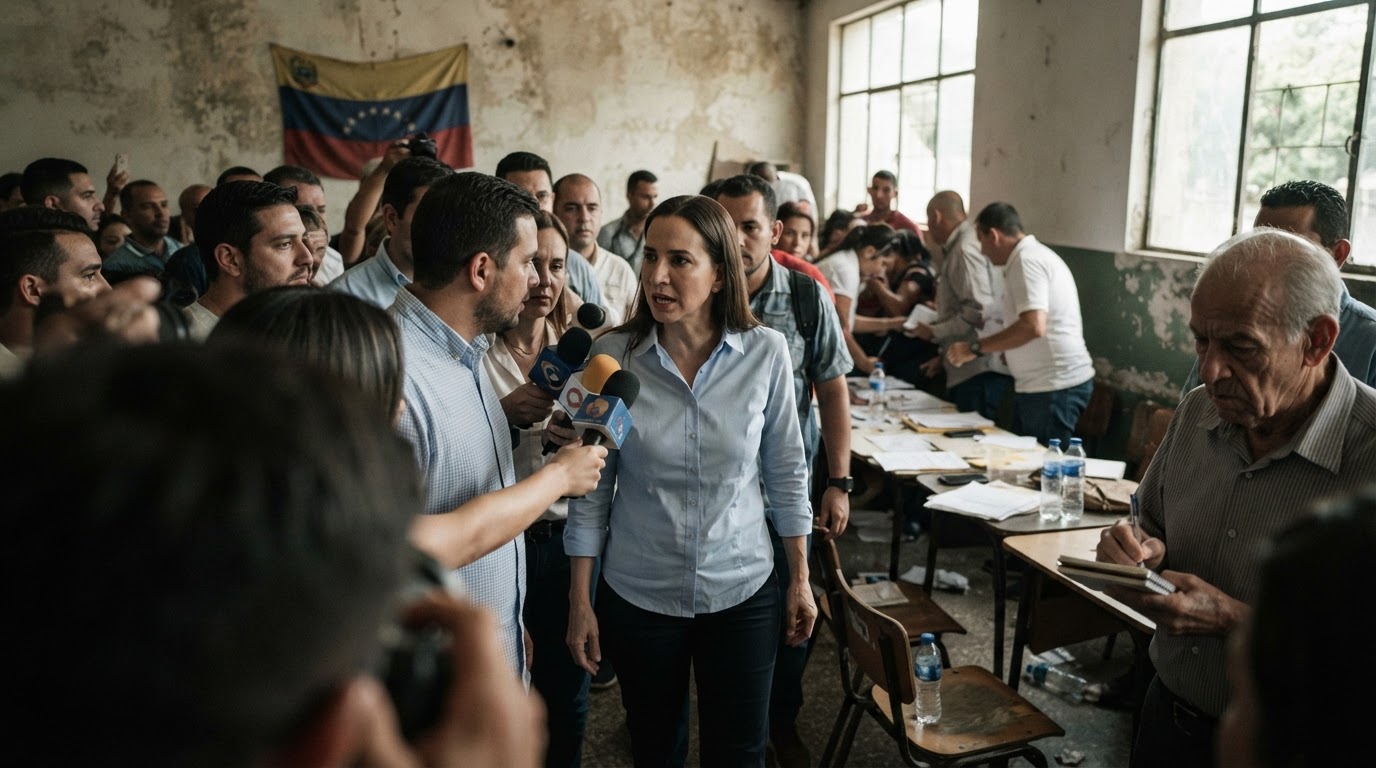
Direct executive removal of an incumbent foreign leader alters the fundamental operating assumptions of sovereign diplomacy. Venezuelan opposition figure Maria Corina Machado arrived in Caracas on Sunday, Oct 25, 2026, ending ten months in exile before addressing a press conference on Thursday, Oct 29. Her appearance marked an abrupt shift in domestic circumstance. Machado, a Nobel Peace Prize laureate, directed explicit gratitude toward the administration of US President Donald Trump. Her remarks framed the operation of January 3, in which the United States captured president Nicolas Maduro, as the decisive catalyst for systemic change.
Political rhetoric aside, the structural question rests on capability rather than gratitude. Machado stated her position with unmistakable clarity during the Caracas appearance:
"Thanks to their vision, their courage, and their action on January 3, the floodgate to freedom has been opened," — Machado
Attributing the opening of national political space entirely to external military intervention reveals an acute institutional fragility. The physical seizure of Maduro demonstrated that Washington retains both the intelligence capacity and operational readiness to detain a sovereign head of state. Yet decapitating a state apparatus does not dismantle the patronage networks, military apparatus, or legal structures that sustained that government over successive decades.
External Power and Sovereign Precedent
Across the wider Asia-Pacific diplomatic corridor, unilateral enforcement of this nature commands urgent scrutiny. Strategic planners do not interpret the Venezuelan episode as an isolated Latin American settlement. Instead, governments view the January 3 capture as proof that executive vulnerability can be enforced externally when great-power priorities align with decisive punitive action. Washington demonstrates that targeted disruption has superseded gradual sanctions regimes or negotiated electoral pacts.
Sovereign security models historically depended on domestic enforcement to insulate state leaders from foreign legal action. That insulation failed entirely in Caracas. For non-aligned capitals monitoring US strategic doctrine, the spectacle of an opposition leader returning under the umbrella of American extra-territorial detention carries double-edged implications. It indicates that diplomatic stalemate can be severed by kinetic force, but it simultaneously establishes that national sovereignty offers no guaranteed perimeter against foreign operations.
Regional observers also note the broader diplomatic counter-moves emerging alongside American unilateralism. High-level engagements involving global leaders, including diplomatic proposals surrounding Russia, China, and the United States, reflect an international environment where bilateral leverage repeatedly bypasses multilateral consensus. When unilateral force succeeds in displacing a head of state, multilateral treaties and sovereign guarantees lose their deterrent utility.
The Limits of Unilateral Enforcement
Transition managed through foreign intervention confronts an immediate legitimacy deficit. Machado now operates inside Venezuela, yet her political authority must navigate the residual infrastructure left behind by Maduro. While the Trump administration exercised operational superiority in January, external force cannot author domestic institutional consensus. Dislodging an individual president does not create administrative order, nor does it resolve territorial governance.
Sustained governance requires administrative continuity, broad civic buy-in, and the managed reintegration of entrenched security elements. An external raid solves an operational objective, but it leaves domestic political actors indebted to foreign sponsors. If Venezuelan stability depends on continued enforcement from Washington, the resulting administration remains structurally dependent rather than independently sovereign.
Decapitation operations change political personnel, not systemic incentives. The fundamental tension exposed by the Caracas press conference is that foreign arrest operations can dismantle an executive without securing the institutional machinery required to sustain a state.
Sources
Newsletter
Pacific Daily
A curated briefing from Thailand, Asia-Pacific and the world.