Archival Reissues Expose the Fragility of Controlled Scarcity
Early retail appearances of Nike's Los Angeles tribute reveal how vintage catalogue recycling tests distribution discipline across the Pacific Rim
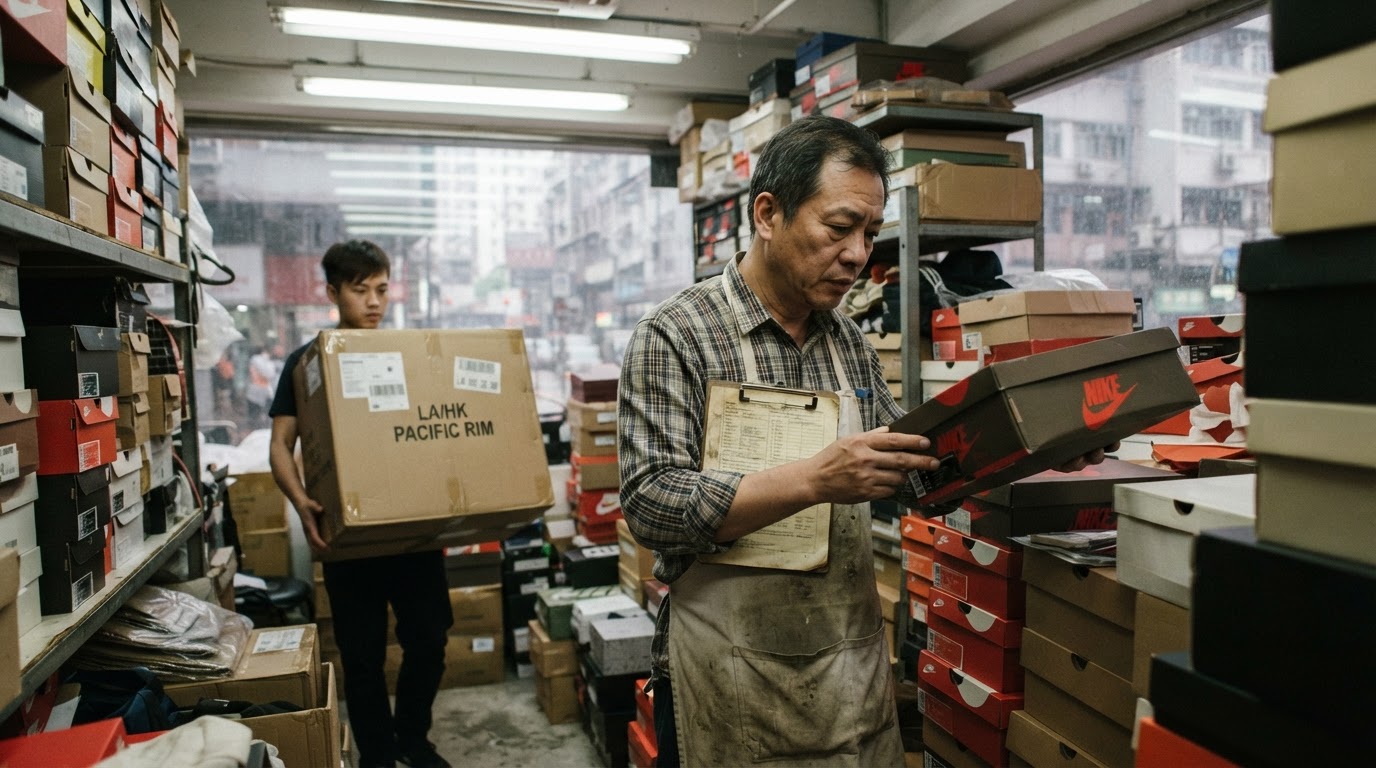
Nike has built decades of tier-one footwear demand on the mechanics of synchronized release dates. When a designated footwear model leaks onto shop shelves ahead of its corporate calendar, the disruption is rarely an accident of logistics. More often, it exposes the operational friction between corporate inventory management and merchant incentives. The impending return of the Nike Air Force 1 Low Premium What the L.A., scheduled for an official November arrival seven years after its 2019 debut, is already appearing early across select stockists. This premature shelf placement demonstrates the limits of enforced retail discipline in an era dominated by catalogue fatigue.
Manufactured scarcity requires absolute control over timing. If select independent doors choose to disregard an agreed November rollout, the underlying commercial bargain has weakened. Wholesale accounts carry the immediate risk of dead stock if secondary interest cools, creating an incentive to liquidate inventory before broader market saturation occurs. The 2019 original pair arrived alongside a What the N.Y. companion model, anchoring demand to municipal sporting tribalism. Reviving that specific White, Black, and Hyper Jade mismatched template seven years later relies on the assumption that regional nostalgia remains liquid. Yet by hitting retail floors before the central marketing campaign initiates, the product enters circulation stripped of corporate choreography.
The Mechanics of Catalogue Recycling
Reissuing specialized stock from 2019 represents a standard balance-sheet strategy: re-monetize legacy intellectual property with negligible research expenditure. The mismatched panels, integrating disparate Los Angeles-inspired references across left and right shoes, previously commanded collector interest because access was artificially constrained. When that same silhouette returns to market shelves, the premise of distinctiveness faces immediate scrutiny.
Premature shelf placement demonstrates the limits of enforced retail discipline in an era dominated by catalogue fatigue.
Secondary buyers across Pacific-Rim trading hubs monitor these early releases closely. Regional sneaker boutiques in Tokyo, Seoul, and Bangkok operate in direct dialogue with American inventory channels, often importing release anomalies to capture localized arbitrage margins. When wholesale accounts break release embargoes, they flatten the price structure that global brand divisions spend months assembling. The customer who encounters the shoe on a shelf in late October receives an entirely different commercial signal than one participating in an orchestrated November launch.
Shifting Merchant Incentives
Independent vendors balance brand compliance against working capital. Holding designated crates until an arbitrary global date costs floor space and ties up credit facilities. The decision by select retailers to start selling early reflects a pragmatic calculation: capture the immediate liquidity of eager foot traffic rather than gamble on the brand's coordinated digital traffic. For regional stockists across the Pacific trade corridor, where consumer spending on legacy sports footwear has grown increasingly selective, securing the transaction today outweighs honoring corporate calendaring.
This distribution slippage highlights an unresolved structural tension for sportswear giants. Relying on archival reissues from 2019 provides short-term cash flow, but it chips away at the perceived uniqueness that justifies premium positioning. When mismatched tributes to specific North American sports hubs are deployed to stimulate broader international retail registers, the narrative risks wearing thin. Nike can dictate the composition of White, Black, and Hyper Jade leather, yet it cannot entirely force retail partners to hold back boxes when cash flow takes precedence over ceremonial launch calendars.
Sources
Newsletter
Pacific Daily
A curated briefing from Thailand, Asia-Pacific and the world.