Archival Dressing at Milk Studios Reveals the Limits of Platform Philanthropy
Celebrity charity galas increasingly deploy vintage fashion to project restraint while leaving structural relief questions unexamined
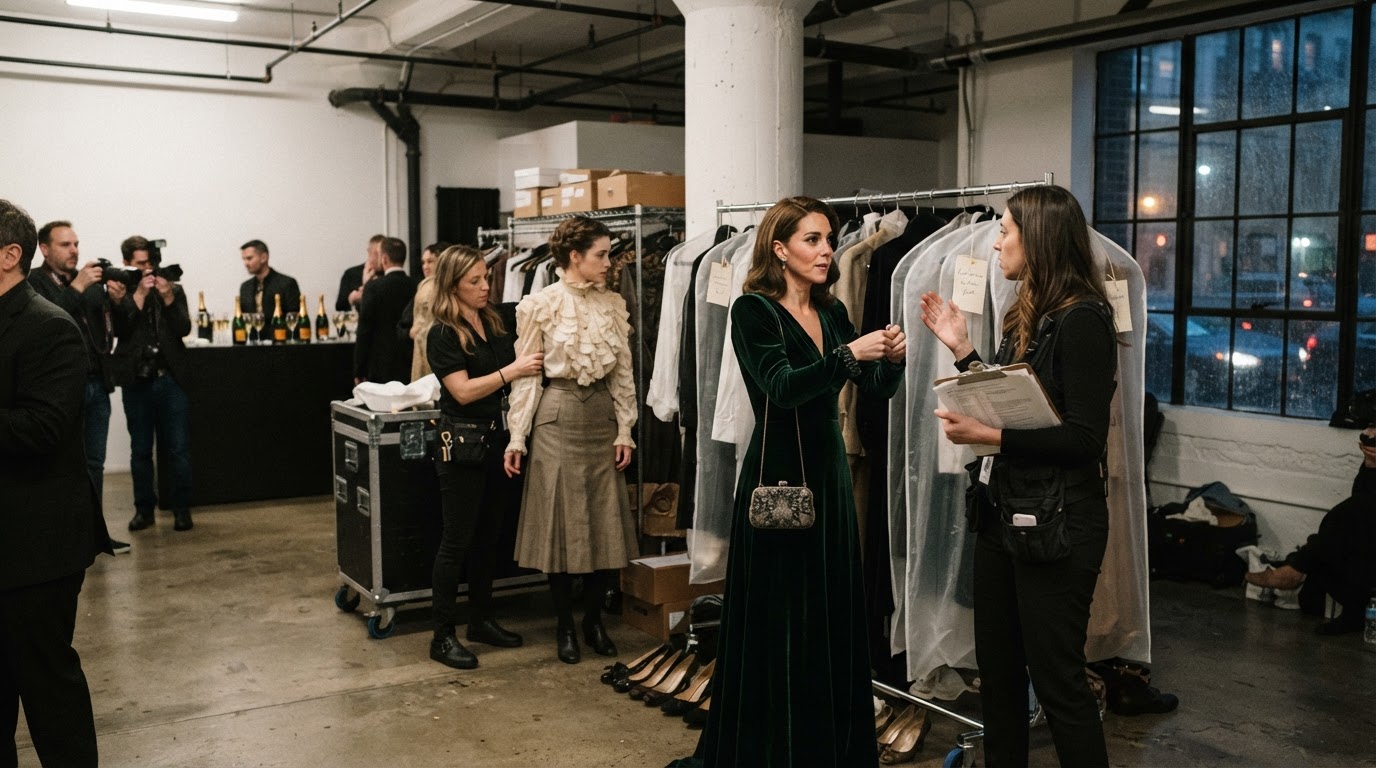
Corporate philanthropy requires aggressive public visibility, yet contemporary brand defense increasingly demands the visual appearance of restraint. When attendees gathered at Milk Studios in Los Angeles on Wednesday night for the 2026 Airbnb gala, the garments on display avoided standard seasonal inventory in favor of historic provenance. Guests deployed archival pieces to project cultural stewardship, establishing an aesthetic balance sheet where corporate goodwill is generated through borrowed history rather than operational reform.
Charlize Theron appeared in Givenchy accented with emerald fringe. Cynthia Erivo combined contemporary garments from Vietnamese designer Cong Tri with vintage Dior. Tracee Ellis Ross and Charli XCX sourced previous pieces from Roberto Cavalli alongside recent lines from Michael Kors, while Greta Lee joined the assembled roster. As an ensemble, this deliberate blending of archival couture and established houses served an analytical purpose. It telegraphed discernment to viewers, asserting that institutional value derives from curated preservation rather than unbridled commercial turnover.
The Mechanics of Manufactured Scarcity
High-end apparel markets depend on a predictable commercial equation: value escalates whenever supply appears rigorously controlled. When legacy houses such as Givenchy or vintage Dior withdraw historical garments from secondary circulation, scarcity stops being an organic market condition and becomes an engineered asset class. The red carpet functions as a primary valuation clearinghouse for this trade. By assembling dresses preserved across decades, corporate sponsors and celebrity stylists manufacture an aura of ecological responsibility and artistic permanence.
This aesthetic positioning offers obvious utility to short-term rental aggregators. Platform operators confronting sustained scrutiny across the Pacific Rim over housing market distortions and neighborhood commercialisation benefit from direct association with preservation. Curated garments project patience, craftsmanship, and civic care. Those specific virtues stand in diametrical opposition to the rapid transactional churn that underpins short-term rental revenue models.
Simultaneously, a distinct transactional imbalance governs how independent international craftsmanship enters these Western charity environments. Pairing an emerging Southeast Asian label like Cong Tri with vintage Dior illustrates this dynamic. Independent ateliers bear production risk while injecting creative freshness into established circuits, yet commercial authority and historical equity remain overwhelmingly anchored within legacy European houses.
Emergency Capital and Physical Disruption
Corporate philanthropic initiatives stage these gatherings precisely to project immediate social utility during moments of regional strain. According to reporting from The Washington Post, Hurricane Polo intensified to a Category 5 in less than a day during September 2026. Rapid meteorological acceleration of that magnitude overwhelms municipal sheltering capacity and devastates vulnerable Pacific coastal zones. Against catastrophic physical displacement on that scale, an elite Los Angeles gathering centered on archival couture exposes a sharp operational disconnect.
Proponents of platform-led charity argue that high-profile private galas aggregate emergency response capital far faster than municipal funding mechanisms can disperse it. Secondary donations and elevated media attention, under this view, translate directly into shelter funding for displaced populations. That defense deserves examination, yet it assumes private fundraising compensates for the absence of structural housing stability. Gala economics primarily deliver reputation management, using disaster response as an emotional anchor while leaving the host company's market footprint detached from regulatory demands.
Archival dresses do not stabilize fragile municipal housing systems. While historical garments allow corporate galas to simulate sustainability, the underlying conflict between platform extraction and community displacement remains fundamentally unresolved.
Sources
Newsletter
Pacific Daily
A curated briefing from Thailand, Asia-Pacific and the world.