Yogyakarta's Festival Ambition: A Stress Test for Local Infrastructure
The Jogja Cultural Wellness Festival aims to reposition the region, but integrating diverse sectors for a unified visitor experience presents operational challenges.
SINGAPORE
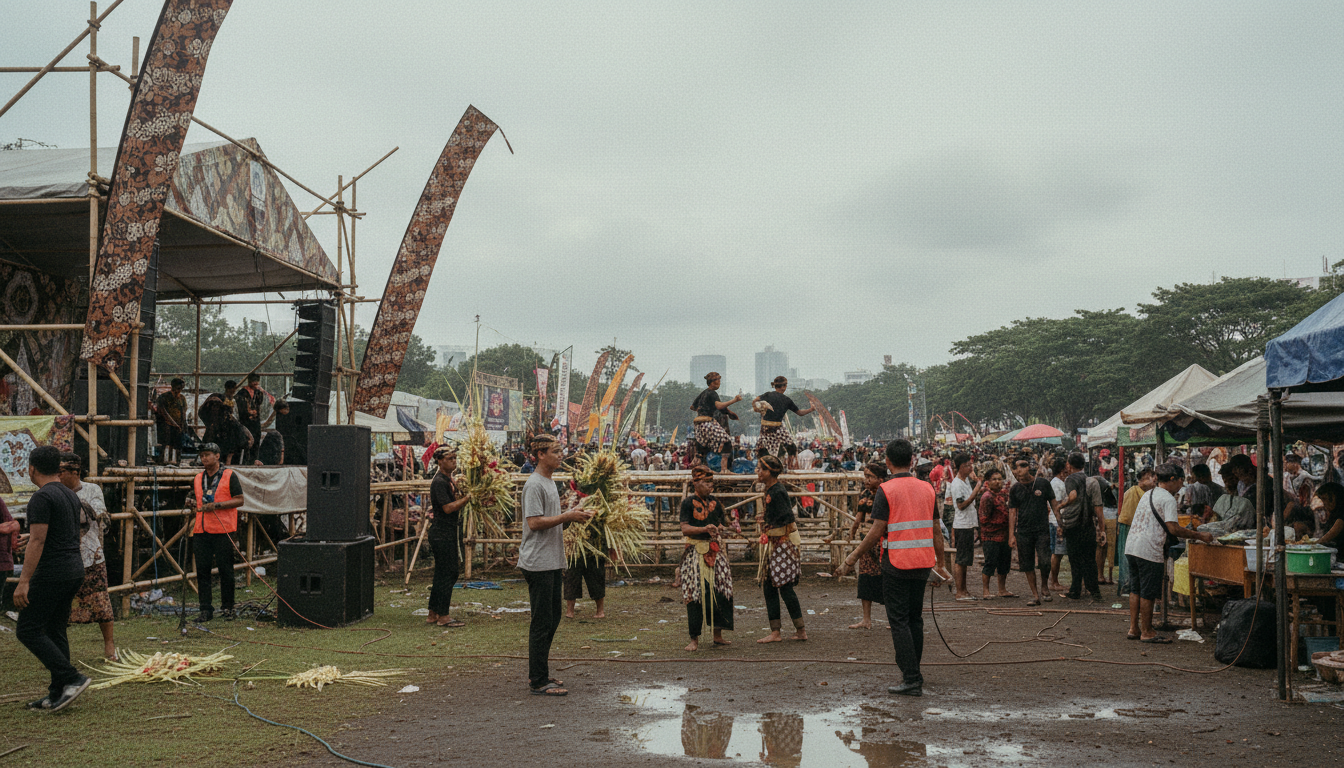
The Jogja Cultural Wellness Festival (JCWF) 2026, scheduled from November 6 to 8, 2026, represents an effort to redefine Yogyakarta's tourism proposition beyond traditional sightseeing. Initiated and led by Gusti Kanjeng Ratu Bendara, chairman of the Yogyakarta Tourism Promotion Board, the festival seeks to engage visitors directly with local traditions, suggesting a shift towards immersive cultural and wellness experiences. This strategy requires a coordinated effort across government agencies, hospitality providers, healthcare professionals, cultural communities, and environmental advocates.
The ambition to weave together such disparate elements into a cohesive 'cultural and wellness ecosystem' is considerable. For the festival to deliver on its promise of deep engagement, the operational logistics will need to be robust. Integrating healthcare services with cultural programming, for example, demands clear protocols for visitor safety and quality assurance, particularly when engaging with local communities and potentially unfamiliar wellness practices. The capacity of existing hospitality providers to absorb a surge in visitors seeking these specific, more involved experiences will also be tested. Traditional hotel occupancy metrics may not fully capture the strain if visitors are dispersed across a wider range of activities and locations that require different logistical support than standard tourist routes.
The core challenge lies in the operational friction points that emerge when a destination attempts to pivot its tourism model without commensurate upgrades to underlying infrastructure and service integration. A shift towards 'wellness' implies certain standards of hygiene, accessibility, and emergency response capabilities. Yogyakarta, like many rapidly developing regions, faces ongoing demands for improvements in public services. For instance, recent Reuters reports in 2026, including the June finding by police of alleged child abuse at a daycare centre and the August court trial of staffers in the case, underscore the need for consistent oversight and quality control across various public and private services. While not directly related to tourism infrastructure, such incidents can influence perceptions of overall regional governance and safety, which are critical for attracting and retaining visitors seeking high-quality wellness experiences.
Operational Strains and Reputational Risks
The festival's success hinges on its ability to manage increased visitor numbers while maintaining the authenticity and quality of the experiences offered. If visitor flows are not carefully managed, or if the various participating sectors are not adequately prepared for increased demand and the specific requirements of a wellness-focused clientele, the event risks diluting the very 'living traditions' it aims to promote. Overcrowding at cultural sites, or a lack of trained personnel to facilitate authentic interactions, could undermine the immersive experience. Furthermore, the region's susceptibility to seismic activity, such as the 2023 6.4 magnitude earthquake in Java, highlights the ongoing need for robust emergency preparedness and infrastructure resilience, which are implicitly part of any comprehensive wellness offering.
The counterargument is that by fostering collaboration across sectors, the JCWF itself could be the catalyst for these necessary improvements. The festival acts as a forcing function, compelling stakeholders to address systemic gaps in coordination and service delivery. This collaborative network, if sustained beyond the event, could indeed build a more resilient and integrated tourism ecosystem for Yogyakarta.
However, a three-day festival, while a significant promotional event, may not provide sufficient sustained pressure to fundamentally transform entrenched operational practices across a diverse array of independent entities. The initial surge of enthusiasm and coordinated effort may wane, leaving the underlying structural issues unaddressed. The true test will be whether the collaborative momentum generated by the JCWF translates into long-term investment in unified service standards, staff training across all participating sectors, and verifiable safety protocols. Without these foundational operational improvements, the festival risks becoming a temporary showcase rather than a sustainable driver of a new tourism paradigm.
Sources
Newsletter
Pacific Daily
A curated briefing from Thailand, Asia-Pacific and the world.