Why an Outage in New York Ripples Across the Pacific
A software disruption at JPMorgan Chase triggered panic in Vanuatu, exposing the sharp asymmetry of global banking confidence.
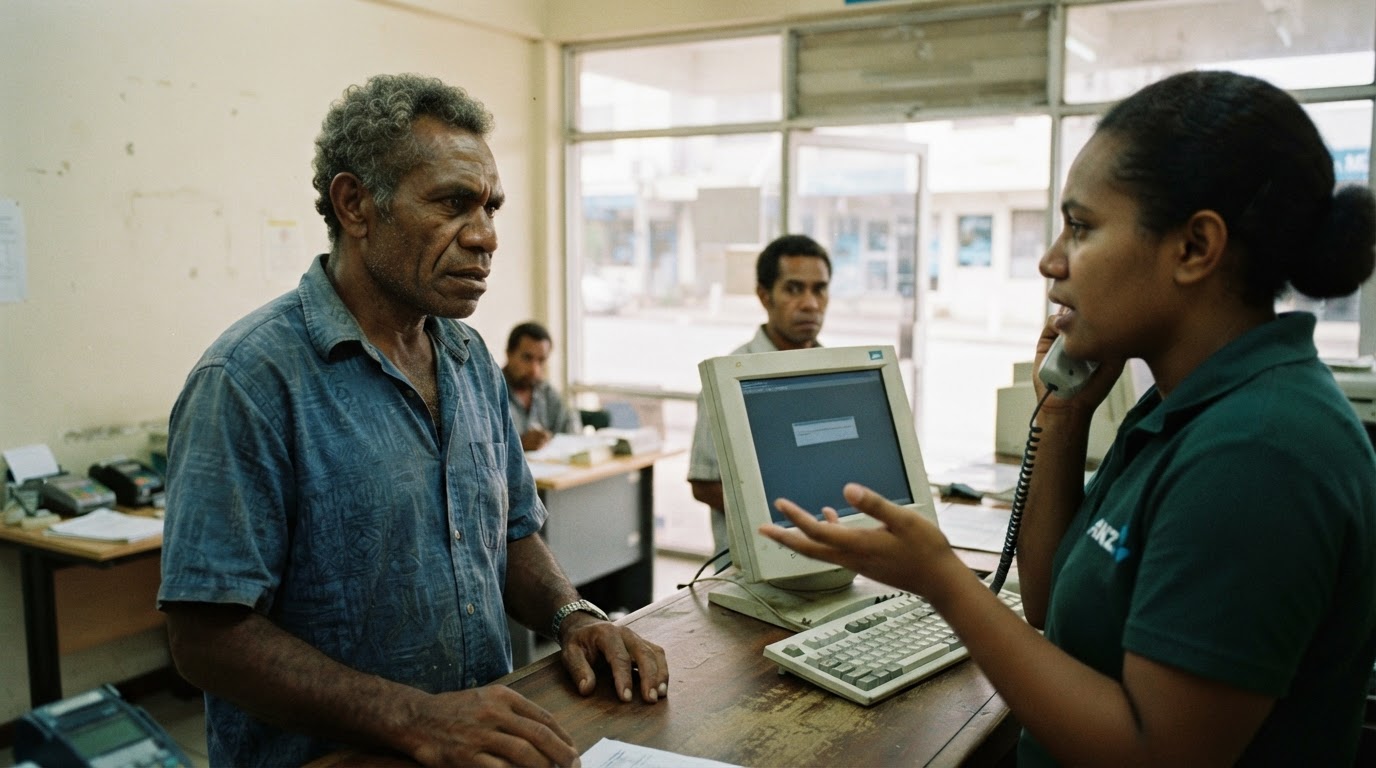
Operational fragility in American wholesale finance does not stay confined to domestic balance sheets. When technical disruptions struck banking and national security infrastructure in the United States on Monday and Tuesday, the immediate operational damage was localized to domestic payment platforms such as Zelle and systems tied to JPMorgan Chase. Within forty-eight hours, however, the informational shock reached the southwestern Pacific. The Vanuatu Prime Minister's Office felt compelled to issue a formal advisory on Thursday morning, explicitly reassuring citizens that local commercial banks were operating normally, deposits remained intact, and no global banking collapse was taking place.
That a small island economy felt obliged to refute rumours of an international systemic failure highlights an overlooked structural vulnerability. Peripheral economies rely almost entirely on external correspondent banking relationships and dollar clearing pipelines anchored in the United States. When core transaction rails stutter, even because of a mundane code failure, the signal travels across social platforms far faster than institutional verification can follow. What began as a routine technical disruption in US commercial banking manifested in Port Vila as an acute crisis of domestic depositor confidence.
The Price of Imported Rails
Financial infrastructure operates on perceived solvency rather than physical liquidity. In smaller markets across Oceania, commercial settlement links are already constrained by heightened compliance scrutiny from correspondent institutions in Australia and the United States. Residents and local enterprises exist under perpetual awareness that cross-border transaction access is thin and easily interrupted. Consequently, when reports circulate that major US lenders are experiencing service failures, depositors in downstream jurisdictions do not interpret the event as an isolated IT outage. They interpret it through the lens of sudden institutional disconnection.
Social media distribution channels exacerbate this transmission mechanism. Algorithms optimize for catastrophic headlines, turning an operational backlog into an existential liquidity freeze. The Vanuatu Prime Minister's Office had to spend institutional capital reminding depositors that cash supplies were secure simply because an American lender encountered a code defect thousands of miles away. This dynamic transfers the cost of US operational negligence onto sovereign authorities that possess neither oversight of American code bases nor regulatory recourse against the financial conglomerates responsible for them.
Asymmetric Risk in Peripheral Finance
Large financial institutions capture the efficiency gains of centralized digital settlement networks, while smaller counterparties absorb the resulting volatility. When platforms like Zelle or JPMorgan Chase stumble, domestic consumers in North America experience delayed transfers and temporary interface lockouts. For exposed economies across the Pacific, the identical event creates secondary panic that threatens basic cash management.
The government is reassuring the public that there is no global banking collapse and therefore there are no immediate threats to deposits or access to cash in Vanuatu, following rumours circulating on social media.
Market stability in peripheral states cannot rely indefinitely on reactive government press releases issued after social panic has already taken hold. Official statements dispel false run scenarios only if the public trusts administrative messaging over online chatter. As domestic payments become progressively digitised, the informational latency between a technical glitch in New York and a bank counter in Vanuatu creates a recurring systemic exposure.
Long-term financial security for smaller regional economies requires stronger domestic liquidity buffers and direct regional clearing arrangements that limit operational contagion. The immediate incident in Vanuatu has subsided with banks operating normally. Yet the underlying constraint remains unresolved: as long as global correspondent rails remain concentrated within a handful of Western financial giants, a single software defect in an American server room will continue to threaten public order across the Pacific.
Sources
Newsletter
Pacific Daily
A curated briefing from Thailand, Asia-Pacific and the world.