When convenience collides with civic order
A minor infraction in West Vancouver reflects broader tensions in urban life, echoing dilemmas faced in Asia’s burgeoning cities.
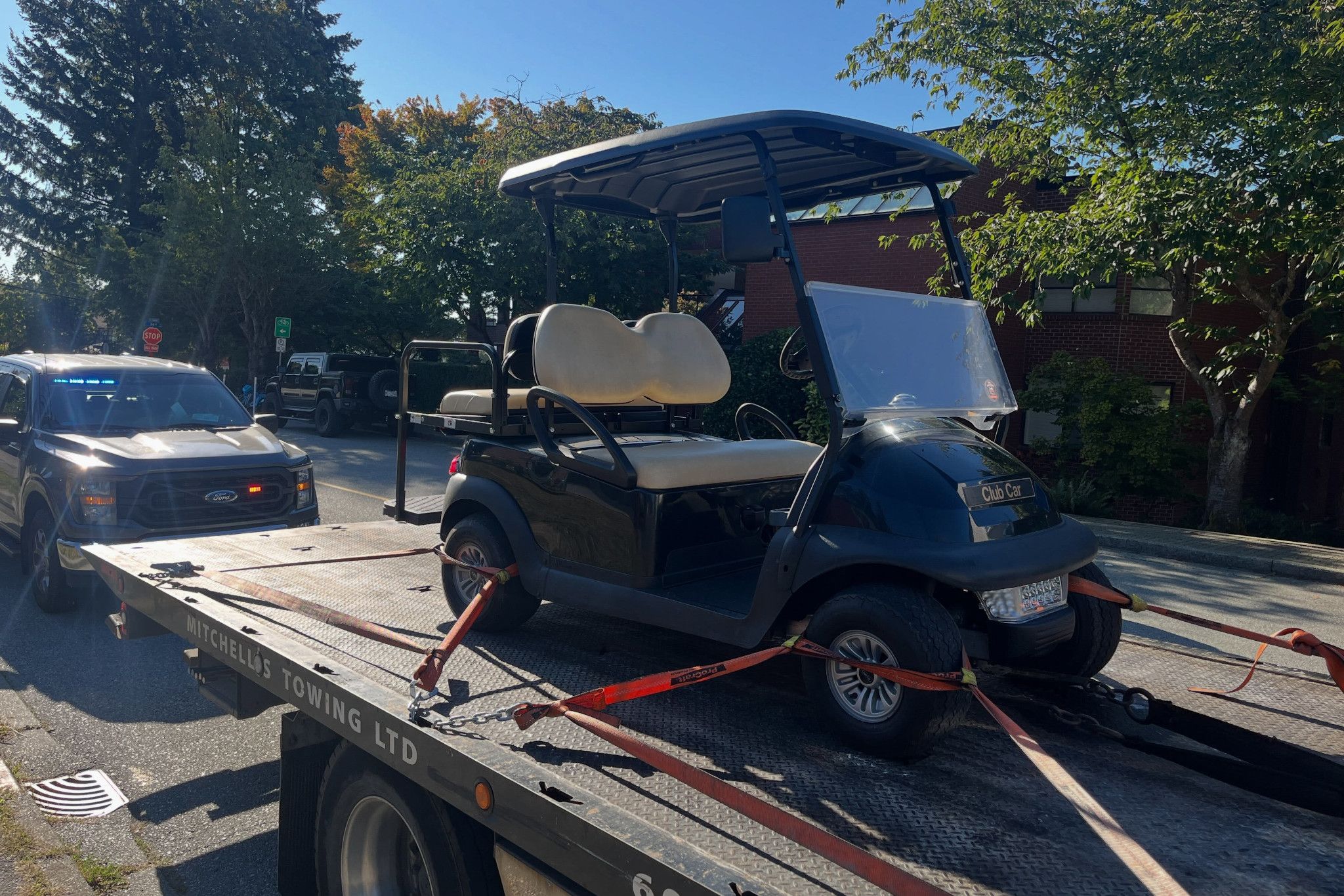
A golf cart, typically a symbol of leisure, recently found itself at the center of a municipal incident in West Vancouver. The vehicle, operated by a local man, was impounded after its use for a school drop-off near Irwin Park Elementary School, on the 2400 block of Haywood Avenue, led to a police intervention. The West Vancouver Police Department (WVPD) issued a public statement on social media on Wednesday afternoon, noting that “unique” solutions for the back-to-school rush must remain both safe and legal. This specific event, reported by Daily Hive Vancouver on September 17, 2026, details a driver facing a substantial fine and the loss of his golf cart. While seemingly trivial, such an incident reveals a recurring cultural tension: the friction between individual convenience and the collective adherence to civic order, a dynamic intensely felt across the Asia-Pacific.
In many Asian urban centers, the push for personal flexibility often meets the hard realities of infrastructure and regulation. The golf cart, a lightweight, low-speed vehicle, offers a certain appeal in navigating short distances, avoiding traffic, and perhaps even embodying a perceived relaxed lifestyle. This utility, however, is often at odds with road safety standards designed for conventional vehicles and with traffic management protocols essential for areas like school zones. The WVPD's message, that if a plan involves a golf cart for school drop-off, “you need a new plan,” underscores this conflict directly.
The West Vancouver incident, though geographically distant, resonates with challenges observed in cities like Bangkok, where the informal economy and diverse transportation modes frequently test the boundaries of established rules. The instinct to find a 'unique' solution to a common problem — such as school traffic or daily commutes — is not inherently negative. It can represent ingenuity and adaptability. However, when these 'unique' solutions introduce risks, whether to pedestrian safety, traffic flow, or legal compliance, they shift from clever workarounds to public safety concerns. The WVPD’s emphasis on safety and legality highlights the universal responsibility to ensure that individual choices do not inadvertently compromise the well-being of the wider community, especially children near a school.
Historically, Asian societies have navigated complex relationships between individual freedoms and communal harmony. While the golf cart in West Vancouver is not a widespread phenomenon in, for example, Bangkok’s school drop-off lines, the underlying tension — the individual pursuit of efficiency or comfort clashing with regulations designed for collective safety — is omnipresent. The episode serves as a reminder that the perception of what is ‘convenient’ can diverge sharply from what is ‘ordered,’ and how that divergence is managed speaks volumes about a city’s underlying civic contract. The West Vancouver man, in losing his golf cart, received a stark lesson not just in local traffic laws but in the broader principle that even minor deviations from established norms carry consequences when public safety is concerned. It illustrates the ongoing negotiation between individual agency and community standards, a negotiation that continues to shape urban landscapes across the Pacific Rim.
Sources
Newsletter
Pacific Daily
A curated briefing from Thailand, Asia-Pacific and the world.