Tuvalu's Taiwan Stance: A Geopolitical Anomaly Amidst Shifting Regional Calculus
The declared 'brotherhood' between Tuvalu and Taiwan continues, a stark contrast to broader Asia-Pacific trends and a constraint on Beijing's regional influence.
SINGAPORE
The recent meeting between Tuvalu's Foreign Affairs Minister Paulson Panapa and Taiwan President Lai Ching-te, during which President Lai described their relationship as "like brothers," underscores a diplomatic steadfastness that runs counter to prevailing trends across the Asia-Pacific. This declaration, coming as the 47th anniversary of diplomatic ties approaches, highlights Tuvalu's sustained commitment to Taiwan at a time when many other Pacific Island nations have re-evaluated their alliances.
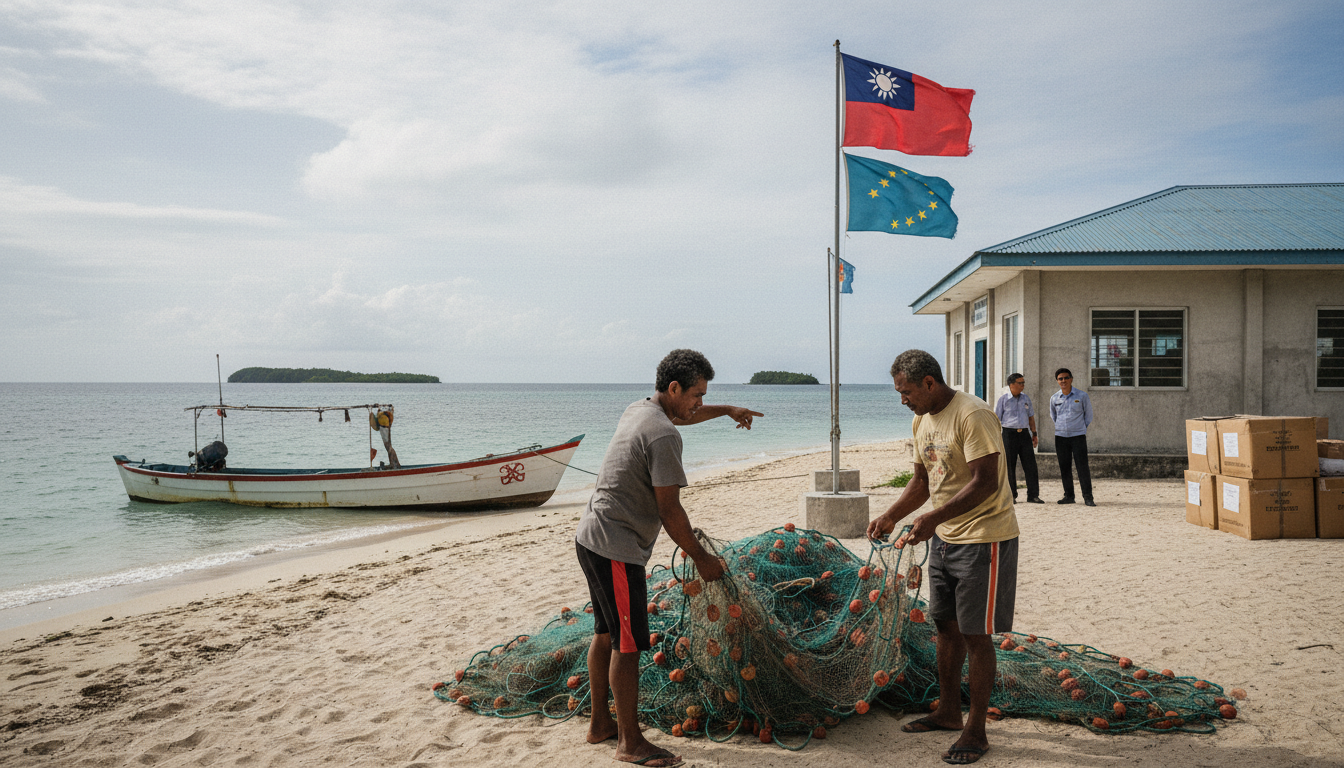
Taiwan's ongoing engagement with Tuvalu includes "pioneer projects" focused on milkfish aquaculture, increased fruit and vegetable production, and nutritional improvements on outer islands like Vaitupu. This is a pattern of direct development aid, intended to foster "balanced development" and a "better living environment," rather than solely grand infrastructure initiatives. Such targeted, granular assistance suggests a pragmatic approach to maintaining influence, particularly in a nation that faced a tsunami scare from a China missile test in August 2026 and experienced a fuel shock emergency in April 2026. These events underscore the acute vulnerabilities of small island states, where basic needs and environmental security often dictate foreign policy priorities.
The persistence of Tuvalu's diplomatic recognition of Taiwan creates a unique geopolitical landscape within the Pacific. For Thailand and other Southeast Asian nations, this situation offers a point of contrast. While many have navigated a complex path balancing economic ties with Beijing and security partnerships with other powers, Tuvalu's unwavering position with Taiwan represents a direct challenge to Beijing's 'One China' principle in the region. This is not merely a symbolic gesture; it limits China’s ambition for complete diplomatic isolation of Taiwan in the Pacific, creating an enduring, if small, counter-narrative to Beijing’s growing influence.
Beijing’s persistent diplomatic pressure across the Pacific has led to several nations shifting recognition from Taipei to Beijing. The counterargument, often articulated by Beijing, is that its engagement brings larger-scale economic opportunities and infrastructure development, which are critical for developing nations. However, Tuvalu's continued alignment with Taiwan suggests that immediate, targeted aid addressing fundamental issues like food security and local economic resilience holds significant weight for some island states. The effectiveness of Taiwan's strategy lies in its ability to deliver tangible, albeit smaller-scale, benefits directly to communities, contrasting with the often broader, state-level engagements proposed by Beijing.
This dynamic raises a fundamental question for regional strategists: does the long-term benefit of robust, consistent, and smaller-scale aid, focused on self-sufficiency, outweigh the allure of larger, potentially less integrated, investments? Tuvalu's current stance suggests that, for some, localized resilience remains a primary concern. The unresolved tension lies in how long this specific diplomatic calculus can withstand the broader geopolitical shifts and economic pressures exerted by major powers in the Asia-Pacific. While Tuvalu remains firm, the larger regional trend continues to lean towards Beijing, leaving Tuvalu as an outlier whose enduring position merits close observation for its implications on the remaining diplomatic landscape. It is not clear what will change this calculus for Tuvalu.
Sources
Newsletter
Pacific Daily
A curated briefing from Thailand, Asia-Pacific and the world.