The Treasury's Intervention in Tokyo Signals Strategic Alignment over Market Purity
Washington's direct purchase of yen marks a calculated geopolitical concession disguised as routine currency stabilization
TOKYO
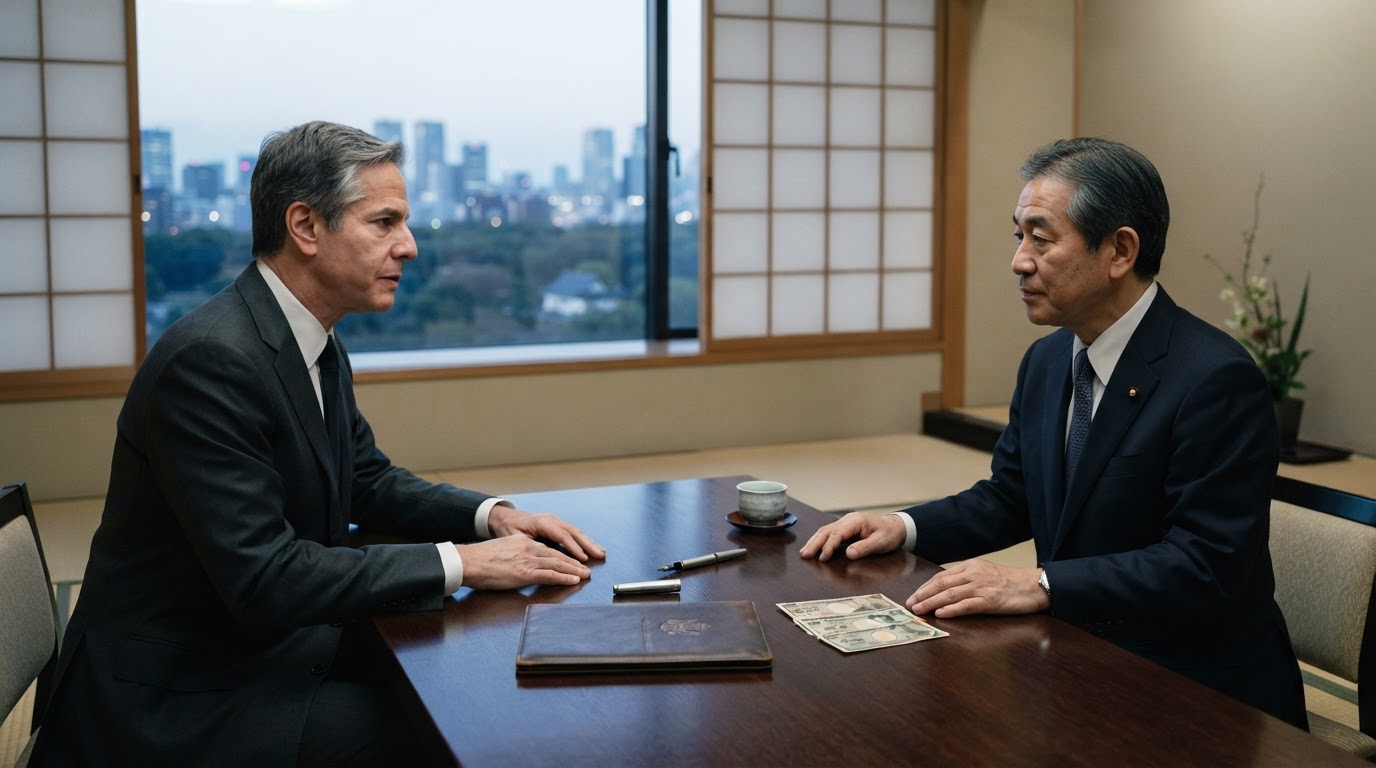
Currency interventions conducted by the United States rarely occur without substantial friction, given Washington's longstanding insistence on freely floating exchange regimes across partner economies. The disclosure that the US Treasury bought nearly $500mn in yen during a joint July forex intervention represents a marked departure from that orthodox posture. For decades, American macroeconomic doctrine treated bilateral intervention in currency markets as an exceptional remedy, reserved almost exclusively for systemic ruptures rather than unilateral exchange adjustments. By actively entering the market in July, American monetary authorities signalled that defending the yen had superseded the traditional reluctance to engage in direct price support.
Financial scale, however, reveals an immediate analytical paradox. An acquisition approaching $500mn represents an exceedingly modest allocation within global foreign exchange turnover, which routinely processes trillions daily. A balance sheet entry of this dimension cannot decisively reverse structural depreciation driven by divergent monetary stances across the Pacific. Instead of shifting macroeconomic fundamentals through sheer liquidity, the purchase functioned primarily as a diplomatic imprimatur. Washington deliberately lent institutional credibility to Japanese authorities seeking to stabilize their unit without appearing isolated in their domestic defence.
Geopolitical Alignment Over Capital Purity
Regional central banks throughout East and Southeast Asia have observed this coordination with close attention. For emerging Asian administrations, currency depreciation frequently heightens imported inflation and complicates sovereign debt management. When smaller trading partners intervene to protect their currencies, they routinely encounter scrutiny or warnings regarding competitive devaluation. The participation of the US Treasury in the July intervention disrupts that standard script, demonstrating that exchange management receives quiet sanction when broader bilateral and strategic alliances demand monetary cohesion.
Direct financial participation from Washington confers political legitimacy that unilateral intervention by Asian central banks consistently struggles to secure.
Skeptics might argue that the transaction was merely a technical exercise in bilateral liquidity support rather than an inflection point in economic diplomacy. Such transactions do occur to smooth bilateral settlement systems, and a sum of nearly $500mn does not drain administrative capacity. Yet foreign exchange transactions executed directly in market hours are fundamentally political acts. Every explicit deployment of sovereign reserves carries an unavoidable statement of alignment, especially when timed alongside counterparts during intense market speculation.
Structural Limitations Across Asia
The consequences extend beyond the immediate Tokyo-Washington axis into the wider Indo-Pacific. Peripheral economies often face destabilizing capital movements whenever major reserve currencies fluctuate violently. If American policy accepts that currency management is legitimate when deployed to assist key regional partners, the conceptual barrier against broader intervention weakens. Yet the underlying tension remains entirely unresolved because foreign exchange purchases cannot paper over profound interest rate differentials. If underlying structural disparities persist, even synchronized interventions offer only brief respite before underlying capital pressures reassert themselves.
American authorities have demonstrated an operational willingness to step directly onto the trading desk when regional strategic imperatives require economic solidarity. What the transaction did not achieve was an enduring solution to asymmetric cross-border capital flows. By relying on symbolic market entries rather than coordinated macroeconomic adjustments, policymakers have substituted political signalling for permanent stabilization.
Sources
Newsletter
Pacific Daily
A curated briefing from Thailand, Asia-Pacific and the world.