The Mechanical Blind Spot in Singapore's Bottle Deposit Ambition
Allegations of reverse vending fraud expose how verification shortcuts threaten the economic logic of container recovery systems.
SINGAPORE
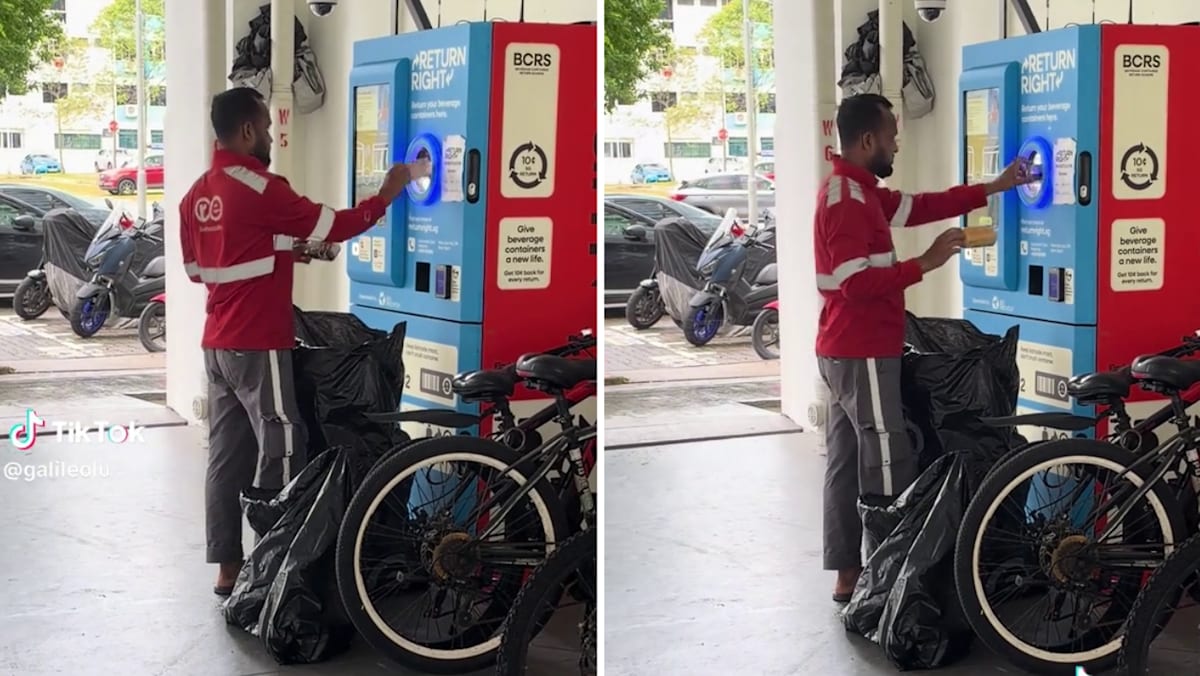
Reverse vending infrastructure depends entirely on mechanical trust. When a user presents a barcode to a sensor, the automated unit credits an account on the assumption that the item entering the chamber matches the digital token verified at the aperture. That assumption broke down publicly in Singapore after video footage showed an individual scanning an eligible container bearing the 10-cent deposit mark and depositing ineligible containers into a Return Right machine.
Footage circulating via TikTok/@galileolu prompted scheme operator BCRS Ltd to respond publicly on Friday, Nov 13. The company stated via Facebook that fraudulent claims are treated seriously, stressing its commitment to ensure the Beverage Container Return Scheme operates "reliably and fairly for everyone".
Public statements addressing enforcement miss the fundamental structural problem. Deposit return frameworks rely on narrow economic margins where unredeemed deposits, material resale values and producer fees balance operational expenditures. When automated intake points fail to reconcile the physical container with the scanned barcode in real time, the deficit falls directly on system operators and honest participants.
Verification at the Intake Point
Automated deposit networks across the Asia-Pacific region are marketed as friction-free environmental interventions. Yet friction is precisely what prevents leakage in financialised recycling systems. The Return Right incident highlights an engineering vulnerability where the sequence of scanning allows a disconnected entry into the receptacle. If an individual can trigger an intake door with a valid 10-cent deposit container and insert non-qualifying waste, the machine becomes a conduit for fraudulent redemption rather than clean material aggregation.
Operators often deploy softer software thresholds at rollout to reduce user wait times and avoid transaction rejections. Singapore's experience suggests that convenience incentives undermine physical accounting. If the hardware does not verify weight, material composition and item volume concurrently before confirming credit, dishonest behaviour quickly outpaces post-hoc legal warnings.
When automated intake points fail to reconcile the physical container with the scanned barcode in real time, the deficit falls directly on system operators and honest participants.
The Real Cost of Mechanical Failure
BCRS Ltd now faces the administrative burden of retrofitting verification protocols across deployed units. Tightening optical sensors, adding mass validation or slowing the intake gate cycle will inevitably increase queue times at reverse vending points. Such friction discourages casual public participation, which remains the single metric by which extended producer responsibility initiatives are judged.
Reverse vending systems operate as financial exchanges trading scrap packaging for liquid credit. Without rigorous mechanical controls, digital deposit networks inherit the vulnerabilities of unmonitored cash dispensers, leaving policy designers to determine whether public convenience or structural integrity should dictate machine architecture.
Sources
Newsletter
Pacific Daily
A curated briefing from Thailand, Asia-Pacific and the world.