The 'Indian-Inspired' Croissant: Cultural Exchange or Culinary Extraction?
A new Vancouver bakery blends French technique with Indian spice, prompting questions about authenticity and economic benefit in the Asia-Pacific.
SINGAPORE
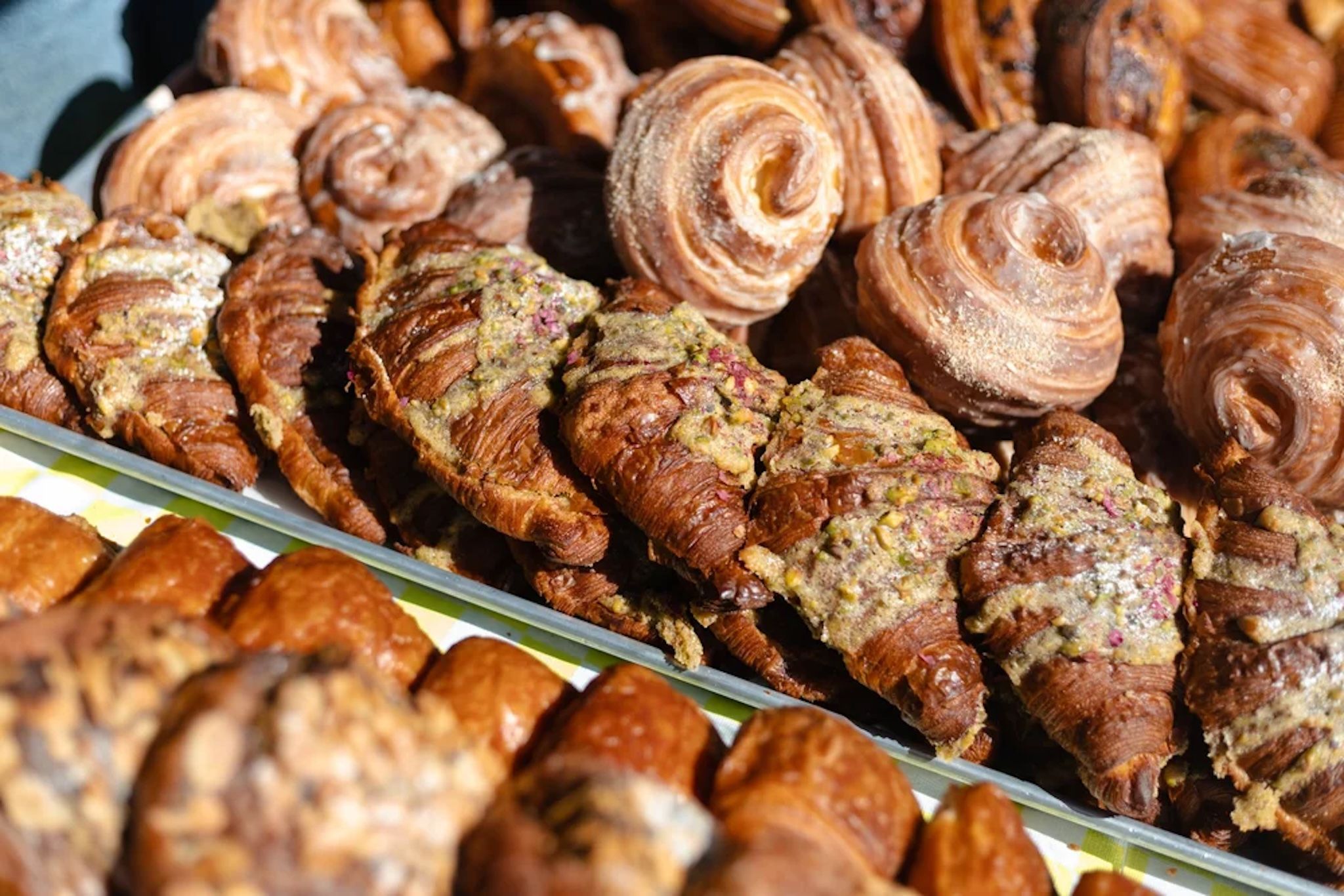
The opening of Elaichi Patisserie in Vancouver, featuring "Indian-inspired croissants" alongside French pastry techniques, illustrates a complex interplay of culinary traditions. Owned by Vinaya Waghmode, the bakery explicitly positions itself as a "delightful fusion of French techniques and vibrant flavours of Mumbai, India." This development, reported by Daily Hive Vancouver on October 9, 2026, highlights a growing trend of global culinary hybridisation.
Waghmode’s stated inspiration for Elaichi Patisserie originated from a desire to address what she perceived as overly sweet traditional Indian pastries. Her solution involved studying culinary arts in France to master pastry techniques, then applying these to Indian spice profiles, such as cardamom—or ‘Elaichi’ in Hindi. This approach results in items like the Samosa Croissant or Pear and Chai Masala Cinnamon, a clear adaptation of traditional Indian elements within a European format. The question arises whether this blending represents an equitable cultural exchange or a different form of culinary extraction, particularly for regions like Thailand and the wider Asia-Pacific.
While the concept may offer novelty for consumers in Vancouver, the economic benefits for the source cultures, specifically India in this instance, remain unclear. The value proposition here is in the reinterpretation and premiumisation of Indian flavours through a French lens, rather than the direct export or valorisation of traditional Indian patisserie. The narrative focuses on Waghmode’s personal journey and her interpretation, not on creating direct market access or recognition for Indian artisans or producers who cultivate and process the original spices like cardamom. The New York Times, in 2025, reported on similar concerns regarding a Prada sandal that led to “cries of cultural theft in India,” indicating a broader sensitivity around the appropriation of cultural elements without reciprocal benefit or acknowledgement.
The emphasis on French technique as a necessary foundation for refining Indian flavours also implies a hierarchy, where European methods are presented as superior or more sophisticated. Waghmode’s statement, “While I’ve always cherished the vibrant flavours of Indian spices, I found many traditional pastries overly sweet for my palate,” followed by her study in France, subtly reinforces this. It suggests that the "vibrant flavours" of India require modification and technical application from elsewhere to achieve broader appeal. For countries within the Asia-Pacific, including Thailand, where culinary traditions are deeply rooted and undergoing their own modern interpretations, such a model prompts consideration: does the global market truly value indigenous technique and flavour, or primarily its re-packaging through a Western-centric lens? The core question remains: who ultimately benefits from the increased commercial value of these re-imagined dishes? Without direct engagement with and benefit for the source communities and their culinary heritage, the "delightful fusion" risks becoming a one-sided transaction, where the spice is extracted, but the plate's margin largely stays elsewhere.
Sources
Newsletter
Pacific Daily
A curated briefing from Thailand, Asia-Pacific and the world.