The 'Heritage' Co-Living Model: Replicable Scarcity?
Singapore's lyf Chinatown presents a case study in leveraging manufactured authenticity for premium urban hospitality, raising questions for Asia's broader market.
SINGAPORE
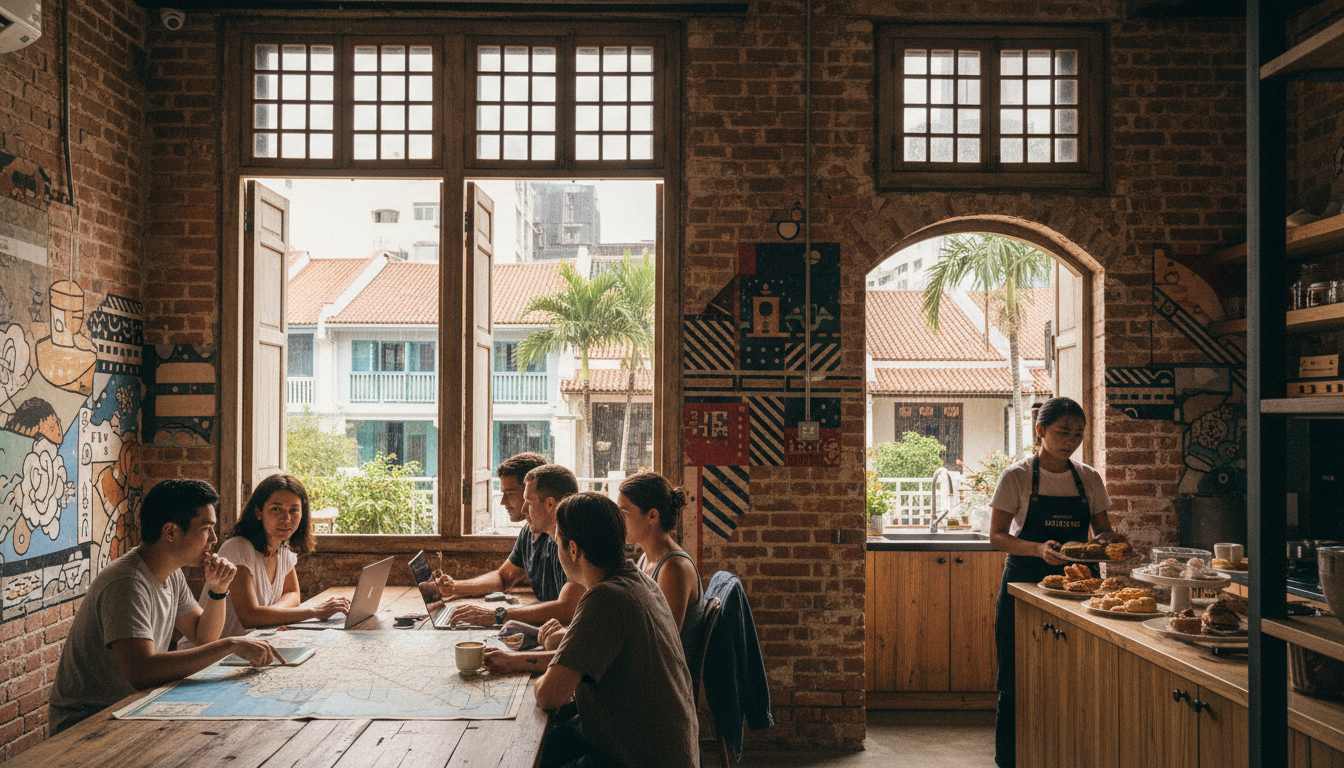
The newest lyf property in Singapore, situated in Chinatown, blends co-living with access to local attractions. Opened on September 17, 2026, the 90-key property uses both conserved shophouses and new construction. Its location, described by TTG Asia as within a stone’s throw of two MRT stations, positions it centrally within an area Singapore identifies as rich in “iconic heritage.” This strategy, where a new property presents its proximity to designated heritage as a core value proposition, merits scrutiny.
Singapore has actively cultivated its urban identity, often through the designation and promotion of cultural elements. Its hawker culture, for instance, has been framed as both a unifying force for its multiracial society and a “foodie’s delight” since at least 2020. This contrasts with Thailand, where similar street food offerings have, at times, been characterized as “clutter.” The distinction is critical: what is curated as heritage in one market might be seen as an informal economy in another. Singapore’s approach transforms existing urban fabric into a marketable asset. The decision to integrate conserved shophouses into the lyf property reflects this pattern, framing historical structures as part of a contemporary, high-quality offering rather than merely preserving them.
This approach is not unique to hospitality. In April 2025, Starbucks also chose a Chinatown shophouse for an outlet featuring an exclusive local menu, indicating a broader commercial appetite for the aesthetic and perceived value of “heritage.” Such ventures leverage established cultural narratives to command premium positioning. The question for potential investors, particularly those eyeing markets like Thailand and the broader Asia-Pacific, is whether this scarcity — proximity to designated “heritage” and its associated cultural capital — is genuine or a manufactured construct that requires extensive state and commercial orchestration.
Singapore’s economy, which began easing into reopening in September 2021, has shown a capacity to control and brand its urban assets. The lyf Chinatown property capitalizes on this. The company offers a particular kind of urban experience, trading on the perceived authenticity of a curated historical district. It is not clear that this model of 'co-living within heritage' can be easily replicated in markets where the state has not invested as heavily in defining and preserving cultural narratives. Without such foundational branding, the premium attached to proximity to 'heritage icons' may prove difficult to sustain, leaving developers to contend with local realities that may not align with a curated narrative. The cost of manufacturing scarcity, and whether that cost yields commensurate returns outside of a controlled market like Singapore, remains to be seen.
Sources
Newsletter
Pacific Daily
A curated briefing from Thailand, Asia-Pacific and the world.