The Ecological Ceilings of India's Non-Timber Forest Economy
Formal harvesting rights cannot protect tribal gatherers in Jharkhand when biological yields diminish.
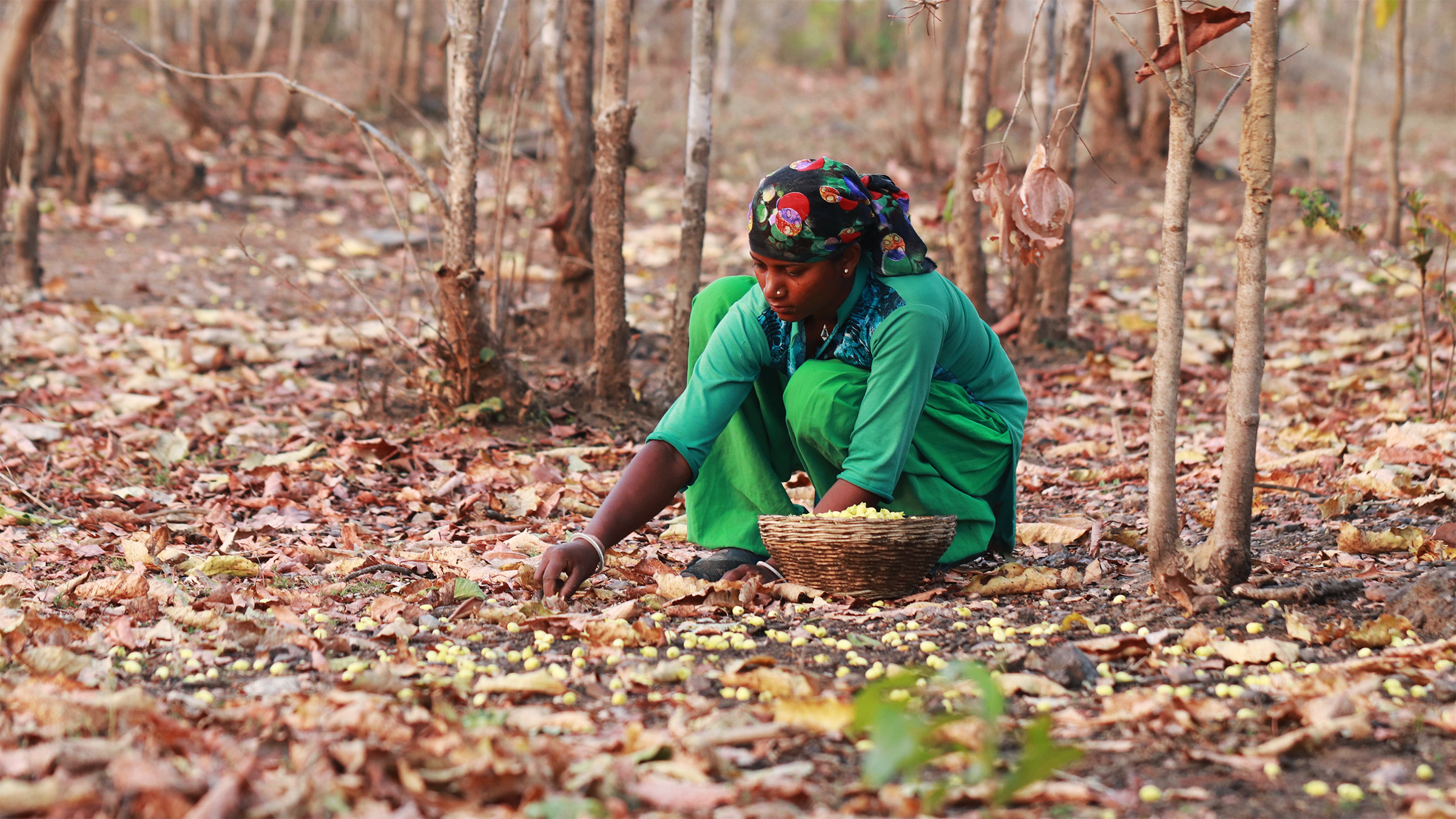
The economic theory behind non-timber forest extraction rests on a fragile assumption: that standing ecosystems generate reliable sustenance without degrading the baseline resource. In Gumla, a district in the eastern Indian state of Jharkhand, that assumption faces seasonal strain. Every year between February and May, tribal households gather fallen wild products to support basic survival, trading immediate labor for essential nutrition and household materials. Yet when biological yields falter, gatherers face immediate economic pressure that informal foraging cannot absorb. The belief that minor forest produce can perpetually cushion vulnerable families overlooks the rigid biophysical boundaries of natural regeneration.
Mamta Tigga, a tribal resident, homemaker, and mother of two children from a village in Gumla, has spent the past three years collecting forest produce across the seasonal harvest window. Her collection focuses on three distinct species: mahua blossoms from Madhuca longifolia, gethi kanda tubers botanically identified as Dioscorea bulbifera, and tendu leaves from Diospyros melanoxylon. All of these plants serve as important sources of food, medicine, and traditional cultural use in her community. Over this three-year period, however, the volume of available forest goods has noticeably altered. Tigga observes that there is less mahua than before, signaling an environmental contraction that threatens the practical viability of subsistence collection.
Ecological ceilings and unhedged collection
Proponents of non-timber forest products suggest that harvesting leaves, tubers, and blossoms provides sustainable local income while preserving standing tree cover. Because collectors do not cut timber, the forest canopy remains structurally intact. Studies recorded by the Food and Agriculture Organization across Indian regions, including Karnataka, Madhya Pradesh, and the Sundarbans, have evaluated non-timber forest products as mechanisms for rural livelihood support and societal transition. This framework presumes that forest commons can absorb repetitive seasonal harvesting year after year without experiencing baseline productivity declines or severe yield contractions.
The empirical reality in Jharkhand demonstrates the sharp structural limits of that perspective. Subsistence foraging households remain exposed to ecological variations that disrupt natural flowering and fruiting cycles. Madhuca longifolia blooms during a tight seasonal calendar spanning February, March, April, and May. If flowering volumes drop during these months, collectors possess no financial instruments or agricultural reserves to offset the physical deficit. While Dioscorea bulbifera and Diospyros melanoxylon provide complementary sustenance and medicinal value, secondary forest products cannot replace lost volumes of primary seasonal blooms. Forest gathering does not function as an expanding economic safety net; it operates under strict biological constraints.
Institutional rights versus biological yields
State policy frameworks have attempted to resolve tenure insecurity through institutional governance. Initiatives including Joint Forest Management and statutory mechanisms such as PESA, examined by The Hindu, alongside tribal rights efforts documented by the United Nations Development Programme, have sought to grant communities stewardship over forest resources. Conferring legal authority over non-timber products addresses long-standing historical exclusions. Yet administrative rights over forest lands cannot manufacture biological abundance. When regional ecosystems experience vegetative stress, statutory rights merely grant rural households the formal authority to harvest from an increasingly depleted resource base.
Research on Sustainable Food Systems in Frontiers emphasizes the necessity of maintaining ecological stability alongside human consumption needs. In Gumla, tribal women balance household responsibilities as mothers and homemakers with demanding physical collection across forest areas. When seasonal yields contract, these subsistence workers absorb the direct impact through reduced nutrition and depleted household security. Relying on informal non-timber collection without coordinated ecological monitoring risks locking rural communities into diminishing returns. Forest protection strategies across India cannot rely on the unhedged labor of tribal gatherers who must collect from dwindling natural stocks to prove that conservation models work.
Sources
Newsletter
Pacific Daily
A curated briefing from Thailand, Asia-Pacific and the world.