The Decline of Individual Advocacy and the Systemic Challenge for Indigenous Knowledge in Asia-Pacific
Chief Raoni Metuktire's palliative care underscores a structural over-reliance on individual figures, posing a governance risk if traditional knowledge is not institutionalized.
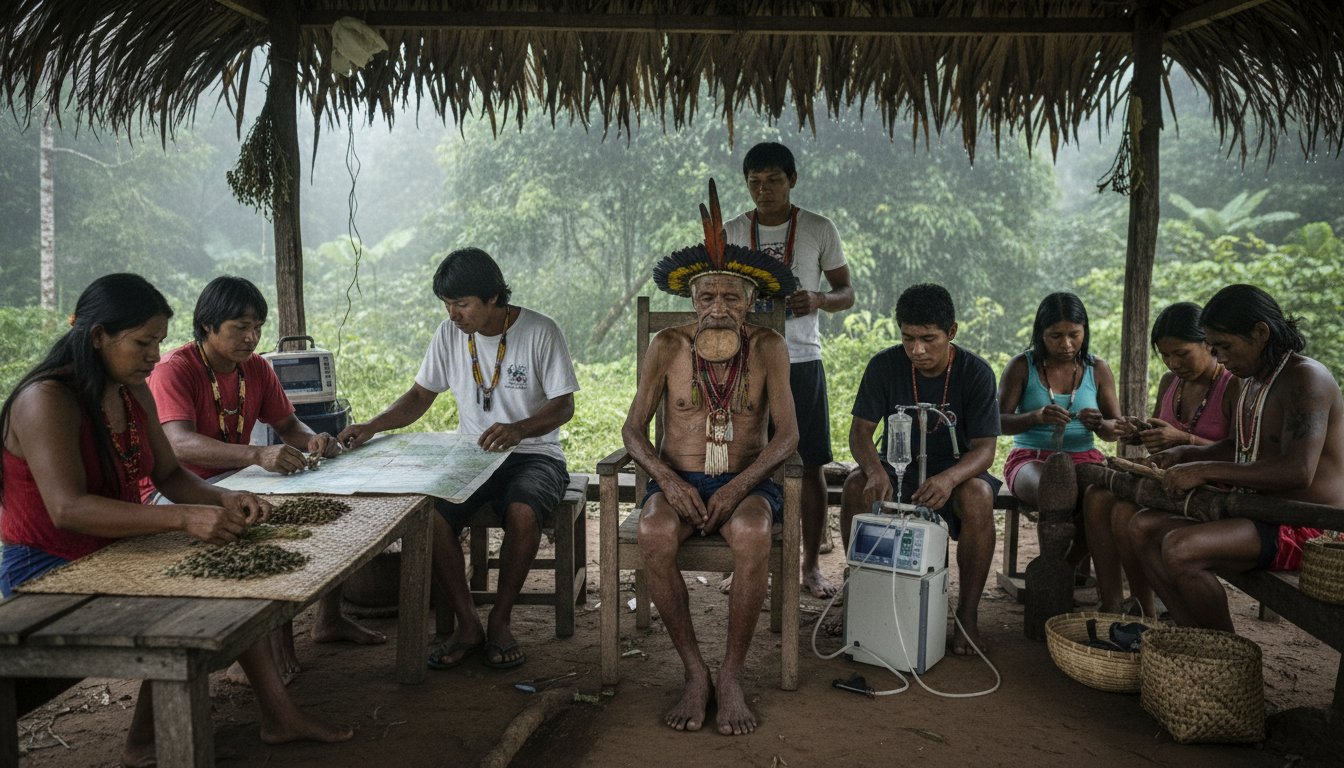
The report from Mongabay Asia on September 15, 2026, confirming that Kayapó Chief Raoni Metuktire is receiving palliative care for cancer, shifts focus from individual leadership to the structural reliance on Indigenous knowledge. His hospitalization in Sao Paulo in June for a severe intestinal obstruction, followed by a diagnosis of cancer in his digestive system at age 94, marks a critical moment not just for his people in Brazil but also for how global environmental policy acknowledges traditional ecological governance.
Chief Raoni has represented a persistent voice for the Amazon, a role that brought international attention to the value of Indigenous approaches to environmental stewardship. The Raoni Institute has stated its priority is his comfort and proximity to family and his people, acknowledging the gravity of his health. This situation highlights a broader structural vulnerability: the dependence on singular, often elderly, figures to champion Indigenous perspectives in global forums. When such figures recede, the mechanisms for integrating their knowledge into mainstream policy often prove inadequate.
In the Asia-Pacific, similar patterns of environmental degradation exist, alongside resilient Indigenous communities whose traditional knowledge systems offer tangible solutions to ecological crises. Hopkins Bloomberg Public Health Magazine, in 2024, noted that Indigenous knowledge offers solutions to environmental crises. The Guardian, in 2023, reported on Indigenous communities combating invasive species off Canada's Pacific coast, demonstrating ongoing efforts to protect biodiversity using ancestral methods. However, these are often isolated fights rather than integrated policy frameworks. The structural issue is not merely the presence of this knowledge but its systemic recognition and application beyond localized conflicts.
For Thailand, the country faces significant environmental challenges, from resource depletion to biodiversity loss. While national environmental strategies exist, the integration of traditional knowledge from ethnic groups into these frameworks remains limited. The passing of influential Indigenous leaders, or their withdrawal from public advocacy due to health, could reveal a critical policy vacuum if robust systems for knowledge transfer and co-governance are not established. The structural change required is the institutionalization of Indigenous knowledge, moving beyond mere consultation to genuine partnership and decision-making authority for traditional custodians.
One might argue that many governments, including those in the Asia-Pacific, have already established departments or initiatives to engage with Indigenous communities, implying that the necessary structures are in place. However, the operational reality often involves consultation without empowerment, or the tokenistic inclusion of Indigenous voices without substantive policy shifts. The structural change needed is the transfer of decision-making power, rather than just input, to Indigenous groups where their traditional lands and practices are concerned. Without this, the insights championed by figures like Chief Raoni risk remaining peripheral, rather than central to global and regional ecological resilience. The outcome now depends on whether states can proactively embed Indigenous governance into environmental policy, or if they will continue to rely on individual advocacy until it is no longer available.
Sources
Newsletter
Pacific Daily
A curated briefing from Thailand, Asia-Pacific and the world.