The Curbside Friction of Transit Discretion
When service refusal turns violent near Boundary Road, the incident exposes how decentralized transport shifts physical risk onto unshielded operators.
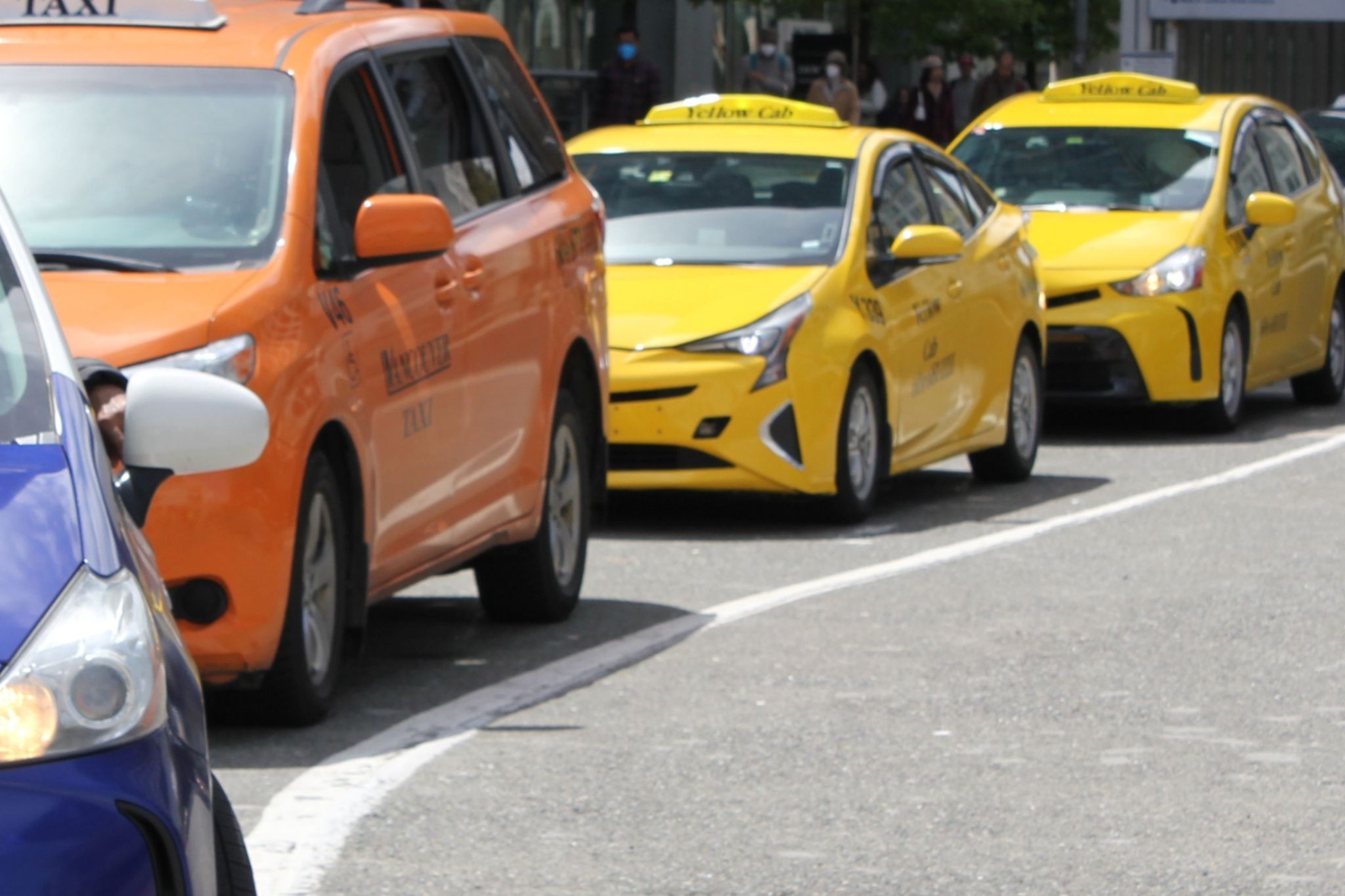
Frontline transport concentrates operational friction at the exact point where service discretion encounters street-level demand. When an operator exercises the formal prerogative to reject a fare, the enforcement mechanism is neither bureaucratic nor institutional. That decision falls entirely on an isolated worker occupying the driver seat. Recent details released by the Vancouver Police Department highlight how rapidly this operational threshold collapses into physical violence when municipal transit relies on unshielded private contractors.
According to incident summaries released by the Vancouver Police Department, the sequence unfolded on Oct. 28 during the evening commute. Police logs record that around 7:30 p.m., an unknown individual damaged a vehicle side mirror near Butler Street and East 46th Avenue before departing. Shortly after 8 p.m., emergency dispatchers received a second call reporting an assault near Boundary Road, specifically at Tyne Street and East 47th Avenue. Investigators noted that an individual matching the earlier description approached an occupied commercial vehicle. When the driver refused to provide a ride, the man punched him in the neck through the vehicle portal, leaving the driver injured and the car damaged.
The Mechanics of Street Discretion
Analytically, the right to decline a passenger serves as an operator's primary instrument for risk mitigation. Commercial transport regulations generally recognize that private contractors must not be coerced into hazardous transit environments. Yet delegating refusal authority to the individual creates a severe institutional asymmetry. While regulatory frameworks grant the legal authority to reject service, they provide no physical mechanism to enforce that refusal safely. Passengers demand immediate mobility, frequently interpreting non-compliance as personal provocation. Drivers seek to prevent cabin disruption by establishing a perimeter at the window, turning a transaction portal into a flashpoint.
The progression between East 46th Avenue and East 47th Avenue reveals how uncontained hostility moves through municipal corridors.
Initial property damage targeted exterior vehicle hardware without direct personal engagement. Within thirty minutes, that unfocused aggression met an accessible human counterparty. Stationary commercial vehicles waiting near Boundary Road offer fixed engagement points for volatile individuals traversing peripheral residential streets. Because commercial taxi drivers operate as isolated economic units rather than concentrated labor inside secured transit terminals, they absorb the immediate physical costs of urban volatility without intermediate institutional buffers.
Risk Allocation in Decentralized Transit
Urban transport systems depend on decentralized operators to maintain peripheral routes during off-peak hours. Municipal administrations benefit from this distribution because private point-to-point transit resolves mobility gaps without requiring public capital expenditure on permanent transit stations or continuous physical security patrols. Fleet management structures also gain, capturing dispatch revenue while shifting real-time physical risk onto frontline workers. Drivers remain the sole economic actors forced to calculate personal safety against lost revenue while negotiating face-to-face with unpredictable pedestrians.
Regulators often counter that unrestricted driver discretion undermines transit equity and breaches common-carrier obligations. Municipal authorities frequently penalize drivers who reject fares without verified justification, aiming to preserve reliable public access across all neighborhoods. That policy logic, however, fails to distinguish between discriminatory refusal and urgent self-preservation. Enforcing service mandates without mandating physical cabin partitions or verified dispatch screening guarantees that operators will face punitive regulatory scrutiny precisely when prioritizing physical safety.
Police intervention remains an inherently reactive remedy. As the Vancouver Police Department records demonstrate, formal enforcement occurs only after property is damaged and physical blows have landed. Sustainable transit security requires altering the transaction architecture itself. Until physical partition standards or verified dispatch screening remove the necessity for direct window-side negotiations, street-level transport labor will continue operating as the default shock absorber for peripheral urban friction.
Sources
Newsletter
Pacific Daily
A curated briefing from Thailand, Asia-Pacific and the world.