The Balance Sheet of Eradication in the Breekkrans River
Removing invasive spotted bass gives an endangered redfin temporary respite, but the long-term ecological ledger demands recurring capital.
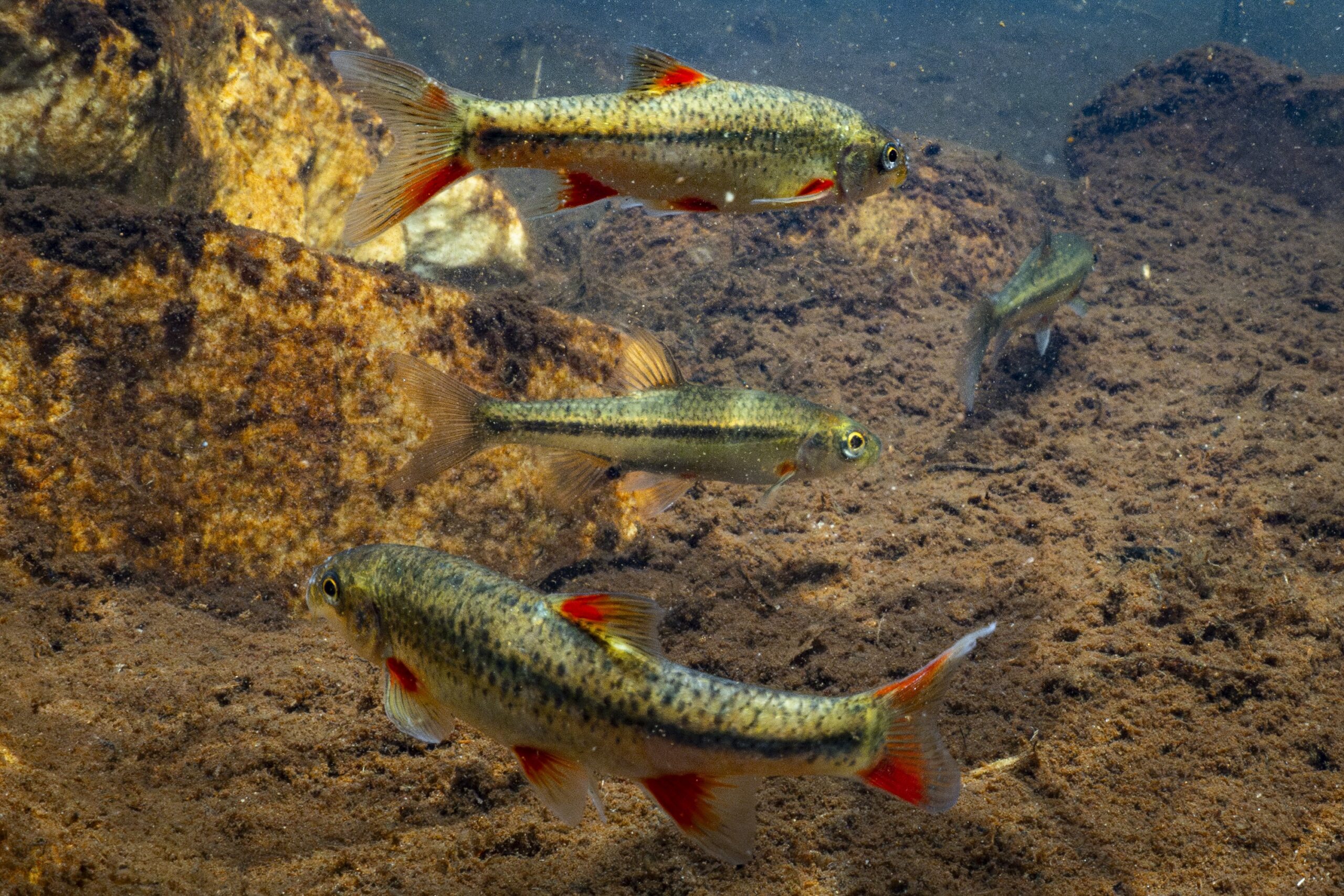
Recreational stocking decisions made nearly a century ago continue to impose direct remediation costs on modern conservation budgets. In South Africa, an eradication campaign in the Breekkrans River, situated about two hours north of Cape Town, targeted the removal of invasive spotted bass to prevent the extinction of the critically endangered doring fiery redfin, Pseudobarbus doring. Removing the predator offers measurable ecological relief. Yet the underlying arithmetic of river clearing shows that technical removal is only the initial expense in an ongoing, capital-intensive balance sheet.
Historical records establish that spotted bass were introduced into the river system in the late 1930s. The policy objective was singular and recreational: establishing sport angling. Martine Jordaan, a faunal ecologist at provincial conservation authority Cape Nature, pointed out the structural mismatch created by that intervention:
"The main reason was to have a species that was good for angling. What makes bass a good angling fish makes it a bad invader. It really goes after the small fish, and most of our native fish are 12 centimeters [4.7 inches] and smaller."
Predatory Leverage and Spatial Compression
The survival data reflects that predatory leverage directly compressed indigenous habitats. Because endemic species evolved without selective pressure against large-bodied pursuit predators, demographic losses compounded whenever bass gained access to open water. Research involving Cape Nature and the Freshwater Research Centre, alongside work by scientists such as Jeremy Shelton, established that native stock survived only where structural geography intervened. As Jordaan noted: "Often you find that native fish populations [are restricted to] streams where bass cannot invade,"
Confining Pseudobarbus doring to isolated headwaters averted immediate extinction, but habitat fragmentation generates its own quantifiable liabilities. Fragmented populations run severe risks from localized ecological disruptions, including sedimentation, drought, or seasonal water depletion. Eradicating invasive spotted bass across target sections of the Breekkrans River effectively aims to restore river mileage to the redfin, widening its geographic safety margin. The operational claim is straightforward: eliminating predation downstream allows the redfin population to expand outward from its precarious mountain redoubts.
The Economics of Permanent Exclusion
The conservation model assumes that cleared stretches remain clear, an inference that operational history frequently challenges. Eradicating aquatic invaders from complex natural river channels requires high labor inputs, specialized chemical or mechanical interventions, and multi-year surveillance. If monitoring lapses or reintroduction occurs, a single surviving cohort of spotted bass can repopulate cleared stretches within seasons, wiping out the biological gains achieved by the initial intervention. Sunk capital in invasive removal rapidly depreciates without dedicated operational spending to secure physical barriers and maintain downstream isolation.
Policy planners must treat invasive fish removal not as a one-time repair, but as an open-ended maintenance commitment. Introducing alien predatory species in the late 1930s delivered short-term utility to recreational anglers, while externalizing permanent containment costs onto modern conservation authorities. South Africa’s effort in the Breekkrans River proves that spotted bass can be cleared to give Pseudobarbus doring room to recover. Whether that biological recovery survives now depends entirely on sustained recurrent funding to police upstream perimeter barriers against reinvasion.
Sources
Newsletter
Pacific Daily
A curated briefing from Thailand, Asia-Pacific and the world.