Taiwan's Aid to Japan: A Strategic Signal Amidst Rising Pressure
The US$9.4 million donation highlights a calculated recalibration of Taiwan's regional role, driven by evolving geopolitical realities.
SINGAPORE
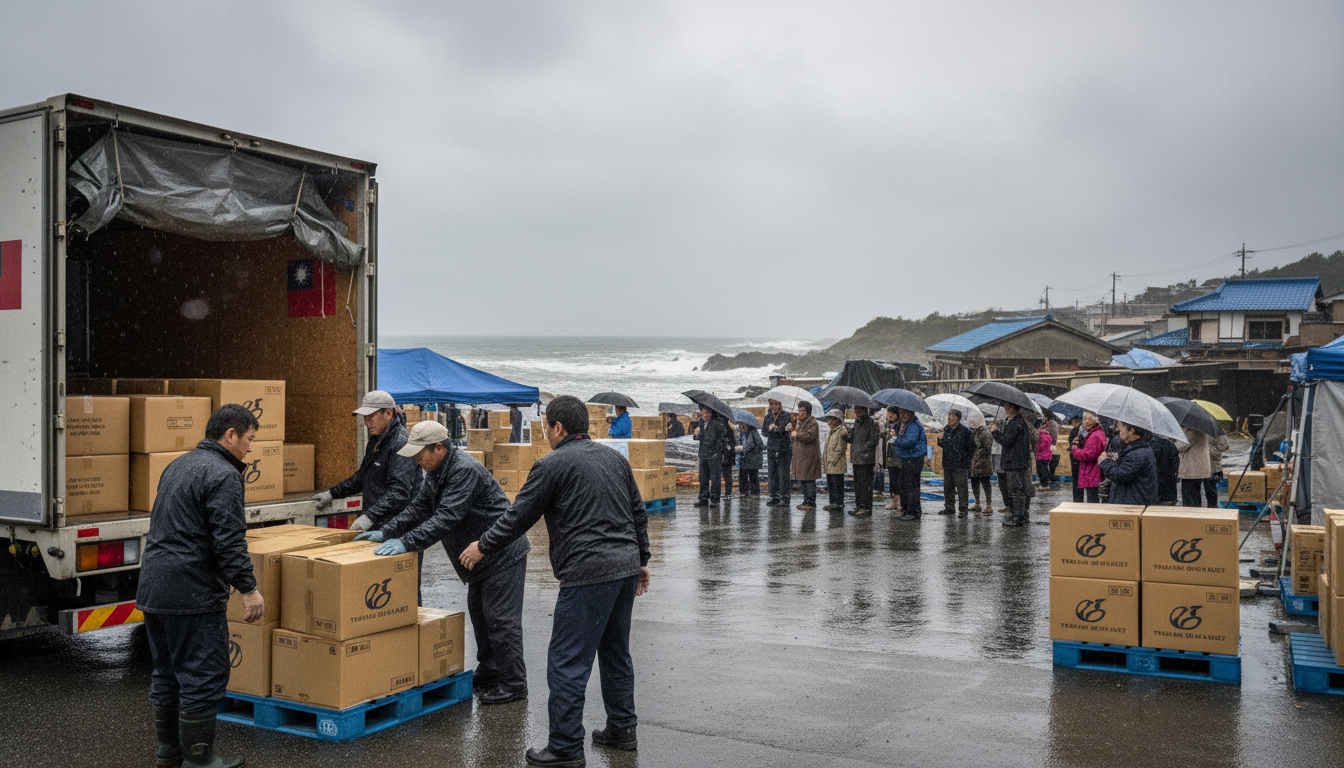
Taiwan’s US$9.4 million donation for earthquake relief in Japan, reported on 2026-09-17, represents more than humanitarian aid. This action must be analyzed within a structural shift in regional dynamics, particularly Taiwan’s position under increasing external pressure. The sum, while significant, functions as a public gesture of solidarity and capability, following a period where China has amplified its military presence near Taiwan. China initiated new patrols off Taiwan’s Pacific coast, intensifying a pre-existing pattern of military activity.
This donation coincides with Taiwan’s stated intent to promote sustainable development across the Asia-Pacific, a claim made by Lai on 2026-08-27. Simultaneously, Taiwan has proposed an 18% increase in its 2027 defense spending, aiming for a record high, a proposal reported on 2026-08-19. These actions are not isolated. They form part of a coherent strategy to assert Taiwan's sovereignty and regional relevance, even as military encounters in the region persist. A Chinese military commander overseeing Taiwan operations met with the U.S. PACOM chief on 2026-09-05, underscoring the direct engagement of major powers in the context of Taiwan operations.
The underlying implication is that Taiwan is actively seeking to solidify its diplomatic and security standing through diverse avenues. While military preparedness, including troops on islands key to Taiwan’s defense preparing for a potential Chinese first strike, remains a critical component of its strategy, as reported on 2026-08-28, humanitarian contributions offer an alternative dimension to its regional engagement. This donation to Japan, a key regional partner, can be interpreted as an effort to cultivate goodwill and reinforce alliances in a manner distinct from direct military posturing.
However, the efficacy of such humanitarian gestures in fundamentally altering the strategic calculus surrounding Taiwan remains to be assessed. China's sustained pressure, exemplified by the increased patrols, is largely unaffected by these contributions. The core constraint remains the geopolitical competition between major powers, which continues to shape Taiwan's security environment. While the donation projects a certain image of Taiwan as a responsible regional actor, it does not directly address the fundamental power imbalance or the military challenges it faces. The outcome now depends on whether these multi-faceted diplomatic and defense efforts can collectively create sufficient deterrence or support to meaningfully alter the structural pressures Taiwan confronts.
Sources
Newsletter
Pacific Daily
A curated briefing from Thailand, Asia-Pacific and the world.