Singapore's Unseen Shifts: A Canteen's Closure and the End of an Era
The shuttering of a long-standing eatery in Singapore signals a broader regional trend of economic and strategic reorientation, with implications for neighboring economies like Thailand.
SINGAPORE
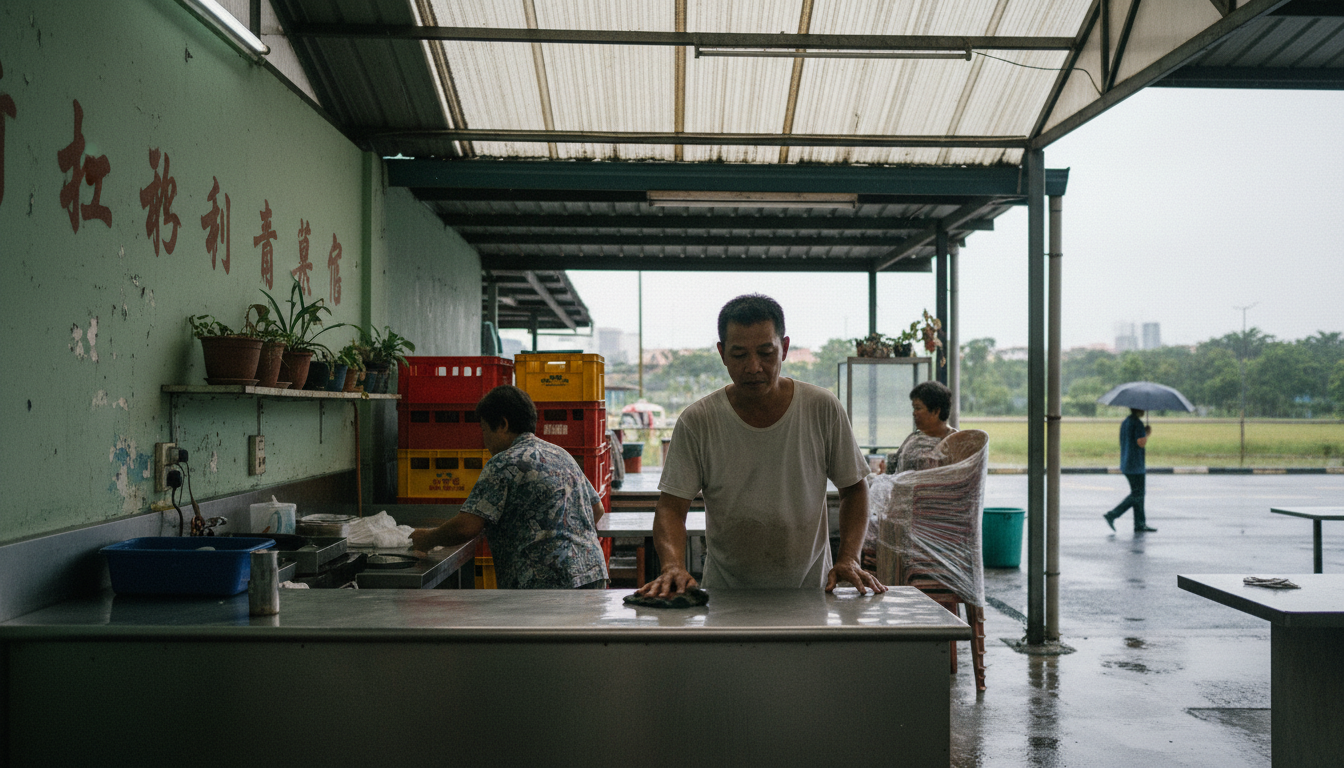
The Boh Geh Uncle Canteen, an open-air eatery on the grounds of a former Royal Air Force base in northern Singapore, will serve its final meal on September 18 and close permanently the next day after 57 years. This closure, reported by VnExpress International, marks the end of an establishment that outlasted the military presence it once served. The canteen's longevity, extending decades beyond the Royal Air Force's departure, illustrates a gradual but persistent recalibration of land use and economic focus within Singapore.
The strategic value of Singapore's real estate has intensified over recent decades. While the canteen's demise may appear as a localized commercial decision, it registers within a pattern of continuous spatial re-evaluation. Such re-evaluations are not isolated to commercial interests; they reflect national priorities. The former Royal Air Force base, a legacy of a prior geopolitical order, now exists within a dynamic regional economy where capital deployment is increasingly focused on high-value sectors.
Singapore's economy continues to draw significant international interest. HashKey looks to purchase Singapore's Asia Pacific Exchange, and Stripe’s chief revenue officer states the company’s Apac business should grow faster than any other region. These financial and technological investments indicate a concentrated effort to position Singapore at the forefront of digital and financial innovation in Asia Pacific. This sustained inward investment, alongside ongoing regulatory scrutiny, as evidenced by the Singapore police raid on Radiant World’s office, points to a state actively managing its economic environment to maintain competitive advantage.
For a nation like Thailand, such developments in Singapore present both a model and a challenge. Singapore's deliberate shaping of its urban and economic landscape towards high-tech and financial services offers a clear trajectory. However, it also underscores the increasing pressure on physical space and traditional enterprises. The closing of Boh Geh Uncle Canteen is not merely a nostalgic event; it is a micro-indicator of a macro-economic shift where historical land use gives way to contemporary economic imperative. The question for regional strategists remains how nations balance the preservation of cultural touchstones with the relentless drive for economic evolution, particularly when the value of land and capital dictates outcomes that displace long-standing community fixtures.
Sources
Newsletter
Pacific Daily
A curated briefing from Thailand, Asia-Pacific and the world.