Singapore's Ghibli wager: Cultural capital versus economic return
An upcoming immersive exhibition highlights Singapore's strategy to attract premium tourism, but the scale of investment versus direct economic impact merits scrutiny.
SINGAPORE
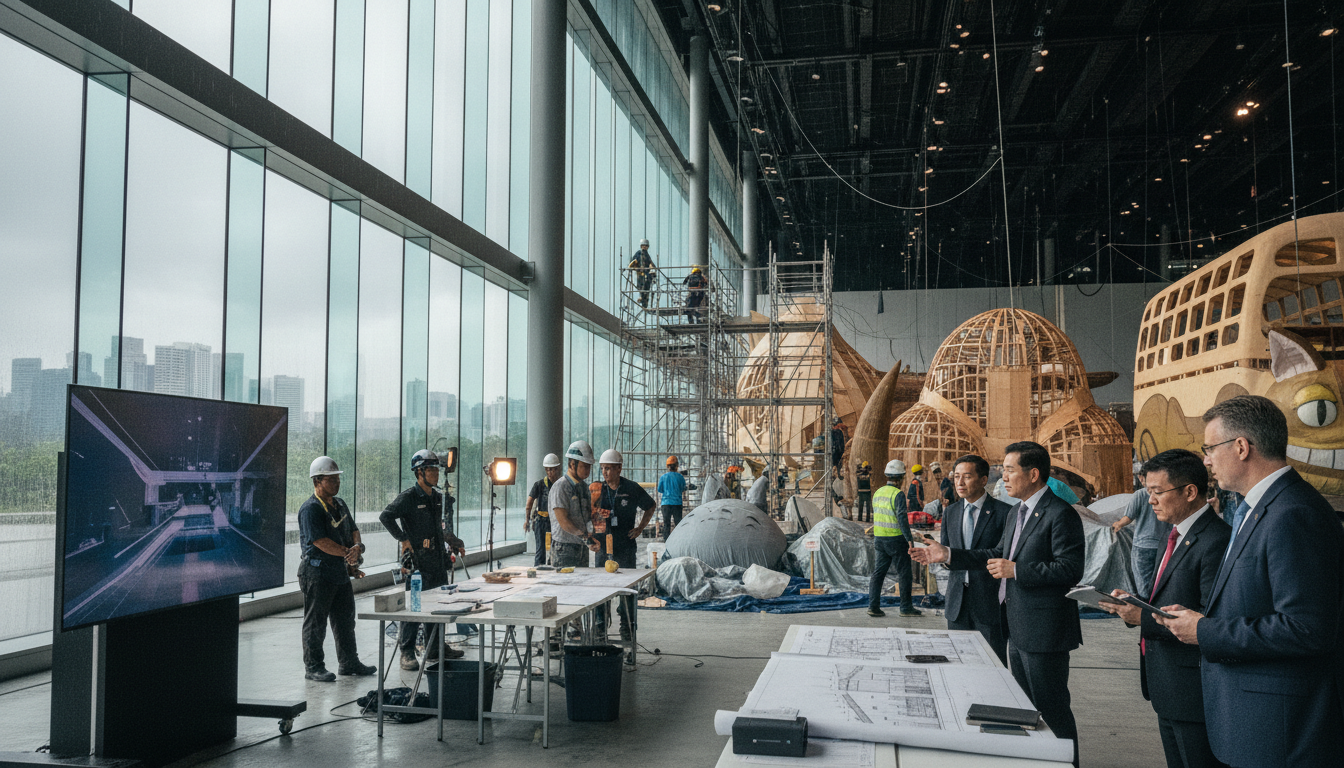
Singapore will host an immersive exhibition titled 'The Story of Studio Ghibli,' set to debut on December 18, 2026. This Singapore edition, produced by Tsukuru, Inc and M Experience with support from the Singapore Tourism Board, will span nearly 3,500m², featuring 12 life-sized worlds inspired by films such as *Nausicaä of the Valley of the Wind*. The event is billed as the largest presentation of 'The Story of Studio Ghibli' to date.
This initiative aligns with Singapore’s established pattern of leveraging cultural attractions to draw international visitors and position itself as a regional hub. Studio Ghibli’s founder, Miyazaki Hayao, was among the 2024 Ramon Magsaysay awardees, indicating the brand’s recognized cultural weight, which the Singapore Tourism Board is banking on. The exhibition’s scale suggests a significant investment, likely covering production costs, venue fees, and marketing, particularly given the Singapore Tourism Board's support.
For a market realist, the central question revolves around the financial mechanics: who pays for this, and at what occupancy does it work? Studio Ghibli has a global fanbase; for example, *Princess Mononoke* received a review noting it was 'fervently inventive and imagined' in 2001. Translating broad cultural appeal into direct, substantial tourism revenue for the host city is a complex proposition. The Singapore Tourism Board's involvement indicates public funds are deployed, positioning this as an investment in Singapore's cultural and tourism profile rather than a purely commercial venture.
Quantifying the Return
However, the direct return on investment for such an event is not always clear. The exhibition is intended to offer 'longtime fans and a new generation of audiences an opportunity to explore famous stories in a new way.' The total number of new arrivals specifically motivated by this exhibition, and their average spend beyond ticket purchases, would determine its financial viability. Without disclosed projections for ticket sales, international visitor uplift, or ancillary spending, assessing the direct economic contribution remains speculative.
Singapore has recently seen activity in other sectors. Anthropic is set to open a Singapore office in October 2026, and HashKey looks to purchase Singapore's Asia Pacific Exchange by July 2026. This broader economic context suggests Singapore continues to attract diverse investment. For the Ghibli exhibition, the immediate beneficiaries are the production companies, Tsukuru, Inc and M Experience, and potentially the Singapore Tourism Board if its objective is primarily brand-building rather than immediate profit. The exhibition could generate indirect benefits through increased hotel stays and dining, but these are difficult to quantify pre-event.
The underlying tension is between cultural prestige and measurable economic output. While Singapore enhances its reputation as a cultural destination, the direct financial sustainability of such large-scale, time-limited events relies heavily on consistent, high attendance and significant visitor expenditure. The outcome now depends on whether the perceived cultural value translates into a robust, measurable economic influx sufficient to justify the public and private capital deployed.
Sources
Newsletter
Pacific Daily
A curated briefing from Thailand, Asia-Pacific and the world.