Singapore’s Exotic Pet Trade: A Hidden Echo of Urban Anonymity
Beneath the city’s ordered surface, the illicit demand for rare wildlife continues, revealing an overlooked aspect of metropolitan life.
SINGAPORE
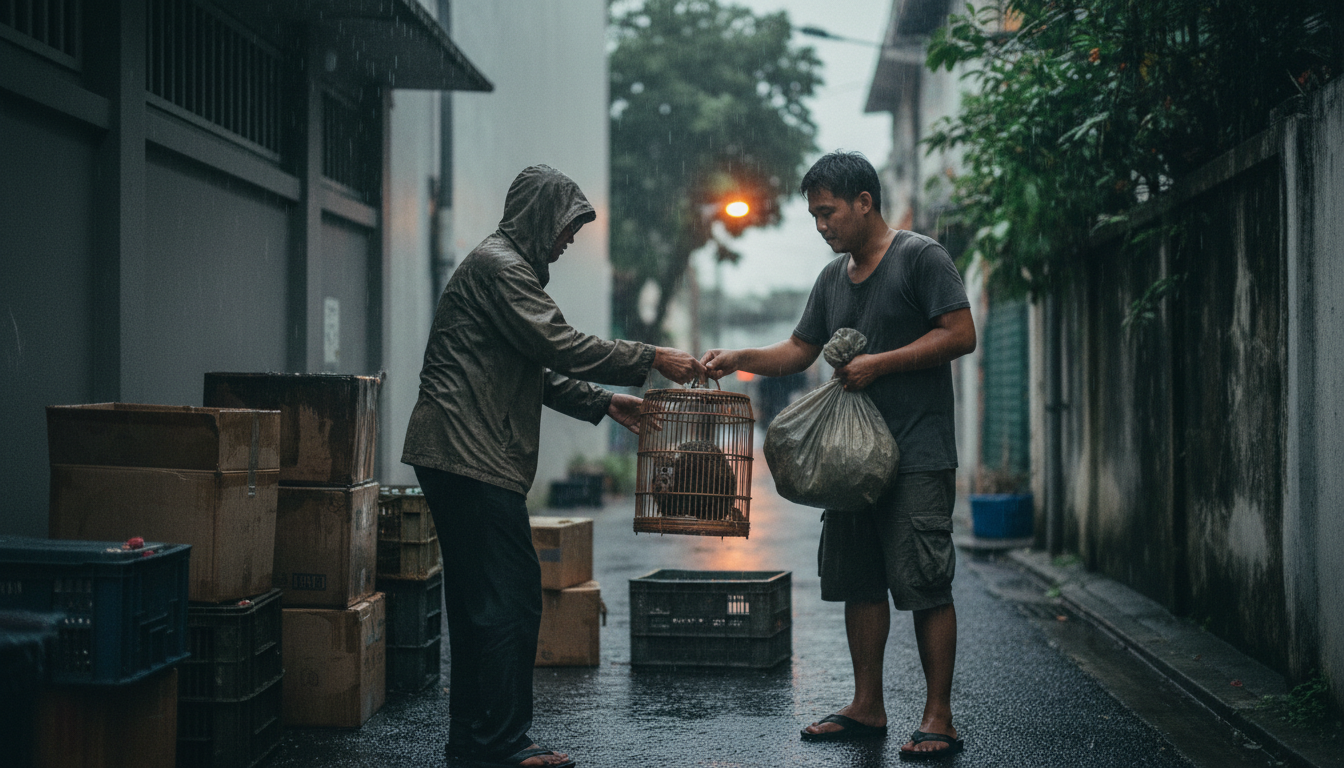
The low hum of urban life in Singapore often masks a quieter, more peculiar rhythm. While the city meticulously plans its green spaces—a digital plant database for the Botanic Gardens ([4]), gold medals for its orchid displays ([6])—another, less visible ecosystem thrives. The National Parks Board (NParks) recently undertook an islandwide operation, seizing 101 non-native wildlife species ([1], [2]). This singular event, occurring on September 16, 2026, saw six individuals placed under investigation for the illegal sale and possession of these creatures, 14 of which were found dead ([1], [2]). Among the animals recovered were axolotls, a ball python, and a blue beauty anole ([1]).
This is not an isolated incident. Less than a year prior, on October 20, 2025, Singapore authorities conducted raids targeting Telegram groups, leading to the seizure of rare tortoises and lizards ([3]). These operations, which NParks describes as among its largest in recent years ([2]), suggest a persistent, if subterranean, demand. The existence of an illegal trade implies a market, and a market implies buyers. Who are these buyers, and what compels them to seek out such specific, often endangered, creatures in a city known for its strict regulations and carefully curated natural environments?
The answer may lie in the evolving relationship between urban dwellers and their increasingly artificial surroundings. For some, the draw of an exotic pet — an axolotl, a ball python — is a form of defiance against the highly structured routines of metropolitan existence. It’s an assertion of individuality in spaces where personal expression often feels circumscribed. The very act of acquiring and keeping an illegal animal, hidden from official view, offers a sense of control, a small, illicit dominion in an otherwise regulated life. It moves beyond simple pet ownership; it becomes a performance of identity, a cultural signal of a life lived slightly off-grid, however subtly.
While NParks dedicates resources to identifying illegally traded items, even developing mobile apps to detect shark and ray fins ([5]), the continued frequency and scale of these seizures point to a deeply entrenched pattern of behaviour. The issue is not just about conservation, though that is critical. It is also about the psychological landscape of a hyper-modern city. For some, the exotic pet represents a connection to something wild and untamed, a contrast to the manicured parks and digitalised flora that dominate public spaces. It's a private wilderness curated within four walls, a personal rebellion against the visible order.
The human desire for uniqueness, for something distinct from the mainstream, finds expression in various forms. In a city where even nature is increasingly managed and digitised, the allure of the truly wild, however small or caged, can be potent. The demand for these creatures, far from being a simple oversight, seems to echo a deeper, unacknowledged craving for the raw and unregulated, a quiet counter-narrative unfolding in the private spaces of an otherwise meticulously planned metropolis. It is a peculiar habit, persisting beneath the surface, changing the domestic texture of the city one hidden vivarium at a time.
Sources
Newsletter
Pacific Daily
A curated briefing from Thailand, Asia-Pacific and the world.