Seeds of Resilience: How Global Farmers Are Rewriting Tradition for a Changing Climate
From ancient terracing to vertical hydroponics, communities worldwide are merging ancestral wisdom with modern ingenuity to secure their harvests.
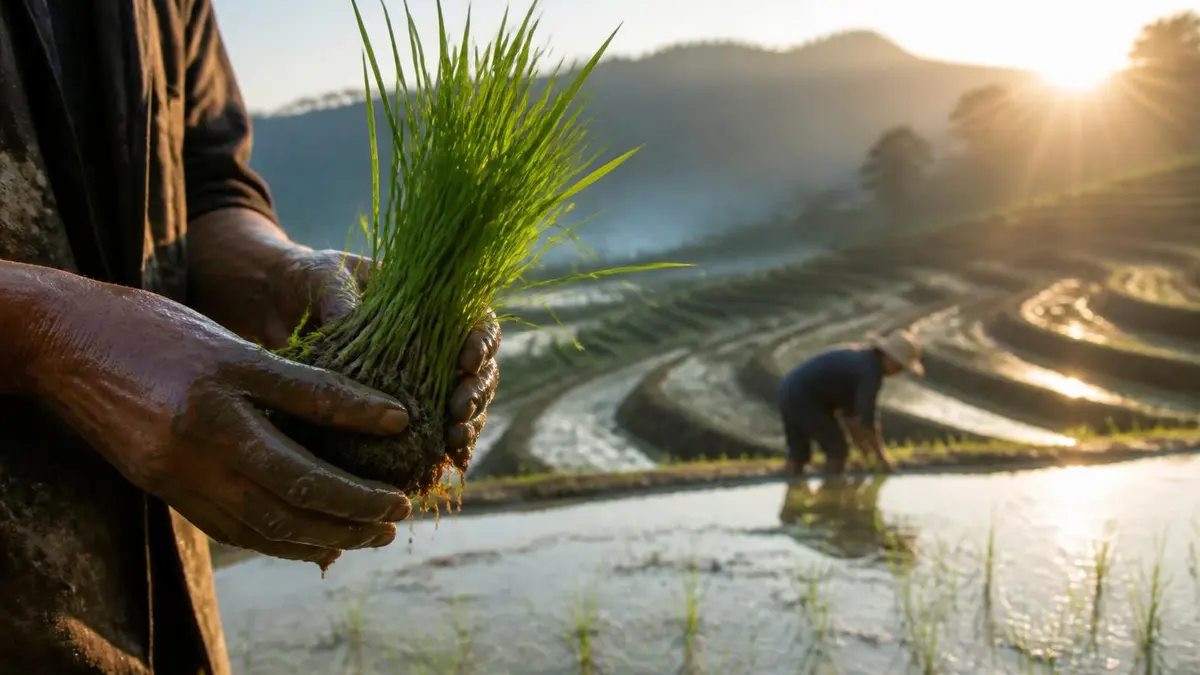
As a correspondent for Pacific Press, my beat often brings me face-to-face with the sharp edges of climate change. Nowhere is this more apparent than in agriculture, where age-old rhythms are faltering under erratic weather patterns and shrinking resources. Yet, amidst the challenges, I’ve witnessed a powerful current of innovation – a cross-continental movement where farmers, guided by necessity, are reinventing their relationship with the land.
My journey began in the terraced rice fields of Ifugao, Philippines, a UNESCO World Heritage site where generations have perfected an intricate irrigation system. I spoke with Maria, a 60-year-old farmer whose family has tilled these lands for centuries. "Our ancestors built these," she said, gesturing to the sprawling emerald steps, "but even they could not predict this heat, these stronger typhoons." Maria described how her community, initially resistant to change, is now experimenting with drought-resistant rice varieties brought by local agricultural universities, and even reviving certain indigenous, hardier strains once thought less productive. "It's a dance," she explained, "between what we know and what we must learn."
Thousands of miles away, in the arid plains of Rajasthan, India, I encountered similar adaptations. Here, water scarcity is a perennial crisis. Farmers like Raj, a 45-year-old millet cultivator, are resurrecting traditional 'khadin' systems – ancient rainwater harvesting structures that capture and store monsoon runoff for cultivation. "For years, we relied on borewells, but the water table drops every season," Raj told me. "Now, we clean the khadins, plant drought-tolerant millets and pulses, and use drip irrigation where we can afford it. It's slower, but it's sustainable. It's our only option if we want to stay on this land."
The Vertical Horizon and Coastal Innovations
The innovations aren't solely about looking backward. In the bustling urban fringes of Singapore, I visited a vertical farm, a stark contrast to the sprawling fields I’d just left. Here, leafy greens grow under LED lights, stacked in climate-controlled environments. Mr. Lee, the farm's operations manager, explained their mission. "Singapore imports over 90% of its food. Climate change, geopolitical instability – these threaten our supply. We're leveraging hydroponics and aeroponics to maximize yield in minimal space, reducing water usage by 95% compared to traditional farming." While the initial investment is significant, the promise of year-round, hyper-local produce, insulated from external shocks, is compelling. This isn't just about food security; it's about national resilience.
Further west, along the coastal communities of Senegal, I witnessed an innovative response to rising sea levels and soil salinization. Mangrove restoration projects, spearheaded by local women's cooperatives, are not only protecting coastlines but also creating new habitats for fish and crabs, supplementing local diets and incomes. Fatou, a community leader, articulated the deep connection: "When the sea takes our land, it takes our food, our identity. Planting mangroves is like planting hope. It is our children's future, rooted in the very earth that protects us."
"To adapt is not to abandon tradition, but to deepen our understanding of its core principles in a changing world."
These diverse approaches – from re-embracing ancient water management in India to high-tech urban farms in Southeast Asia, from heritage rice varieties in the Philippines to ecological restoration in West Africa – underscore a critical truth. The climate crisis demands not a singular solution, but a mosaic of localized, culturally resonant adaptations. Farmers, from the smallest landholders to the largest operations, are not passive victims; they are active innovators. Their ingenuity, often born of desperation, offers a powerful testament to human resilience and a blueprint for a more food-secure future, forged at the intersection of ancestral wisdom and urgent necessity. Their stories are a poignant reminder that while the challenges are global, the solutions are often deeply local, echoing through generations while looking bravely toward tomorrow.
Newsletter
Pacific Daily
A curated briefing from Thailand, Asia-Pacific and the world.