Romualdez Transfer Indicates Narrowing Political Latitude
The move of Martin Romualdez to Payatas jail following a hospital stay suggests institutional pressures are resisting political influence, impacting perceived stability.
SINGAPORE
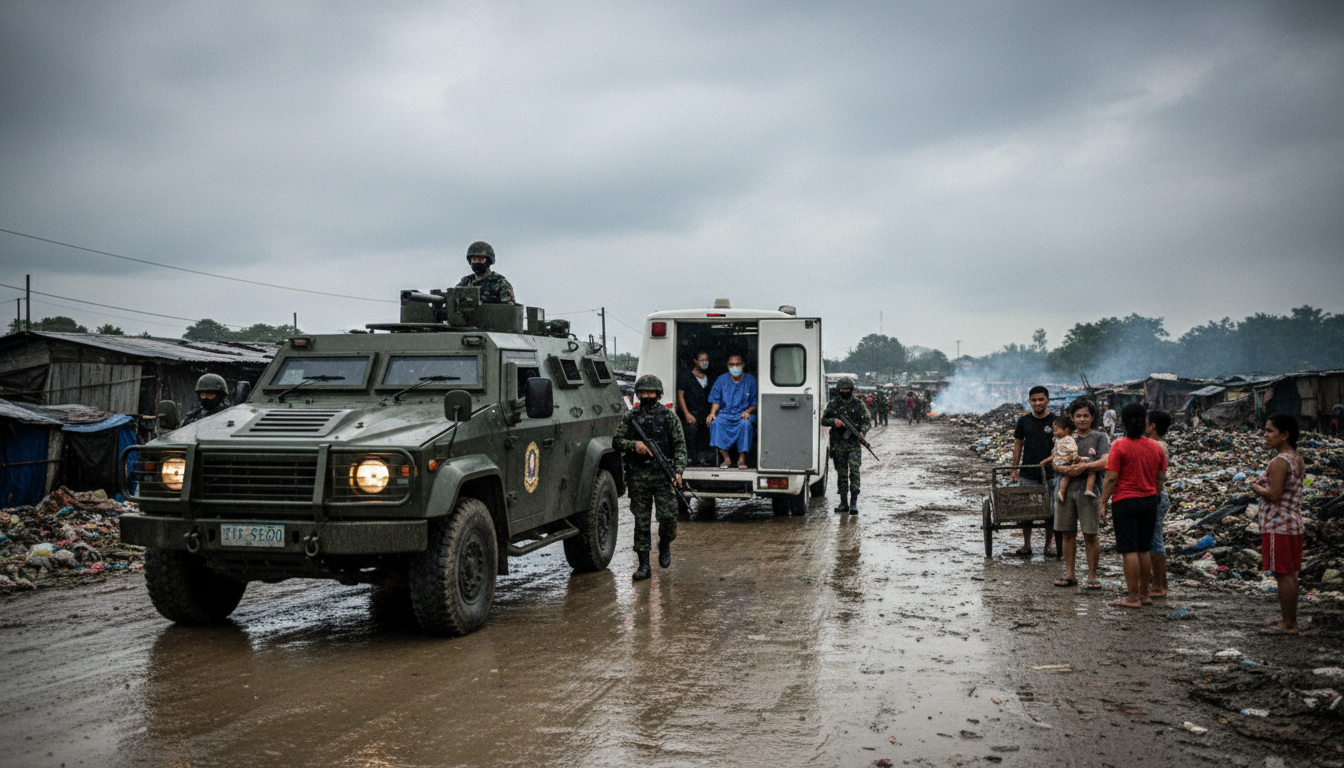
The transfer of Martin Romualdez from the hospital to Payatas jail on September 14, 2026, marks a development beyond a routine legal procedure. Romualdez, identified as a Marcos kin by The New York Times, was charged with plunder, as reported by Rappler. This move follows a Rappler report indicating he would remain hospitalized until further orders from the Sandiganbayan. Doctors subsequently found Romualdez in stable condition, negating the need for continued confinement.
This sequence of events offers a specific lens on the institutional capacity for independent action within the Philippines. The initial hospital stay, following the plunder charges, could be interpreted as a common maneuver to defer detention. The subsequent medical assessment and transfer to a facility like Payatas jail, where Jinggoy Estrada was also detained for a plunder case on June 1, 2026, indicates a judicial and medical system enforcing its protocols.
The implications for Thailand and the broader Asia-Pacific region stem from how such events shape perceptions of governance and investment risk. Political stability in emerging markets is often assessed by the robustness of legal frameworks and the impartiality of their application. When high-profile individuals, particularly those with familial ties to the executive, face legal processes that appear to follow established procedure, it can signal a reduction in political interference.
However, this situation also highlights inherent fragilities. The New York Times reported the arrest of a Marcos kin in a kickbacks case. Alongside Romualdez's plunder charge, this suggests a concentrated period of legal scrutiny on politically connected figures. This could be interpreted as a genuine crackdown, or as a targeted exercise of power. A Rappler report highlighted a senior BSP official's concerns about bank secrecy limits in Sara Duterte subpoenas, illustrating that opacity persists in financial oversight. This suggests systemic vulnerabilities remain.
The transfer of Romualdez to Payatas jail, driven by a medical assessment finding stable condition, signifies that institutional checks, at least in this instance, appear to be functioning. The perceived stability of the Philippines' political-economic environment rests on the consistent application of such processes. Any divergence from this could shift the assessment of investment conditions in the region.
Accountability in Governance
The pattern of legal action against prominent figures, including Romualdez, suggests a growing, albeit contested, emphasis on accountability. While the charges themselves remain claims, the progression through the legal and medical systems provides data points for assessing the independence of state institutions. The fact that a relative of the sitting president is subjected to detention in a standard correctional facility, rather than prolonged hospital stay, represents a departure from historical norms of elite immunity in some regional contexts. This may encourage greater scrutiny from investors on other regional governments.
Nevertheless, the long-term impact on the Philippines' governance and its regional perception is contingent on the sustained and equitable application of such judicial processes. The current events provide a data point, but not a trend. The outcome now depends on whether similar standards are consistently applied across the political spectrum, and whether the underlying issues of financial transparency, as highlighted by the Duterte subpoenas, are addressed with equal resolve.
Sources
Newsletter
Pacific Daily
A curated briefing from Thailand, Asia-Pacific and the world.