Romualdez Plunder Trial Highlights Regional Governance Risks
A prominent Philippine political figure's not-guilty plea underscores persistent issues with institutional stability across Southeast Asia, impacting market perceptions and political confidence.
SINGAPORE
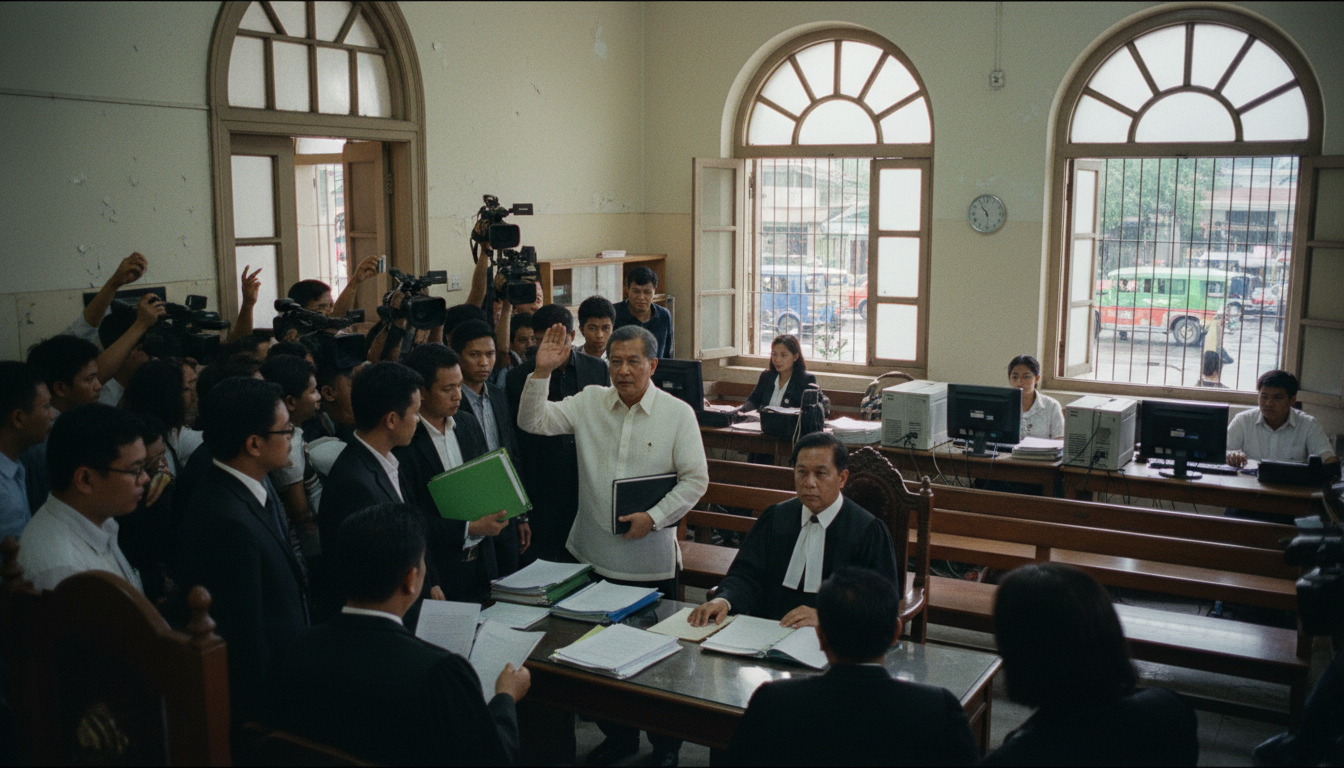
The not-guilty plea entered by Martin Romualdez on September 16, 2026, in a P7.44-billion plunder case marks a procedural shift: the case will now move to trial. This development in the Philippines, involving a figure arrested and later remaining hospitalized, offers a lens through which to examine broader patterns of governance and economic stability across Southeast Asia.
Historically, the region has grappled with the interplay between political continuity and accountability. While individual cases like Romualdez's are localized, their progression — or lack thereof — influences how international and domestic actors perceive the rule of law. A prolonged trial for a figure of this stature in the Philippines can signal institutional fragility or, conversely, a commitment to due process, depending on its conduct and outcome. This duality creates a complex risk profile for investors and policymakers evaluating long-term stability.
In Thailand, for instance, similar concerns about political stability and corruption perception have consistently shaped economic forecasts. The challenge is not merely the existence of corruption allegations, but the efficacy of legal systems in addressing them, particularly when high-profile individuals are involved. A perceived lack of definitive resolution in one market can amplify anxieties in others, given the interconnectedness of regional economies. The 2027 budget, described as containing "hocus-pocus" in a September 16, 2026, Rappler report, indicates that fiscal transparency issues persist even as legal processes unfold.
The Romualdez case, specifically the potential for delaying detention, points to a potential constraint on the legal system's assertiveness. This detail is not an anomaly within the region. Such maneuvers, whether perceived as legitimate procedural rights or as attempts to circumvent justice, contribute to a regional narrative of uneven application of legal standards. This narrative can detract from efforts to build robust regulatory frameworks necessary for sustained economic growth.
The counterargument posits that the legal process is functioning as intended: an arrest occurred, a plea was entered, and a trial will proceed. From this perspective, the system is demonstrating its capacity to address allegations against powerful individuals, which could ultimately strengthen institutional legitimacy. However, the true measure of this function will be in the pace, transparency, and perceived fairness of the trial itself. The unanswered question remains whether the judicial process can conclude definitively and impartially, without protracted delays or political interference, thereby solidifying confidence in the region's governance structures.
Sources
Newsletter
Pacific Daily
A curated briefing from Thailand, Asia-Pacific and the world.