Regional Talent Flows: Vietnam's Educational Achievements and Asia-Pacific Implications
An International Physics Olympiad gold medalist winning two academic awards at MIT signals a concentrated intellectual export, not a broad regional shift.
SINGAPORE
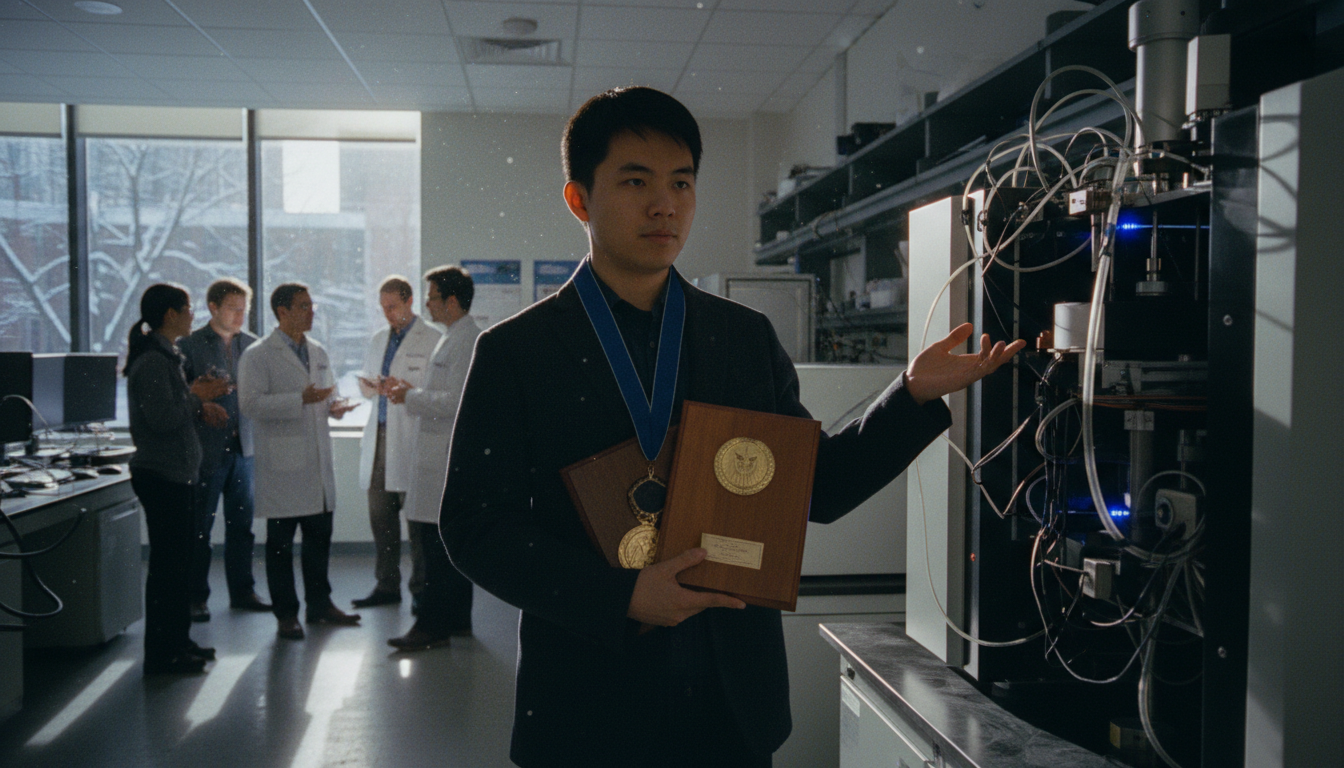
The report that Tran Quang Vinh, an International Physics Olympiad gold medalist, received two academic awards at the Massachusetts Institute of Technology's physics department in 2026 presents a specific instance of Vietnamese academic achievement. This success, occurring at a university described as "world's No. 1" by VnExpress International, coincides with several other reports from the same publication over the past year: Vietnamese students winning tough Canadian scholarships in 2025, another securing a $63,000 Ivy League scholarship in 2025, a European Math Prize winner joining an initiative to curb Vietnam's "brain drain" in 2026, and a Nobel laureate inspiring Vietnamese students in 2026.
This pattern suggests a notable and sustained output of highly capable Vietnamese students into global, specifically Western, academic institutions. The focus appears to be on individual recognition and scholarship attainment. The mention of an initiative to counter "brain drain" in early 2026 acknowledges a counter-narrative: that while individual Vietnamese excel abroad, there are national concerns about retaining this talent. This creates a tension between the celebrated individual achievements and the broader policy objective of national development.
From a regional strategic perspective, particularly looking at Thailand and the wider Asia-Pacific, such specific achievements by Vietnamese students do not necessarily indicate a fundamental shift in the overall educational landscape or human capital distribution. Thailand, for instance, has its own educational pathways and challenges. The success of one Vietnamese student, however significant for that individual and Vietnam, does not inherently alter the competitive environment for Thai students seeking similar international recognition. Instead, it highlights a consistent, targeted effort within Vietnam to foster and support high-achachieving students in STEM fields, particularly in physics and mathematics, leading to international placements.
The pattern suggests a notable and sustained output of highly capable Vietnamese students into global, specifically Western, academic institutions.
It is important to classify these events. The awarding of scholarships and academic prizes to individuals like Tran Quang Vinh are facts of individual achievement. The characterization of MIT as the "world's No. 1 university" is an attributed claim by VnExpress International. The initiative to curb "brain drain" is a factual policy response, implying a recognition of a challenge within Vietnam. These are not broad indicators of a regional scientific revolution or an immediate change in the comparative educational strengths of other Asia-Pacific nations. The continuing challenge for Vietnam, despite these individual successes, remains the systemic retention and integration of such high-level talent into its domestic research and development infrastructure, which the "brain drain" initiative implicitly addresses. For other Asia-Pacific nations, these events serve as a data point regarding a competitor's focused educational development, not a direct threat or opportunity to their own systems.
Sources
Newsletter
Pacific Daily
A curated briefing from Thailand, Asia-Pacific and the world.