Regional Faith: The Geopolitics of Cultural Adaptation in Asia-Pacific
The challenge facing Hongwanji temples in Hawaiʻi reflects broader pressures on cultural institutions shaped by migration and geopolitics across the region.
SINGAPORE
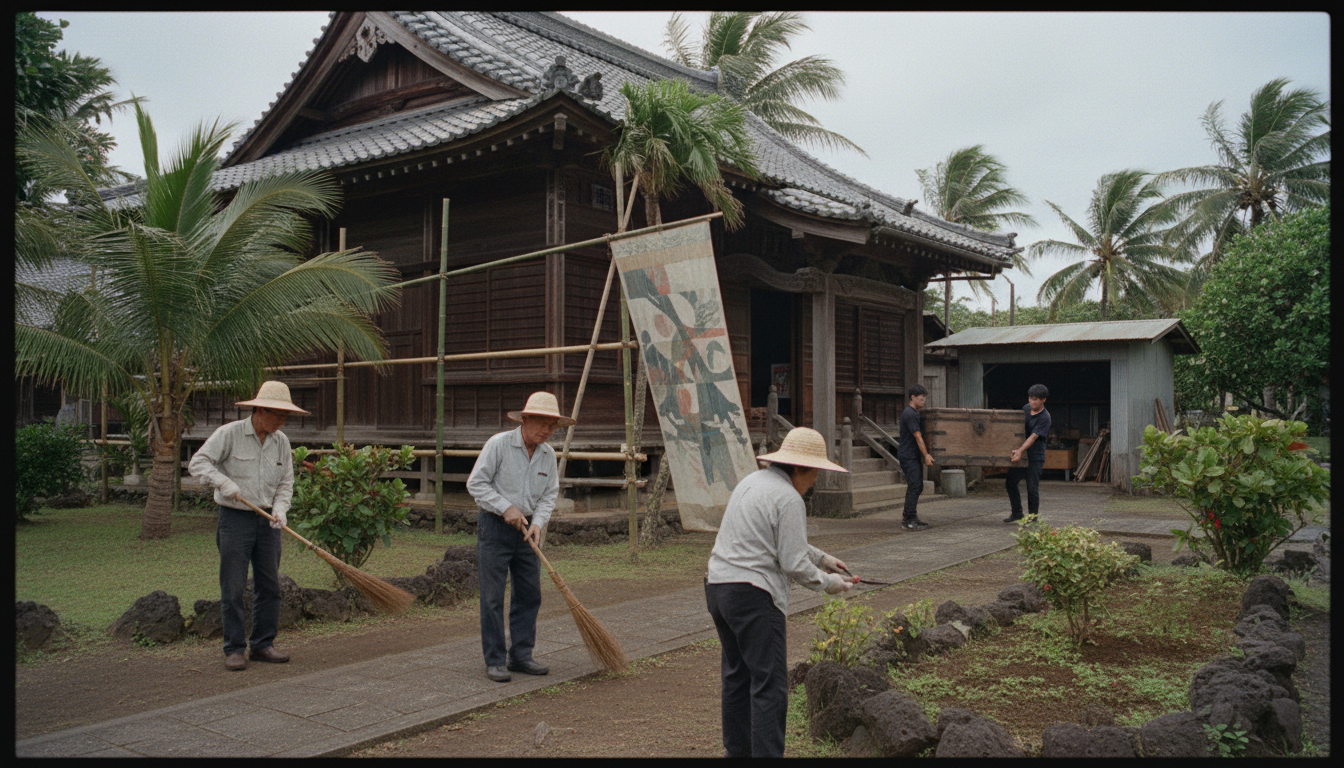
The reported challenges facing Hongwanji temples in Hawaiʻi illuminate a pattern beyond local religious life. Valued by early Japanese immigrants, these temples now confront an aging congregation and a debate over the extent of their ties to Japan. This internal tension — whether to dilute original cultural links for future relevance — is a recurring dynamic in the Asia-Pacific, particularly for institutions that represent historical migration patterns.
Historically, cultural practices and religious institutions established by migrant communities serve as anchors to an ancestral homeland. Their resilience depends on both the continuity of the originating culture and the adaptive capacity within the new setting. The current situation in Hawaiʻi suggests a divergence in these priorities: a perceived need to 'water down' Japanese ties for future viability versus the preservation of foundational identity. This negotiation is not unique; it often arises when demographics shift and the geopolitical landscape alters the relevance or practicality of strong, direct ties.
Consider the broader regional context. Security alliances are under constant renegotiation; for example, South Korea, Japan, and the U.S. recently held nuclear missile drills focused on North Korea, indicating persistent, evolving security concerns that define regional relationships. Concurrently, the deployment of a U.S. aircraft carrier to the Middle East left the Asia-Pacific without this specific naval presence, a tactical decision with regional implications. These macro-level shifts, while seemingly distant from individual temples, affect the underlying conditions for cultural continuity. They can subtly influence how communities perceive their connections to distant homelands, especially when those homelands are also significant geopolitical actors.
While the argument for maintaining strong ties to Japan for historical authenticity is significant, the demographic reality of aging congregations and the desire for future relevance present a compelling counterpoint. The institution's survival may depend on its ability to evolve within the local context, even if that means adapting elements traditionally seen as immutable. The tension here lies between preserving heritage and ensuring continued communal function.
The challenge for Hongwanji temples in Hawaiʻi, then, mirrors a dilemma for many cultural and religious institutions across the Asia-Pacific shaped by migration. Their longevity is not just a matter of faith, but of navigating the currents of regional strategy and demographic change, often far from the centers of their origin. The question remains how deeply rooted traditions can bend without breaking, or if adaptation, in some cases, means a fundamental redefinition of identity itself.
Sources
Newsletter
Pacific Daily
A curated briefing from Thailand, Asia-Pacific and the world.