Pulau Tekong Energy Hub: Singapore's Bid to Sustain Industrial Demand
The proposed 200-hectare energy hub on Pulau Tekong is positioned as a strategic move to secure future energy supply, but its long-term viability hinges on evolving energy markets and the costs associated with novel technologies.
SINGAPORE
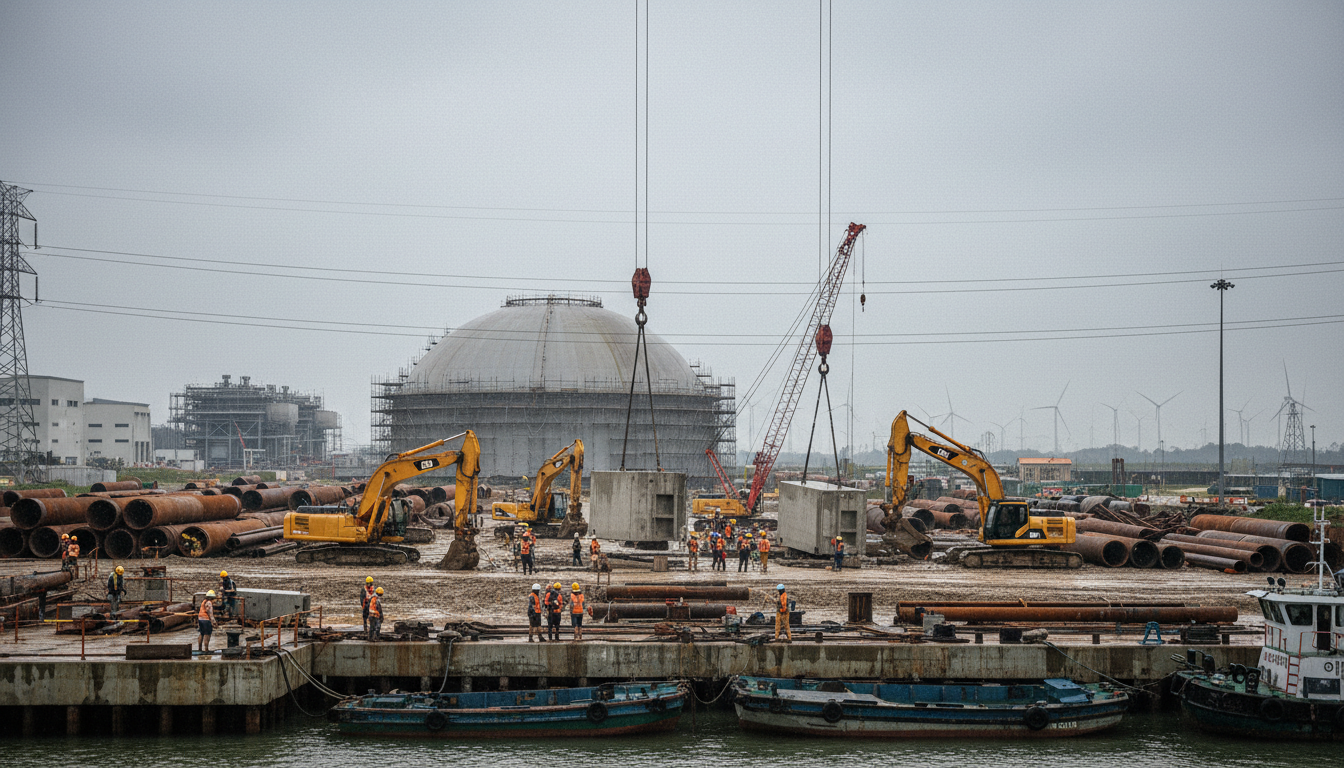
Singapore's plan to develop a 200-hectare energy hub on reclaimed land at Pulau Tekong signifies a clear intent to reinforce its energy infrastructure. This site, described as 40% the size of Sentosa, is earmarked for hydrogen-ready natural gas-fired power plants, a liquefied natural gas terminal, and other low-carbon energy technologies. The feasibility study by the Energy Market Authority (EMA) suggests a deliberate forward-looking approach to national energy security and industrial requirements.
Broader strategic infrastructure developments precede this initiative. In August 2026, Singapore announced studies for undersea tunnels connecting the mainland to Pulau Tekong. Concurrently, plans to merge several outer islands to form a new western island were revealed. Experts cited these developments, including the new western island, as providing space for energy and new industries. This integrated approach points to a comprehensive national strategy for land use and economic growth, where energy supply is a foundational element.
The emphasis on "hydrogen-ready" facilities in the Pulau Tekong plan reflects an acknowledgement of global shifts towards decarbonization. While natural gas remains a primary fuel source in the near term, the inclusion of hydrogen capability indicates an investment in future flexibility. Policymakers appear to be planning for a transition, rather than a static energy mix. However, the economic viability of large-scale hydrogen power generation and distribution infrastructure is still subject to significant market evolution and technological advancements.
These investments are primarily driven by Singapore's continued position as a regional industrial and financial hub. Energy is a fundamental input for manufacturing, data centers, and advanced services that drive the economy. Securing diverse and reliable energy sources, including potential low-carbon options, is a prerequisite for sustaining this competitive edge. The expansion of energy capacity also facilitates the growth of energy-intensive industries, creating a cycle of demand and supply.
Nevertheless, cost and market demand remain pertinent questions. Developing such a large-scale energy complex, especially one incorporating nascent technologies like hydrogen, entails substantial capital expenditure. The identity of who ultimately pays for this is a critical consideration. The success of "low-carbon energy technologies" depends on their economic competitiveness against established, often cheaper, fossil fuel alternatives. While the government may absorb initial development costs, the ongoing operational expenses and the cost passed on to consumers and industries will shape its long-term impact.
For businesses, particularly those with high energy demands, this development offers a degree of certainty regarding future supply. However, the pricing structure for energy from these new facilities will influence investment decisions. A higher energy cost, even for a cleaner supply, could deter some industries. Conversely, a stable, competitively priced energy supply could attract new investments, especially from companies committed to sustainability.
This move by Singapore could set a precedent for other land-constrained urban economies in the Asia-Pacific seeking to balance industrial growth with environmental considerations. The region faces increasing energy demand driven by population growth and industrialization. The blend of conventional and future-proofed energy infrastructure on a reclaimed island offers a model, albeit one dependent on unique geographical and economic factors. The outlook for this project, and similar initiatives across the region, hinges on the pace of technological development in green energy and the willingness of industries to bear the costs of transition.
Sources
Newsletter
Pacific Daily
A curated briefing from Thailand, Asia-Pacific and the world.