Political Violence After Kirk's Assassination: A Structural Shift in US Influence
The aftermath of Charlie Kirk's death reveals a changing landscape of American political engagement, with implications for Asia-Pacific stability.
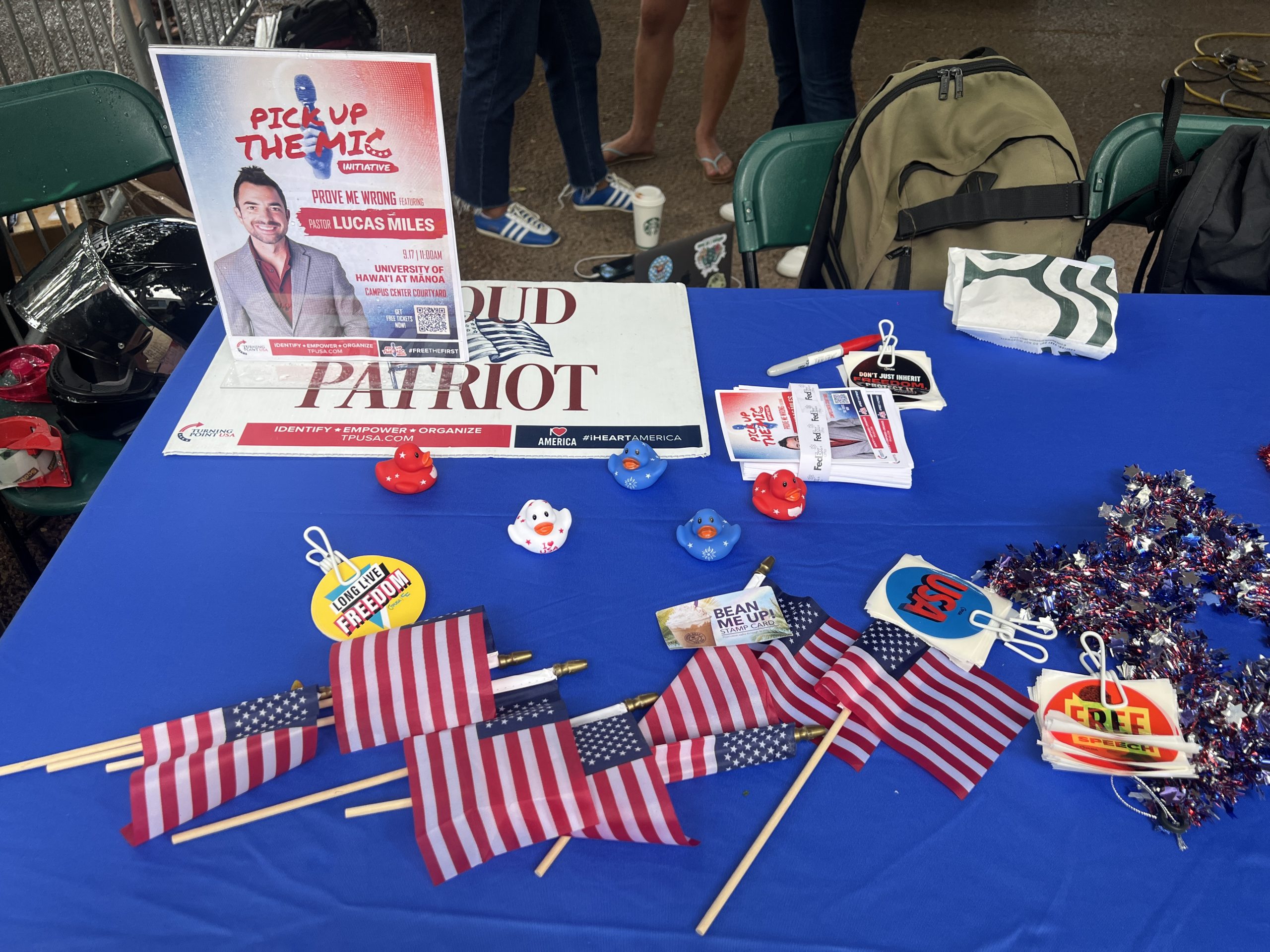
The assassination of right-wing political activist Charlie Kirk at a Turning Point USA event at Utah Valley University, now one year past as of the Honolulu Civil Beat report on September 20, 2026, marks a critical juncture in the trajectory of American political discourse. This event, reported by Reuters as contributing to a 'vicious spiral' of political violence, fundamentally alters the structural dynamics of US ideological projection, a shift with direct relevance to the Asia-Pacific region.
Kirk, who became a millionaire by age 29 partly through his association with the Trump MAGA movement, represented a specific, youth-focused conservative activism. His death and the subsequent global exposure, including to young Australians who witnessed the assassination without warning, highlight a new vulnerability in US domestic political operations. The continued work of Turning Point USA (TPUSA) post-Kirk, including a summit held in December 2025 and rallies with figures like Vance in April 2026, suggests resilience in the organization itself. However, the nature of its influence has undergone a re-evaluation.
Prior to Kirk's death, TPUSA operated as an influential, if sometimes controversial, youth movement within American conservative politics. Its methods and messaging, often characterized by aggressive engagement, extended its reach and visibility. The immediate implication of Kirk's assassination was a dramatic escalation of concern over political violence within the US, as noted by Reuters in September 2025. This concern is not merely a domestic issue; the stability of the US political system directly impacts its capacity for global engagement, including in the Asia-Pacific.
The structural shift lies not in the elimination of a voice, but in the transformation of how that voice resonates. The assassination elevates Kirk to a symbolic figure, potentially radicalizing some elements while forcing others to reconsider the efficacy and morality of confrontational political tactics. When institutions like the University of Hawaiʻi at Mānoa are targeted for TPUSA expansion, as implied by the Honolulu Civil Beat, it is against a backdrop of heightened internal tensions and external scrutiny. The question becomes whether the cost of such activism is now perceived differently by participants and observers alike.
One might argue that the continued operation of TPUSA, and its engagement with prominent political figures, demonstrates the fundamental strength of the movement and its ability to withstand severe shocks. This perspective suggests that the structural changes are minimal, limited to the adaptation of rhetoric or security protocols rather than a fundamental alteration of objectives or methods. Indeed, the mere fact that TPUSA continues to advocate for conservative politics, as stated in the 2026 Honolulu Civil Beat piece, offers some support to this view.
However, the evidence points to a more profound transformation. The reports of some supporters bristling at the 'Trump's war, memes and feuds' during Vance's rallies with TPUSA in April 2026 indicate internal dissent regarding the movement's direction and tenor. The assassination did not merely remove a leader; it injected a new, irreversible variable of martyrdom into the equation. This variable changes the calculus for recruitment, fundraising, and public perception. For nations in the Asia-Pacific relying on a predictable and stable American partner, the internal volatility manifested by such events introduces a layer of uncertainty that must now be factored into regional strategies.
The central structural change is the redefinition of acceptable political engagement. The 'vicious spiral' of violence, explicitly linked to Kirk's death, creates an environment where the cost of public advocacy is demonstrably higher. This may lead to a more fractured political landscape, where mainstream conservative figures distance themselves from the more extreme elements, or conversely, it could harden resolve among the most committed. In either scenario, the capacity of the United States to project a unified, coherent foreign policy is now subject to greater domestic constraints. The outcome now depends on whether internal American political actors can re-establish norms of engagement that do not risk further escalation of violence, thereby restoring a measure of predictability to US international relations.
Sources
Newsletter
Pacific Daily
A curated briefing from Thailand, Asia-Pacific and the world.